Rust and AI: Eugene v0.4 Revolutionizes Multi-Step Agents
Le brief IA que les pros lisent chaque soir
Les 7 actus IA du jour, décryptées en 5 min. Gratuit.
Inclus dès l'inscription : notre sélection des meilleurs guides & comparatifs IA.
Choisis ton rythme
Gratuit · Pas de spam · Désabonnement en 1 clic
State Machines for Multi-Step Tasks
In the development of AI agents, managing multi-step tasks requires more than just a simple conversation loop. While simple tasks can be resolved in a few exchanges, complex tasks necessitate a more robust structure. This is where the use of state machines comes into play.
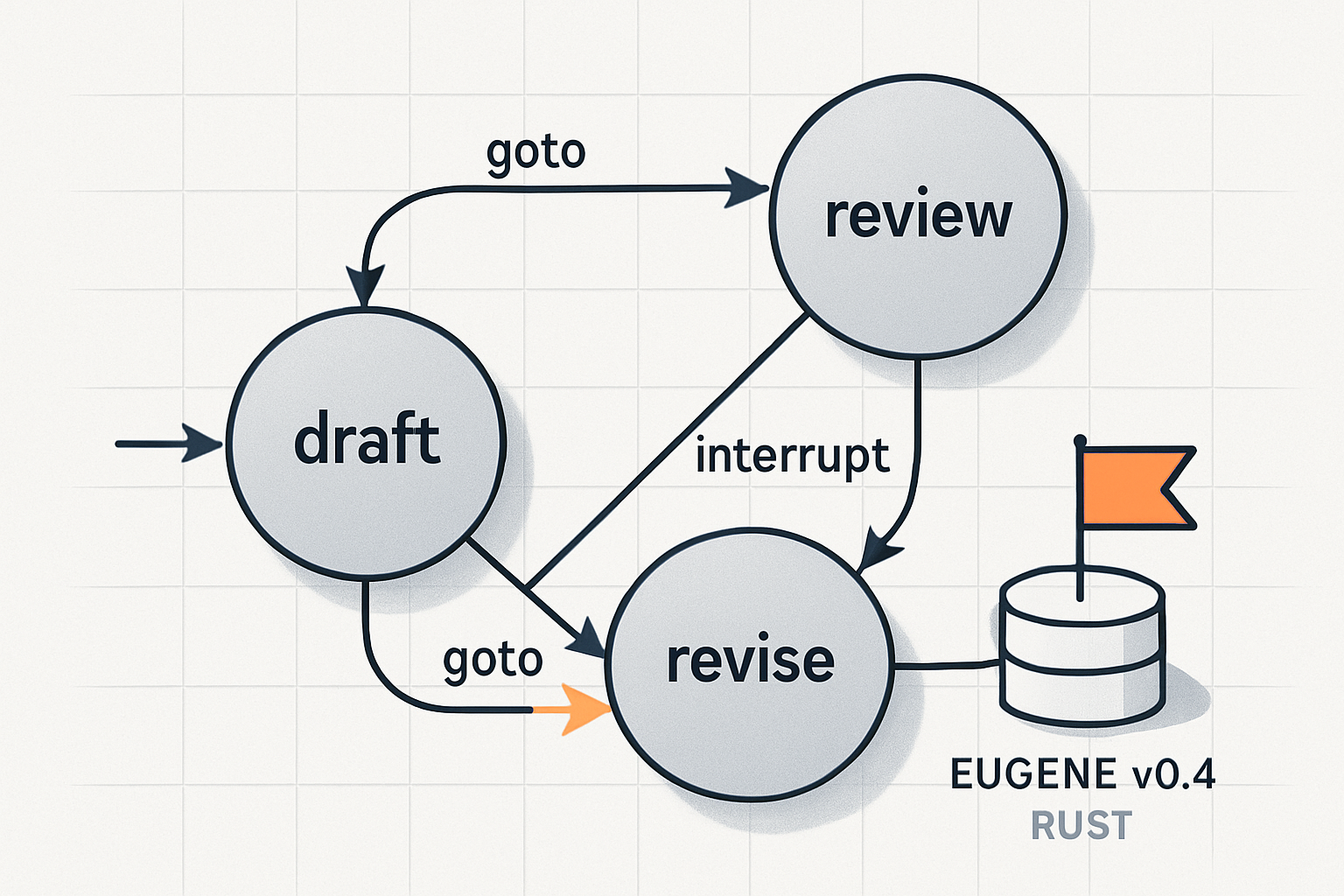
The article explores how Eugene v0.4 integrates a typed graph system in Rust to orchestrate these tasks. Each node in the graph represents a phase of the task, with possible transitions such as goto, halt, and interrupt. This structure allows for efficient management of transitions between phases while incorporating checkpoints via an SQLite checkpointer.
Management of Permissions, Interruptions, and Retries
Eugene v0.4 also introduces mechanisms to integrate human pauses into the process, thanks to an interruption system. This allows users to interact with the process at critical moments, thereby enhancing the flexibility and security of operations.
The permissions system is also improved, with modes such as read-only and approval before destruction. These modes are managed by hooks before and after the nodes, allowing for fine-grained management of permissions, logging, and budgets.
The article emphasizes the importance of placing retries at the right level, such as at the HTTP call level rather than at the entire node level, in order to optimize error and resource management.
Practical Example and Perspectives
To illustrate these concepts, the article presents an example of a three-node graph: “draft → review → revise.” This model demonstrates how agents can effectively and adaptively manage complex tasks.
Finally, the article concludes with the possibilities offered by this design, particularly multi-agent parallelism, and indicates where to find the source code and additional information.
Brief IA — L'actualité IA en français
L'essentiel de l'actualité de l'intelligence artificielle, décrypté et expliqué chaque jour.