Salesforce Launches Koa, Reasoning Model on Nemotron
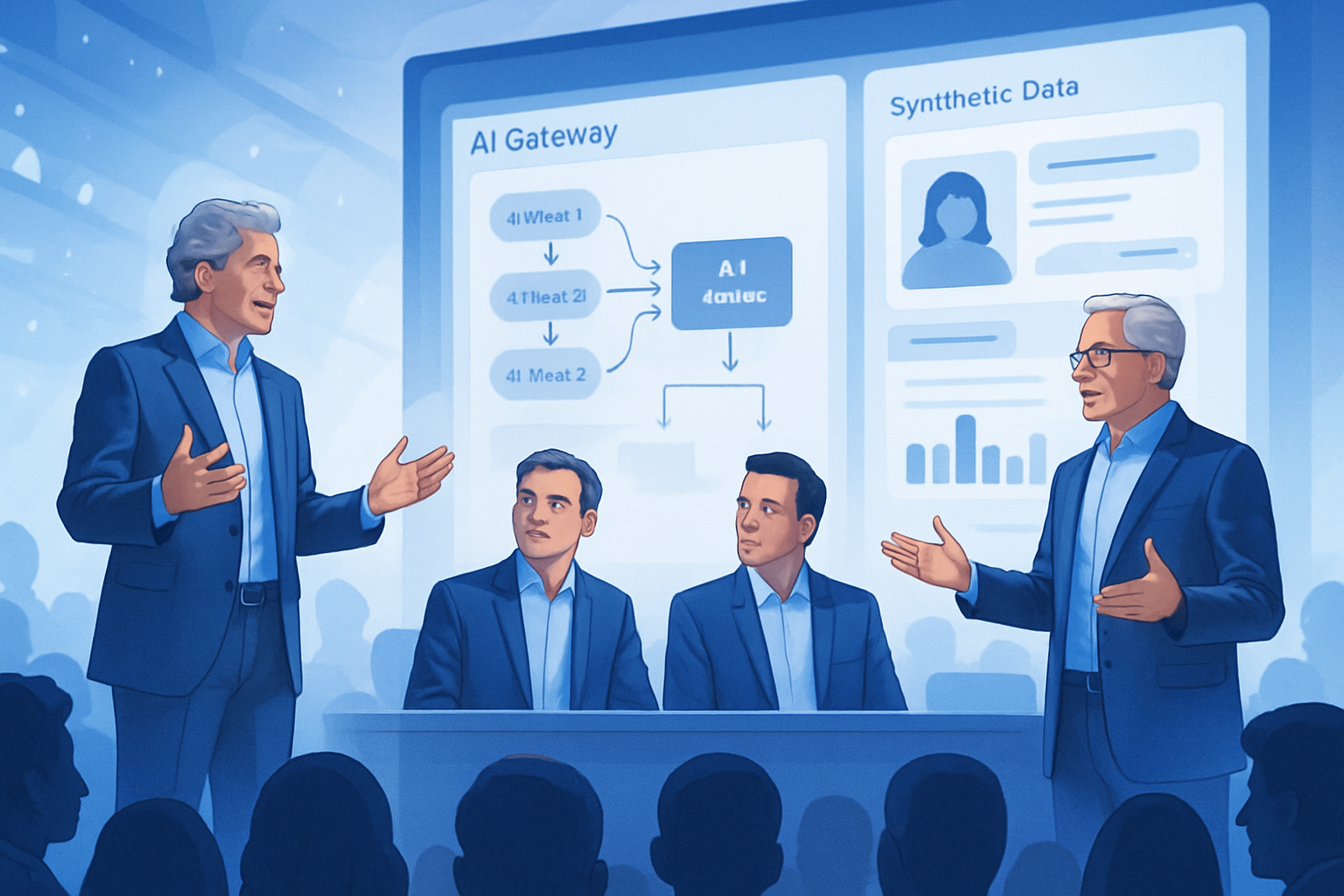
Salesforce introduces Koa, its first reasoning model built on Nvidia's Nemotron and specialized for sales, marketing, and support. The company promises an open-weight alternative, better token efficiency, and strict adherence to security requirements, with no real customer data used in training. While deploying Koa, Salesforce maintains access to third-party models and announces ClaudeForce with Anthropic.
Salesforce retains access to Claude and officially launches ClaudeForce
Salesforce is not ending its collaborations with third-party providers. The company announced a partnership with Anthropic named ClaudeForce. According to Salesforce, this system allows businesses to use Claude as an AI interface while keeping their data within Salesforce's record system. Salesforce states that this data is secured by its infrastructure.
Cost and data governance highlighted for Koa
Salesforce presents Koa as an open-weight alternative to leading closed models. The company claims that the model has not ingested any real customer data from Salesforce and complies with the data and security requirements embedded in Salesforce. It also emphasizes assistance in reducing AI expenses through lower token consumption for equivalent work. Koa can, according to Salesforce, be automatically routed through an AI gateway based on need.
Positioning of Agentforce and prior use of third-party models
Koa will be among the options available in Agentforce, the platform where Salesforce customers design agents for repetitive tasks such as managing customer service inquiries or scheduling appointments. Before Koa's arrival, queries involving complex or multi-step reasoning were handled by models like Claude or ChatGPT, through Agentforce's AI gateway, which assigns each query to the appropriate model. Jayesh Govindarajan specifies that Salesforce has many small language models designed for specific tasks within the Agentforce portfolio, and until now, the company had relied on advanced models to meet reasoning needs.
Le brief IA que les pros lisent chaque soir
Les 7 actus IA du jour, décryptées en 5 min. Gratuit.
Inclus dès l'inscription : notre sélection des meilleurs guides & comparatifs IA.
Choisissez votre rythme
Gratuit · Pas de spam · Désabonnement en 1 clic
Construction of Koa: Nemotron base and synthetic data
Koa is built on Nemotron, Nvidia's open-weight model, with which Salesforce collaborated for post-training. This work targeted sales, marketing, and customer support tasks. Salesforce and Nvidia indicate that they did not use any real customer data from Salesforce, instead relying on synthetic data that mimics customer behaviors. Jayesh Govindarajan describes a simulated service environment, including a persona of a service professional dealing with angry customers and a sales professional trying to close a deal.
Performance goals and emergence conditions
Salesforce presents Koa as better suited for the work tasks assigned to agents and less costly in tokens than sending the same tasks to Claude or ChatGPT. On Nvidia's side, Kari Ann Briski states that Nemotron has a unique inference architecture that is efficient in terms of tokens and mentions a triptych combining sovereign AI, time to first token, and effective reasoning. Jayesh Govindarajan explains that Salesforce wanted to train a cutting-edge enterprise-level model but lacked a pre-trained base model, estimating that until Nemotron, there was no sovereign pre-trained American model with state-of-the-art capabilities and clear data provenance, and stating that he does not know what data Qwen is trained on. Koa is presented as a new AI model, one of the major announcements of Dreamforce, and Salesforce's first reasoning model.
Brief IA — L'actualité IA en français
L'essentiel de l'actualité de l'intelligence artificielle, décrypté et expliqué chaque jour.