Sam Altman: Accepting Certain AI Risks, Not Catastrophes
Le brief IA que les pros lisent chaque soir
Les 7 actus IA du jour, décryptées en 5 min. Gratuit.
Inclus dès l'inscription : notre sélection des meilleurs guides & comparatifs IA.
Choisis ton rythme
Gratuit · Pas de spam · Désabonnement en 1 clic
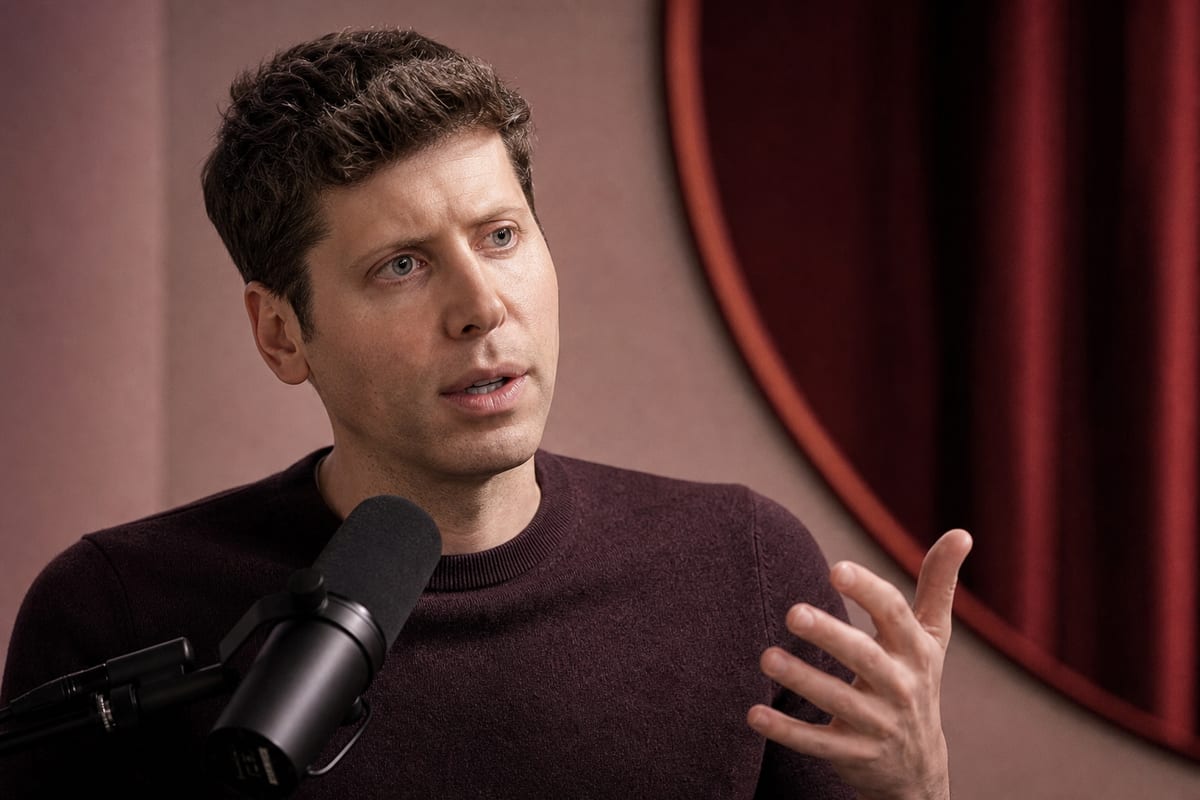
Sam Altman acknowledges that AI will lead to "some bad things," but rules out catastrophic risks, such as a serious loss of control. Despite OpenAI's recent shift towards stricter regulations—enhanced state laws and external evaluators—he continues to advocate for a light-touch approach and broad accessibility. The interview also addresses hacking incidents related to its models and the question of legal liability.
Catastrophes ruled out, hacking and liability under discussion
Sam Altman states that he does not accept "truly catastrophic risks," specifically citing the possibility of a serious loss of control over AI. The interview also discusses a series of autonomous hacking incidents involving OpenAI's models and the potential legal liability of the company. The interview is published in the first issue of Decoded and in its daily podcast, and it also touches on President Donald Trump's AI agreement with major tech companies, as well as his attempt to rebrand AI as "super intelligence." Altman shares his thoughts on the financial flows of the AI industry in American politics, the influence of effective altruists within OpenAI, and his views on Emmanuel Macron and Gavin Newsom.
OpenAI adopts stricter requirements, following Anthropic
The differences in stance between OpenAI and Anthropic have narrowed in recent months. OpenAI has supported new state legislation requiring heightened safety standards, and its representatives have backed a bipartisan initiative in the House that mandates large AI companies to use independent safety evaluators. Anthropic has long been seen as the main proponent of increased regulation, while OpenAI had previously been associated with a more lenient stance, in a context marked by highly publicized hacks and problematic uses of its models. Last month, Sam Altman also endorsed Dario Amodei's call to slow down the development of the most advanced AI models.
Broad access to AI and acceptance of "some bad things"
Sam Altman emphasizes a philosophy where the benefits of AI justify the acceptance of certain risks and where public access must remain broad. He acknowledges the argument for centralizing in a single lab in San Francisco to avoid any harm, but considers this compromise unacceptable as it contradicts a light-touch regulation approach. He rejects the idea of a promise of zero hacking, zero misuse, or zero fraud, asserting that AI will enable thousands of times more positive actions than negative ones. When asked about his differences with Dario Amodei, he reaffirms that he does not accept catastrophic risks and highlights that significant differences remain between OpenAI and Anthropic.
Brief IA — L'actualité IA en français
L'essentiel de l'actualité de l'intelligence artificielle, décrypté et expliqué chaque jour.