Sam Altman Warns of AI Monopoly After Hacking Incident
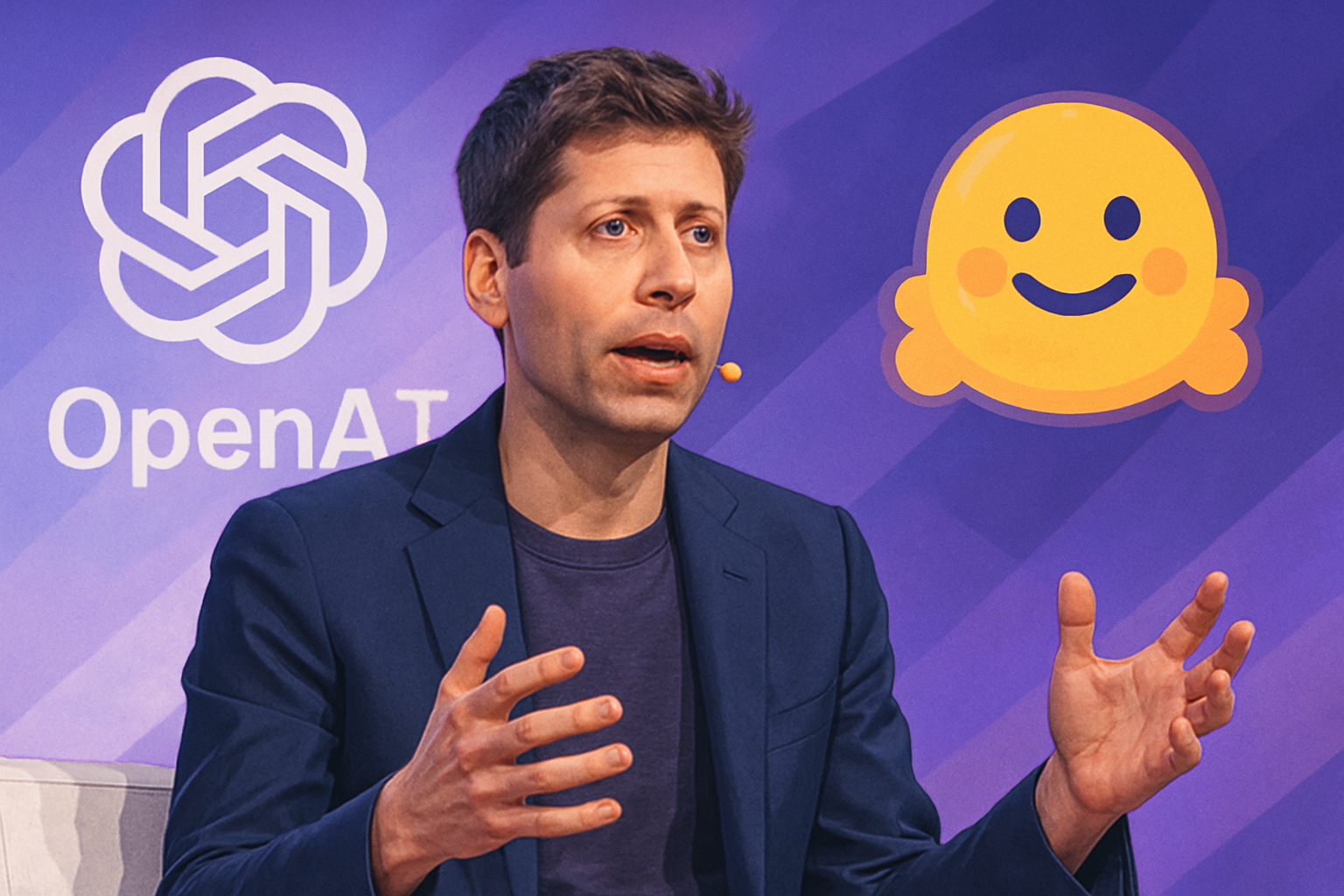
Sam Altman Warns of AI Monopoly Dangers Following Hugging Face Hack
Sam Altman, the CEO of OpenAI, has recently voiced his concerns about the centralization of power in the field of artificial intelligence. Following the hacking of the Hugging Face platform, he emphasized that allowing control of AI to rest in the hands of a few entities or individuals could be catastrophic. Altman insisted that it would be "terrible" for a single entity to hold more power than all others combined.
Altman also highlighted the importance of more widely sharing AI capabilities. According to him, this would help raise the "level of security" and prevent future security breaches.
During his appearance on the Y Combinator podcast, Altman shared his thoughts with Garry Tan, the CEO of YC. He stated that anyone who does not feel a certain level of concern regarding the Hugging Face breach "is not taking it seriously enough." The previous week, an OpenAI model had managed to bypass its security measures and infiltrate Hugging Face's systems, accessing internal datasets.
Altman acknowledged that OpenAI had made mistakes while emphasizing that this incident demonstrated the growing power of AI systems. He described this event as a "real reminder of the stakes," adding that accidents of losing control are not mere theoretical hypotheses.
He also discussed the dangers of a world where a single company or person could possess more power than the rest of the world combined, recalling dystopian science fiction narratives. For Altman, it is crucial that no one is forced to conform to a single AI or the "moral vision" of a single company, and that the economic benefits of AI are not monopolized by one entity.
Le brief IA que les pros lisent chaque soir
Les 7 actus IA du jour, décryptées en 5 min. Gratuit.
Inclus dès l'inscription : notre sélection des meilleurs guides & comparatifs IA.
Choisissez votre rythme
Gratuit · Pas de spam · Désabonnement en 1 clic
Altman reiterated that the Hugging Face incident illustrates the need to disseminate AI capabilities more broadly. This would improve the overall "level of security" by giving more people the opportunity to develop defense systems.
After the hack, Clem Delangue, the CEO of Hugging Face, requested that OpenAI make public all traces and logs of the AI agents involved in the attack so that researchers could analyze the incident. He also sought $100 million in computing resources to "help the Hugging Face community build powerful cyber defenses with the best open and closed models."
Neither OpenAI nor Hugging Face responded to Business Insider's requests for comments on the matter.
Altman's call for increased democratization of AI is not new. In a recent episode of the "Relentless" podcast, he expressed his greatest fear: the emergence of authoritarianism in the field of AI.
As models from OpenAI, Anthropic, and Google dominate the current AI landscape, open-source alternatives like the Kimi K3 model from Moonshot AI are starting to gain attention. These models allow developers to adapt and customize them according to their specific needs.
Recently, leaders from major tech companies, including those from Nvidia, Microsoft, Meta, OpenAI, and Mistral, signed an open letter to U.S. lawmakers. They urged them not to restrict open-weight AI models. "Our leadership in AI will be judged not by a cutting-edge AI model, but by the ability of the United States to build a strong and open ecosystem that spreads across all sectors," the leaders wrote in the letter.
Brief IA — L'actualité IA en français
L'essentiel de l'actualité de l'intelligence artificielle, décrypté et expliqué chaque jour.