Sam Altman Warns of AI Monopoly by a Few Firms
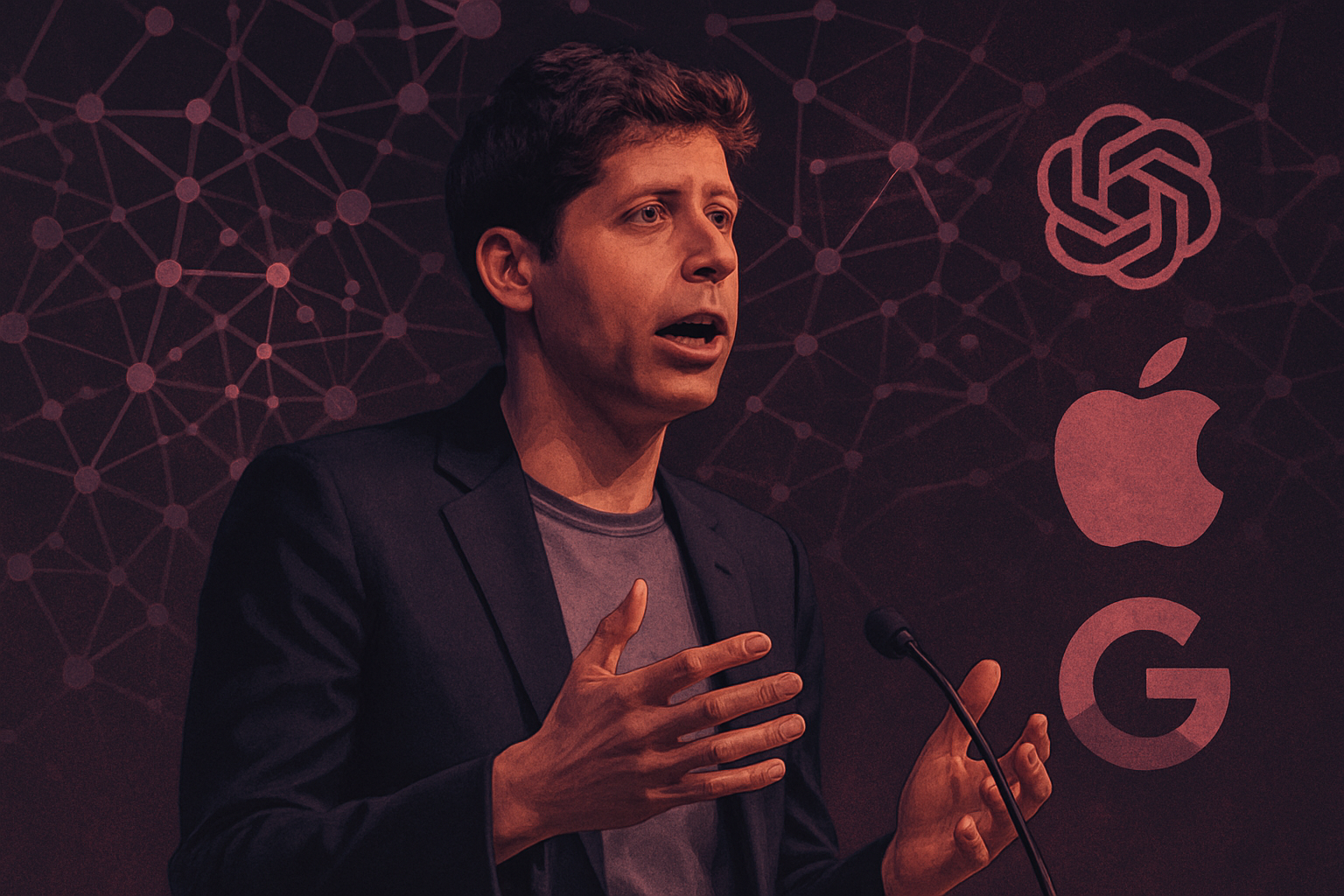
Sam Altman and the Shadow of AI Authoritarianism
Sam Altman, the CEO of OpenAI, has recently voiced a major concern regarding the future of artificial intelligence. He fears what he calls "AI authoritarianism," a situation where a limited number of companies or countries would control access to this revolutionary technology. According to Altman, this scenario could have detrimental effects on innovation and freedom.
The issue of access to AI has been reignited by the recent launch of Kimi K3, an open-source AI model developed in China. For Altman, the real danger does not lie in the intrinsic power of AI, but in the possibility that a single entity could hold exclusive control over it. "The real issue today is whether we are heading towards a world dominated by AI authoritarianism or a world of freedom," he stated during an appearance on the podcast "Relentless."
Altman also emphasized that history has shown that whenever humanity has sacrificed its freedom for greater security, the long-term outcome has been negative. He advocates for an approach where technology is made available to all, allowing society to express itself and use AI on its own terms.
OpenAI: Between Control and Openness
These statements are particularly striking coming from Altman, who leads OpenAI, one of the few companies that hold some of the most advanced AI models in the world. OpenAI, unlike some of its competitors, does not share its technologies as open-source, raising questions about its own stance on transparency and knowledge sharing.
Le brief IA que les pros lisent chaque soir
Les 7 actus IA du jour, décryptées en 5 min. Gratuit.
Inclus dès l'inscription : notre sélection des meilleurs guides & comparatifs IA.
Choisissez votre rythme
Gratuit · Pas de spam · Désabonnement en 1 clic
Altman's remarks come amid intense debate in Silicon Valley and Washington over the transparency of AI technologies. The release of Kimi K3 has sparked mixed reactions, with some U.S. officials calling for restrictions on access to Chinese models, while investors and entrepreneurs fear that this could harm global competitiveness.
The Battle for Access to AI
Beyond the simple question of access to models, the United States has already implemented export controls that determine which countries and companies can access cutting-edge technologies, including the chips and computing capabilities necessary for AI development. This situation gives Washington considerable power over the global development of artificial intelligence.
Major tech companies such as Microsoft, Meta, Nvidia, OpenAI, and Google have signed a letter to U.S. authorities urging them not to restrict access to open-source AI. However, Anthropic, a major player in the sector and a direct competitor to OpenAI, did not support this initiative. Anthropic advocates for a more cautious approach, believing that increasingly powerful models require enhanced safety measures and greater oversight.
Preventing Power Concentration
For Altman, preventing excessive power concentration has long been a priority. Although his company does not share its models, he remains convinced that artificial intelligence can generate unprecedented human prosperity, provided that power concentration and the emergence of a new authoritarianism are avoided. "For years, I have focused on this goal of abundant intelligence, convinced that it can lead to incredible prosperity, as long as we avoid a strange concentration of power," he concluded.
Brief IA — L'actualité IA en français
L'essentiel de l'actualité de l'intelligence artificielle, décrypté et expliqué chaque jour.