U.S. Sanctions on Chinese AI for Technology Theft
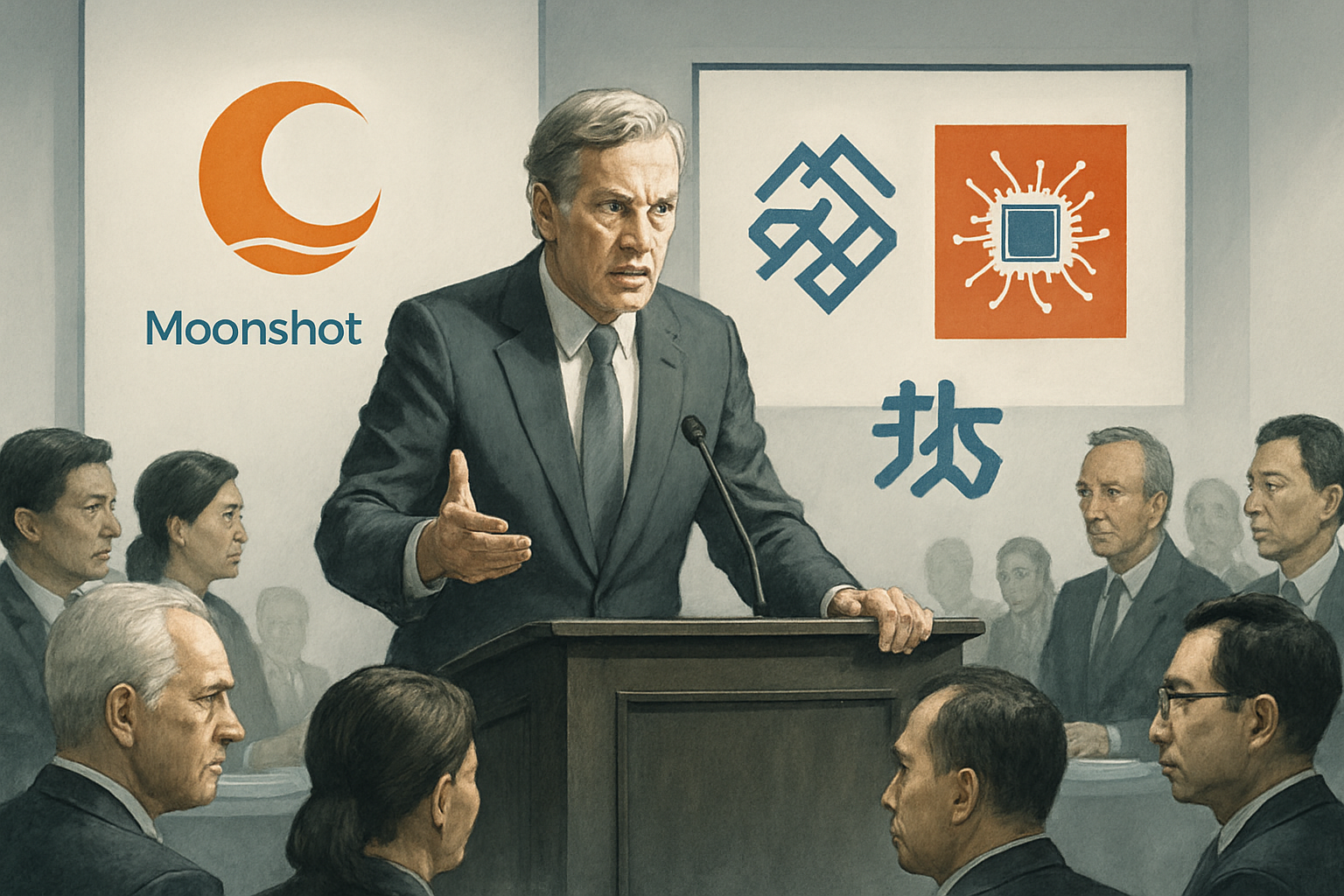
The United States Considers Sanctions Against Chinese AI
U.S. Treasury Secretary Scott Bessent recently expressed major concerns regarding certain Chinese companies specializing in artificial intelligence. According to him, these companies may have used illicit methods to appropriate the intellectual property of American firms. This statement comes amid a serious consideration by the U.S. government to impose sanctions to counter these practices.
Bessent emphasized that the Trump administration is not fundamentally opposed to open-source AI models. However, it is determined to protect American intellectual property against any form of theft, especially when it comes to sensitive technologies like artificial intelligence. This position could lead to restrictions on certain open-source AI models developed by Chinese companies, which are currently attracting significant attention in the sector.
An Investigation into Technology Theft
In an interview with Fox Business, Scott Bessent explained that the U.S. government is conducting a thorough investigation to determine whether open-source AI models developed by companies in China have indeed stolen the intellectual property of their American counterparts. He used the term "distillation" to describe this practice, although he clarified that, in more common language, it would amount to outright theft.
Bessent reiterated the Trump administration's support for open-source models while asserting that intellectual property theft would not be tolerated. He insisted that if evidence of theft by foreign models were discovered, the United States reserves the right to impose severe sanctions on these companies.
Anthropic's Accusations Against Chinese Companies
Bessent's statements echo accusations made by Anthropic, a major player in AI, against several Chinese companies. Anthropic has accused firms like Moonshot AI, creator of Kimi K3, Minimax, and DeepSeek of plagiarizing its research using a distillation technique. Anthropic claimed that these companies accessed its large-scale models without authorization, thereby violating the company's terms of use.
Le brief IA que les pros lisent chaque soir
Les 7 actus IA du jour, décryptées en 5 min. Gratuit.
Inclus dès l'inscription : notre sélection des meilleurs guides & comparatifs IA.
Choisissez votre rythme
Gratuit · Pas de spam · Désabonnement en 1 clic
Although Bessent did not name specific companies in his statements, he mentioned the presence of watermarks from American models in several Chinese models, calling this situation unacceptable.
Kimi K3 and the Race for Generative AI
The launch of Kimi K3 by Moonshot AI has caused a significant shockwave in the field of generative AI. The performance of this model, measured by rigorous benchmarks, shows that it competes with, and even surpasses, the capabilities of proprietary models such as Anthropic's Fable 5 or OpenAI's GPT-5.6-Sol. Unlike proprietary models, open-weight models like Kimi K3 are accessible to users for download and modification. Moonshot AI announced its intention to release the full weights of Kimi 3 on July 27, allowing for even broader access.
Debate on the American Response
The release of Kimi K3 has sparked an intense debate on how the U.S. government should respond. Dean Ball, former AI advisor to President Trump and current strategist at OpenAI, stirred controversy by suggesting that the White House might use fear, uncertainty, and doubt (FUD) to dissuade the private sector from adopting Chinese open-source models. Meanwhile, Bill Gurley, a prominent investor, argued in the Washington Post for the importance of open-source models to avoid a duopoly in AI dominated by Anthropic and OpenAI.
Anthropic has also faced criticism for its concerns regarding distillation attacks, as its own AI models rely on materials protected by copyright, used without authorization according to some authors and media companies.
American Companies Facing Chinese Dominance
Scott Bessent noted that several American companies, such as Meta, Nvidia, and Reflection AI, are also pursuing the development of open-source models. However, he acknowledged that Chinese companies currently seem to dominate this sector. He concluded by stating that these models must be held to the same standards as their American counterparts, while ensuring that they do not use stolen materials.
Brief IA — L'actualité IA en français
L'essentiel de l'actualité de l'intelligence artificielle, décrypté et expliqué chaque jour.