Satlyt raises $8M for AI embedded in satellites
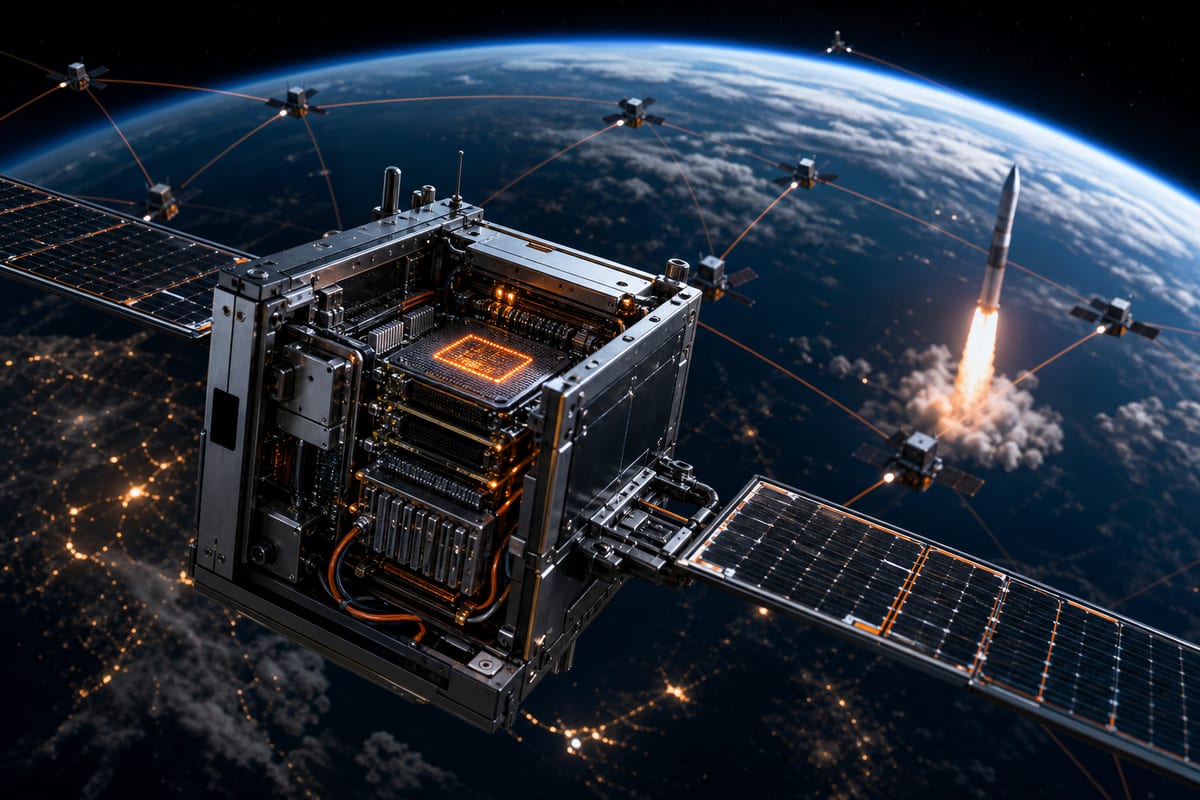
The bi-continental startup Satlyt aims to run AI models directly aboard satellites and share computational tasks in orbit. With $8 million in funding, it targets 20% of the global satellite fleet by the end of the decade and is preparing for a flight test this week on a TakeMe2Space satellite, while Google will send its Project Suncatcher prototype on the same rocket.
Objectives: Targeting 20% of Satellites and Betting on GPU Adoption
Rama Afullo aims for a presence on 20% of satellites by the end of the decade. He expects that almost all manufacturers will integrate GPUs and other advanced processors by this time, going so far as to suggest that sending a satellite without a GPU is self-defeating. On the investor side, Non Sibi Ventures emphasizes that Satlyt's model does not rely on an overly optimistic assumption about orbital data centers, whose economics and launch cadence remain uncertain. For Kent Lucas, a partner at the company, success may simply depend on the number of satellites launched. Bernard Harris, a partner at Non Sibi Ventures and a former NASA astronaut for over 20 years, has helped solidify this belief.
Funding and Identity: $8M Raised and a Team with Google and SpaceX Experience
Satlyt has completed an initial funding round of $8 million, led by Non Sibi Ventures, based in Houston. The company operates from Sunnyvale, California, and Nairobi. Its co-founder, Kenyan-American engineer Rama Afullo, worked in cloud computing at Google and briefly in 2024 on SpaceX's Starlink network. After leaving SpaceX, he co-founded Satlyt, stating that his attempts to bring this idea internally at SpaceX and then at Google were rejected.
Le brief IA que les pros lisent chaque soir
Les 7 actus IA du jour, décryptées en 5 min. Gratuit.
Inclus dès l'inscription : notre sélection des meilleurs guides & comparatifs IA.
Choisis ton rythme
Gratuit · Pas de spam · Désabonnement en 1 clic
Approach: A Multi-Constellation Software for Onboard AI
Satlyt does not plan to build its own spacecraft: the company is developing software to run AI models onboard and offer it to multiple operators. It compares its approach to VMware and Snowflake, managing the complexity of the underlying infrastructure. The initial goal is to generate operational efficiency gains in a context where downlink remains costly and often slow, and where decisions made onboard can reduce ground loads. While few powerful GPUs are still in orbit, the company believes that the types of workloads it targets represent the most likely short-term opportunity. Its next milestone is a demonstration next year of shared computing on two satellites, envisioned as a precursor to a third-party operated orbital cloud. Rama Afullo summarizes the ambition by stating that they aim to transform a satellite into a managed service generating revenue. This momentum comes as SpaceX commits to orbital data centers and other startups, such as Starcloud and Cowboy Space Company, pursue similar projects.
Demonstrations: 60% Less Data and a New Flight This Week
Satlyt has already conducted two demonstration missions. Earlier this year, the company deployed Google DeepMind's Gemma model aboard a spacecraft operated by Momentus: the size of a transmission of software errors was reduced by over 60%, an efficiency that, according to Rama Afullo, could represent hundreds of thousands of dollars saved per satellite per year. A new flight is scheduled this week on a satellite built by TakeMe2Space, involving three clients: NASA, which is funding tests of cloud computing protocols in orbit; Stellerian for image processing workloads; and TakeMe2Space to demonstrate the hosting of third-party software. The same rocket is set to carry the first prototype of Google's space project, Project Suncatcher. Meanwhile, Satlyt is among several dozen startups competing at the Disrupt Battlefield, taking place this week in downtown San Francisco.
Brief IA — L'actualité IA en français
L'essentiel de l'actualité de l'intelligence artificielle, décrypté et expliqué chaque jour.