Satya Nadella: Risky Dependence on Proprietary AIs
A Clear Warning from Satya Nadella
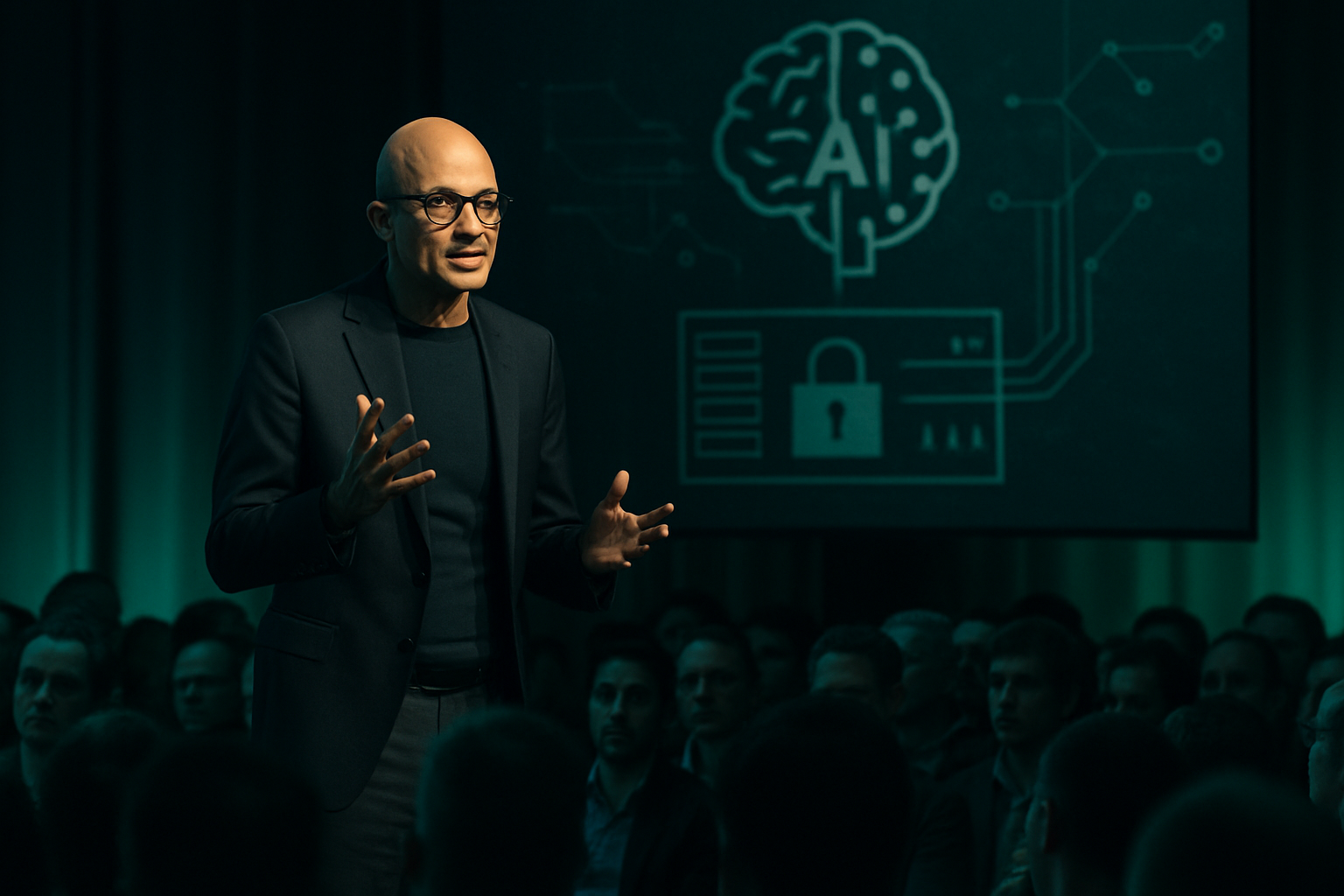
Microsoft CEO Satya Nadella recently reiterated a warning he had previously issued regarding the use of artificial intelligence by companies. During his appearance on CNN's "Fareed Zakaria GPS," he expressed concerns about businesses that rely solely on proprietary AI labs to meet their technological needs. According to him, these companies may not survive in the long term.
Nadella emphasized the importance for companies to control the information they share with AI model providers. He stressed the need to carefully manage the data and queries transmitted to avoid losing control over their own technological development.
The Need to Retain Own Data
Satya Nadella encouraged companies to adopt an approach where they retain all metadata generated from the use of AI models. This would allow businesses to train their own models or adjust open models. In other words, companies should maintain control over the trained parameters of their models, often referred to as "weights," to avoid outsourcing their capacity for critical thinking.
He warned that companies that do not follow this path risk losing their autonomy. "Any company that does not have this control will not remain a company," he asserted, highlighting the importance of not outsourcing one's thinking.
The Importance of AI Gateways
Nadella also highlighted the crucial role of AI gateways. These infrastructures allow for the separation of queries from the AI models themselves, providing an additional layer of protection. He advised companies to avoid relying solely on the built-in coding tools from AI labs, often referred to as "harnesses."
Le brief IA que les pros lisent chaque soir
Les 7 actus IA du jour, décryptées en 5 min. Gratuit.
Inclus dès l'inscription : notre sélection des meilleurs guides & comparatifs IA.
Choisissez votre rythme
Gratuit · Pas de spam · Désabonnement en 1 clic
By keeping these harnesses distinct from the models, companies can utilize different models for their respective strengths. This enables them to remain flexible and not be dependent on a single model that could disappear at any moment.
Microsoft's Interests
It is noteworthy that Microsoft has financial interests in the two largest AI labs, Anthropic and OpenAI. Despite this, Nadella advises companies not to overly rely on the coding agents provided by these labs. Microsoft also offers alternative solutions through its cloud business, which sells the infrastructure recommended by Nadella.
This position may seem self-serving, but it is not without merit. More and more companies are looking to diversify their AI model options, particularly turning to open-weight models that they can customize and run on their own hardware.
Risks of Direct Competition
Nadella also warned about the risk that AI labs could end up directly competing with companies that outsource their thinking. Once a company entrusts its development to an AI model, it becomes easier for the lab to offer a competing service.
This concern is shared by many players in the startup sector. In May, Sam Altman, CEO of OpenAI, proposed investing in every Y Combinator startup, which raised fears that OpenAI might copy and integrate the startups' ideas into its own offerings.
A Warning for Companies, Not Consumers
Finally, Nadella clarified that his warning was directed solely at companies and not individual consumers. When asked how individuals could protect themselves, he responded that data sharing is often the price to pay for using free services, particularly in the advertising business model.
He explained that in the consumer sector, there is a value exchange where users receive free services in exchange for their data, a well-established model in the advertising industry.
Brief IA — L'actualité IA en français
L'essentiel de l'actualité de l'intelligence artificielle, décrypté et expliqué chaque jour.