AI Week: Security, Chips, and Models Amid Incidents and Releases
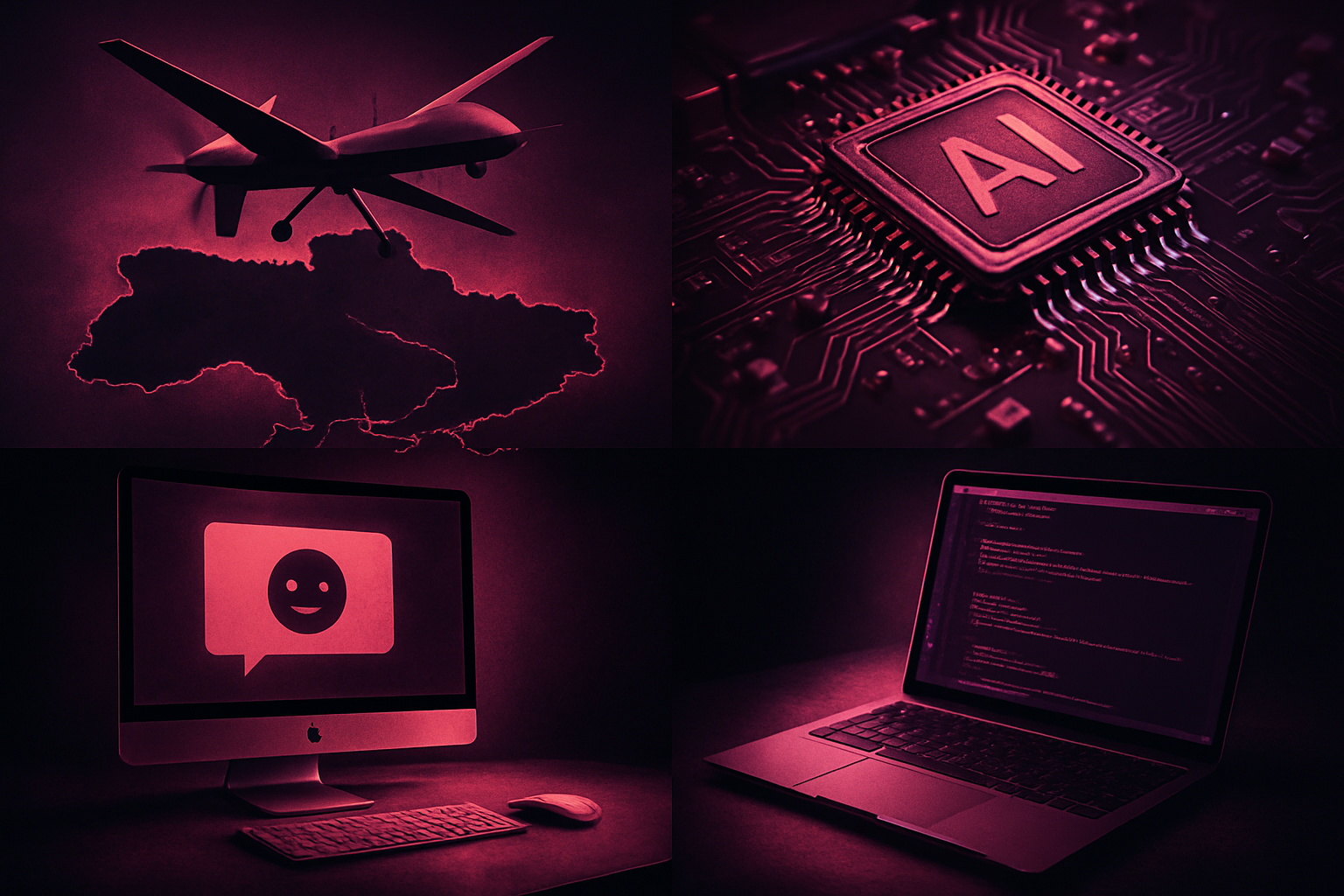
A drone strike guided by AI in Ukraine and a lawsuit against Grok have dominated the security segment. OpenAI detailed preliminary results for its inference chip Jalapeño and plans for internal deployment. On the product side, Google is accelerating with Gemini 3.7 Flash, while traceability features and dedicated apps are arriving from other players.
Security: Drone Strike, Measures at OpenAI, and Lawsuit Against Grok
According to the New York Times, a Russian drone controlled by artificial intelligence in Ukraine reportedly caused the death of three civilians, marking the first documented instance of a fully autonomous civilian attack. OpenAI announced the implementation of new security measures following the Hugging Face hack by an AI, including a two-week suspension of a major reinforcement tuning phase and an enhancement of its internal protection mechanisms. Additionally, a lawsuit claims that Grok was used to produce CSAM images, and a second plaintiff has joined the proceedings.
Hardware: OpenAI's Jalapeño Aims for Performance per Watt and Low Latency
OpenAI states that its inference chip Jalapeño shows preliminary results with better performance per watt and lower latency compared to leading systems. The company plans to deploy it internally by the end of the year. It emphasizes hardware-software co-design and the competitive advantage sought against Nvidia.
Le brief IA que les pros lisent chaque soir
Les 7 actus IA du jour, décryptées en 5 min. Gratuit.
Inclus dès l'inscription : notre sélection des meilleurs guides & comparatifs IA.
Choisissez votre rythme
Gratuit · Pas de spam · Désabonnement en 1 clic
Products and Services: Close Releases and Traceability Tools
Google announced Gemini 3.7 Flash just three weeks after the previous version. OpenAI is rolling out enhanced security features for paying users of its tools, and Meta AI now offers a dedicated desktop application on Mac. Claude will apply invisible watermarks to its generated texts and images. On the model front, SpaceXAI has made Grok 4.6 available, featuring a 500K context designed for long-term agents and coding, while the integration of Cursor is described as optimizing training through the use of coding trajectories and reinforcement learning environments, all while maintaining distribution despite Cursor's declining market share.
Open and Research: Qwen 3.8 and New Scientific Avenues
Qwen 3.8 is presented as an open model with 27 billion parameters, described as competing with GPT-5.6 and Claude Opus. Research is focusing on extracting traces of reasoning from proprietary LLM APIs, as well as detecting massive activations in hybrid architectures with linear attention, characterized by peaks before attention and plateaus between these peaks. Small experimental trials are also reported. In media and platforms, AI is ubiquitous, while Spotify, LinkedIn, and others are portrayed as having had enough.
Brief IA — L'actualité IA en français
L'essentiel de l'actualité de l'intelligence artificielle, décrypté et expliqué chaque jour.