Singapore Becomes an AI Hub Through Its Communities and Hackathons
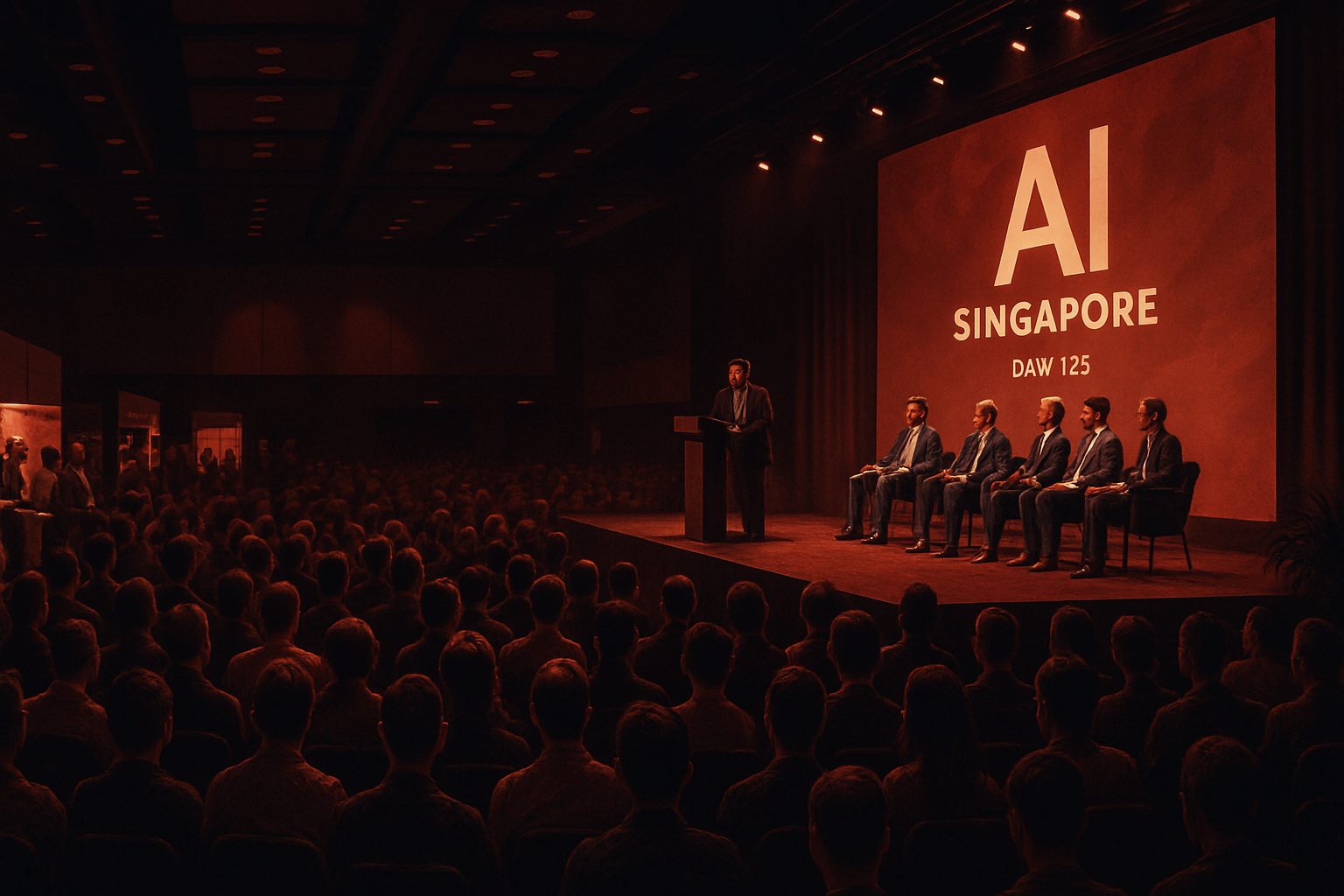
In two years, Singapore has witnessed a resurgence of a builder culture around AI. Massive hackathons, dedicated conferences, local collectives, and "Coding Vibe" have attracted industrial support, international speakers, and new founder profiles.
Conference, sponsors, and regional headquarters attest to a scale-up
In May 2026, 65labs helped bring the first Asian edition of AI Engineer to Singapore, a three-day conference that gathered over 1,000 participants. The event received support from companies like OpenAI, Google DeepMind, Cursor, Vercel, Cloudflare, and Stripe. The program featured 92 speakers, including founders and experts from major AI companies, some having traveled 16 hours from San Francisco to present their work. Foreign Minister Vivian Balakrishnan spoke about using NanoClaw agents and described himself as a "geek" and "maker." In the lead-up, ten sponsors had committed over $400,000 in resources and support during a hackathon organized by 65labs. Meanwhile, OpenAI, Anthropic, and scale-ups like Cursor and Cognition have established their Asia-Pacific headquarters in Singapore, generating hundreds of technical and non-technical jobs. Feedback published after the conference stated that Singapore's role in AI should not be underestimated, indicating that the movement was just beginning.
Collectives gather and produce: from demo formats to 150 deliverables
Event formats prioritize concrete demonstrations, even if imperfect, over formal presentations, and Natives hosts evenings, workshops, and hackathons dedicated to voice agents or agentic workflows. According to its organizers, these gatherings regularly exceed 100 attendees, a threshold dictated by venue capacity rather than interest. Two participants met there before co-founding an agentic AI startup. Entering in 2025 with the ambition to inspire building, the 65labs collective organized a Cursor hackathon in October that received over 1,000 applications and gathered hundreds of participants for 24 hours. Teams delivered nearly 150 functional products, including an AI "aunt" humorously reminding users to take their medication, and a dating app leveraging LinkedIn. Before the pandemic, the city already had a vibrant scene—centered around BLOCK71, supported by universities, public agencies, Grab, and Amazon—and hackathons attracting hundreds of builders, before a sharp decline during and after COVID. Current initiatives and events like AI Engineer are part of this rebound.
Le brief IA que les pros lisent chaque soir
Les 7 actus IA du jour, décryptées en 5 min. Gratuit.
Inclus dès l'inscription : notre sélection des meilleurs guides & comparatifs IA.
Choisissez votre rythme
Gratuit · Pas de spam · Désabonnement en 1 clic
Organizer's journey: from GPT-4 shock to taking the reins
Graduating in 2023, Yong Quan Tan presented himself as a "traditional" developer. The release of GPT-4 in March and his initial trials made him fear he no longer had the skills required to secure or retain a job, prompting him to actively seek out AI-focused events, which were rare in Singapore at that time. The turning point came at the end of 2024 with the discovery of the local chapter of AI Tinkerers, a group that originated in San Francisco and organizes dedicated meetups. Its founder in Singapore, Henry Mao, wished to step back to focus full-time on his startup, and Yong Quan Tan insisted on taking over the group's leadership, claiming he took the helm last year.
The "Coding Vibe" opens doors for non-technical founders
Described as the use of natural language to have AI write code, the Coding Vibe reduces mental and financial costs and broadens access to software creation. For Nehal Agrawal, who worked on the communication for AI Engineer, the issue is not just the proliferation of events but the sense of belonging they foster. Graduating in 2024 with a degree in business, she associated AI with ChatGPT and viewed the field as reserved for technical profiles; the Coding Vibe broke down that barrier. She recounts that on a Monday evening in early 2026, around 1,000 people, from teenagers to those in their sixties, attended a builders' event. At AI Engineer Singapore, many non-technical founders had self-trained on Claude Code, Codex, or Cursor to create and develop their businesses, discussing evaluations, harnesses, loops, and context. In her view, being "AI-native" means directing models, testing their outputs, and assembling tools, rather than writing thousands of lines of Python. She even publishes her own workflows and automations, explaining that this practice has lifted psychological barriers. More broadly, in two years, the aggregation of grassroots organizers, hackathons, and communities has transformed an ecosystem rich in startups but considered less culturally developer-oriented than other hubs, an evolution that builders attribute to AI.
Brief IA — L'actualité IA en français
L'essentiel de l'actualité de l'intelligence artificielle, décrypté et expliqué chaque jour.