Snapchat Bans AI Videos to Promote Authenticity
Le brief IA que les pros lisent chaque soir
Les 7 actus IA du jour, décryptées en 5 min. Gratuit.
Inclus dès l'inscription : notre sélection des meilleurs guides & comparatifs IA.
Choisis ton rythme
Gratuit · Pas de spam · Désabonnement en 1 clic
Snapchat bans AI-generated videos from Spotlight
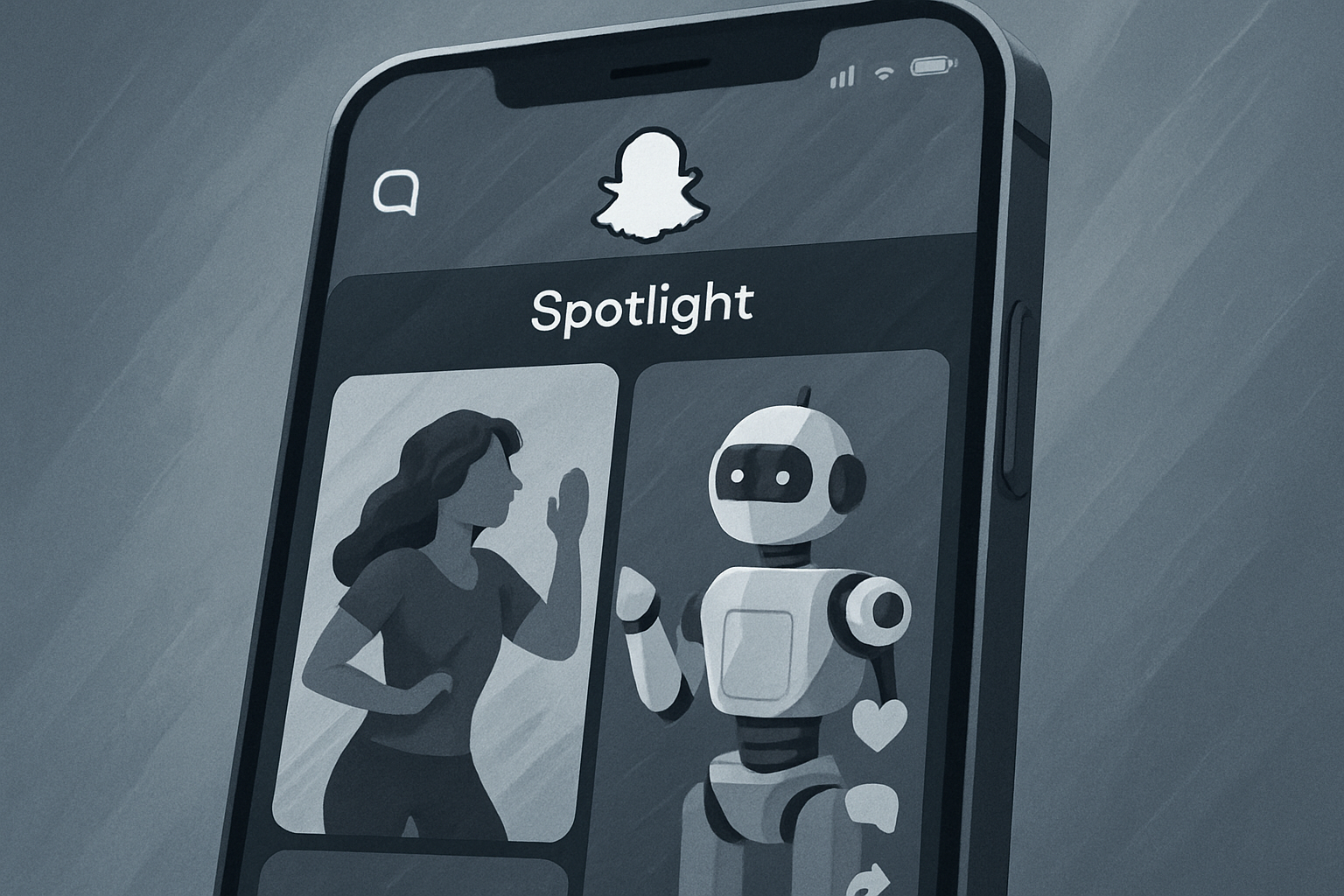
Snapchat has recently taken a firm stance against content generated exclusively by artificial intelligence (AI) on its Spotlight platform. From now on, videos created solely by algorithms will no longer be eligible for rewards, as the company aims to highlight human creativity.
Last Friday, Snapchat announced that its recommendation systems would be modified to ensure that only videos produced by real people would be featured in Spotlight. This decision marks a turning point in the platform's strategy, which seeks to prioritize authentic content.
In a statement published on its blog, Snapchat emphasized its desire to make Spotlight a space where authentic creativity can thrive. The company firmly believes in the lasting value of original perspectives and personal narratives, and wants to reward the moments that users choose to create and share themselves.
However, Snapchat has not completely shut the door on AI. Creators still have the option to use AI-based tools to enhance or edit their content, as long as it is not entirely generated by machines.
This update is part of a series of initiatives aimed at improving Spotlight by emphasizing human contributions. Back in April, Snapchat had already announced that AI-generated content would be less visible to users.
A global movement against low-quality AI content
Snapchat's decision comes as many companies are reevaluating their policies in response to growing criticism of low-quality AI-generated content, often referred to as "AI slop." These companies are looking to reduce the visibility of such content in their algorithms, introduce reporting features, or eliminate certain AI-related functionalities.
For example, LinkedIn recently introduced an option allowing users to report posts that appear to be AI-generated. Meanwhile, Substack has implemented a tool to help users identify newsletters written by machines.
Earlier this month, Meta faced a strong backlash after introducing a feature on Instagram that allowed users to edit public photos with AI. In light of the controversy, the company decided to completely remove this feature.
YouTube and the monetization of AI content
YouTube has also stepped up its fight against low-quality AI-generated content. The platform has clarified its monetization policies to ensure that inauthentic content cannot generate revenue. This includes generic, repetitive, or template-based content, as well as any content featuring AI characters discussing sensitive topics like health and finance.
Measures to protect young users
In another vein, Snapchat has recently introduced new measures to protect its underage users. Now, teenagers aged 13 to 15 can only share Spotlight posts with people they follow back, a measure aimed at preventing doxxing and enhancing the safety of young users on the platform.
Brief IA — L'actualité IA en français
L'essentiel de l'actualité de l'intelligence artificielle, décrypté et expliqué chaque jour.