SpaceX: AI Surpasses Space with $2.6 Billion in Revenue
Le brief IA que les pros lisent chaque soir
Les 7 actus IA du jour, décryptées en 5 min. Gratuit.
Inclus dès l'inscription : notre sélection des meilleurs guides & comparatifs IA.
Choisis ton rythme
Gratuit · Pas de spam · Désabonnement en 1 clic
SpaceX: AI Surpasses Space with $2.6 Billion in Revenue
SpaceX's revenue from AI has more than tripled to $2.6 billion compared to the previous year, primarily due to contracts the company has secured to provide computing capabilities to other AI companies, according to SpaceX's quarterly results. The AI division, which the company described in its IPO documents as the main source of its value, lost $1.5 billion this quarter, slightly less than during the same quarter last year.
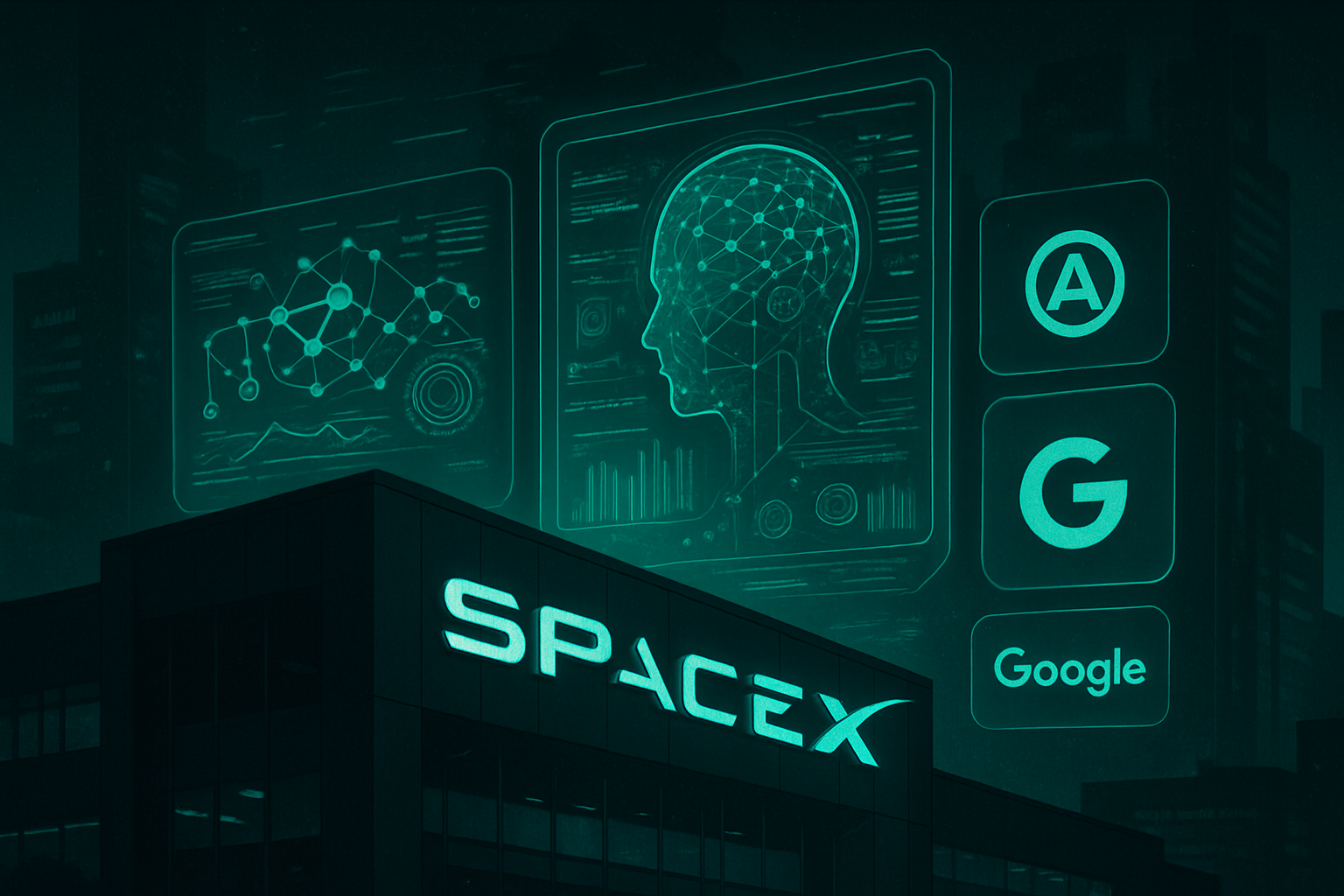
SpaceX entered agreements with Anthropic in May and Google in June to provide computing capabilities to both AI companies, placing it in competition with other cloud providers such as CoreWeave. This increased presence in the AI field is also prompting the company to spend more: capital expenditures reached $18.37 billion.
"We are building large-scale AI computing capabilities faster than anyone else, and we are significantly improving our AI models," said Elon Musk during a call with investors.
Despite its name, SpaceX indicated in its IPO documents that it expects the majority of its value to come from AI. SpaceX conducted the largest IPO in history in June. One of the things the company claimed it could do better than anyone else was to build data centers in space. The company is divided into three segments: space, AI, and "connectivity," which includes the Starlink internet service. The space segment generated $962 million in revenue this quarter, and SpaceX remained the largest user of its own rockets. The Starlink service reported $4.2 billion.
Grok, SpaceX's AI model, has been criticized for exposing women and children without their consent and has fallen behind other companies in the AI race. Before the IPO, SpaceX touted the capacity of its data center that it had initially built for itself. The company also agreed to acquire Cursor, providing it with an AI product for businesses. The acquisition is not yet finalized, although Musk stated during the call that they were "close to that," but did not want to "rush the steps" regarding regulatory approval.
SpaceX continues to lose money, but this quarter's loss has narrowed to $143 million. Musk's ambitious projects — data centers in space, an addressable user market larger than the GDP of the United States — come with a high cost in AI. Development costs for technology in its space division have also increased by $389 million compared to the previous year, with Starship as the main driver of expenses. Starship is crucial to Musk's plan to expand its connectivity business, the only profitable part of the company.
Starship must be capable of launching heavier versions of the satellites that make its Starlink internet service profitable. Some of these satellites have already been manufactured, and in today's documents, SpaceX stated it has launched 20 of them. It is unclear how far off the full deployment — of 60 satellites at a time — is.
Although SpaceX exceeded analysts' estimates, according to Bloomberg, its shares fell after market hours following initial enthusiasm.
Brief IA — L'actualité IA en français
L'essentiel de l'actualité de l'intelligence artificielle, décrypté et expliqué chaque jour.