SpaceX: Starlink and AI at the Heart of Its Uncertain Future
Le brief IA que les pros lisent chaque soir
Les 7 actus IA du jour, décryptées en 5 min. Gratuit.
Inclus dès l'inscription : notre sélection des meilleurs guides & comparatifs IA.
Choisis ton rythme
Gratuit · Pas de spam · Désabonnement en 1 clic
SpaceX: A Growing Dependence on Starlink and AI
SpaceX, the aerospace company founded by Elon Musk, recently held its first public conference call since its record IPO. This meeting highlighted the financial challenges the company is facing, particularly due to its massive investments in artificial intelligence (AI). The stock price of SpaceX may continue to be unstable, as AI spending has become a central point of discussion.
During this event, Elon Musk shared ambitious visions for the future of SpaceX, including bold projects such as building a lunar catapult and developing a space economy. However, it appears that the company now needs to focus on more pragmatic activities to satisfy its shareholders, especially since it has obligations to them.
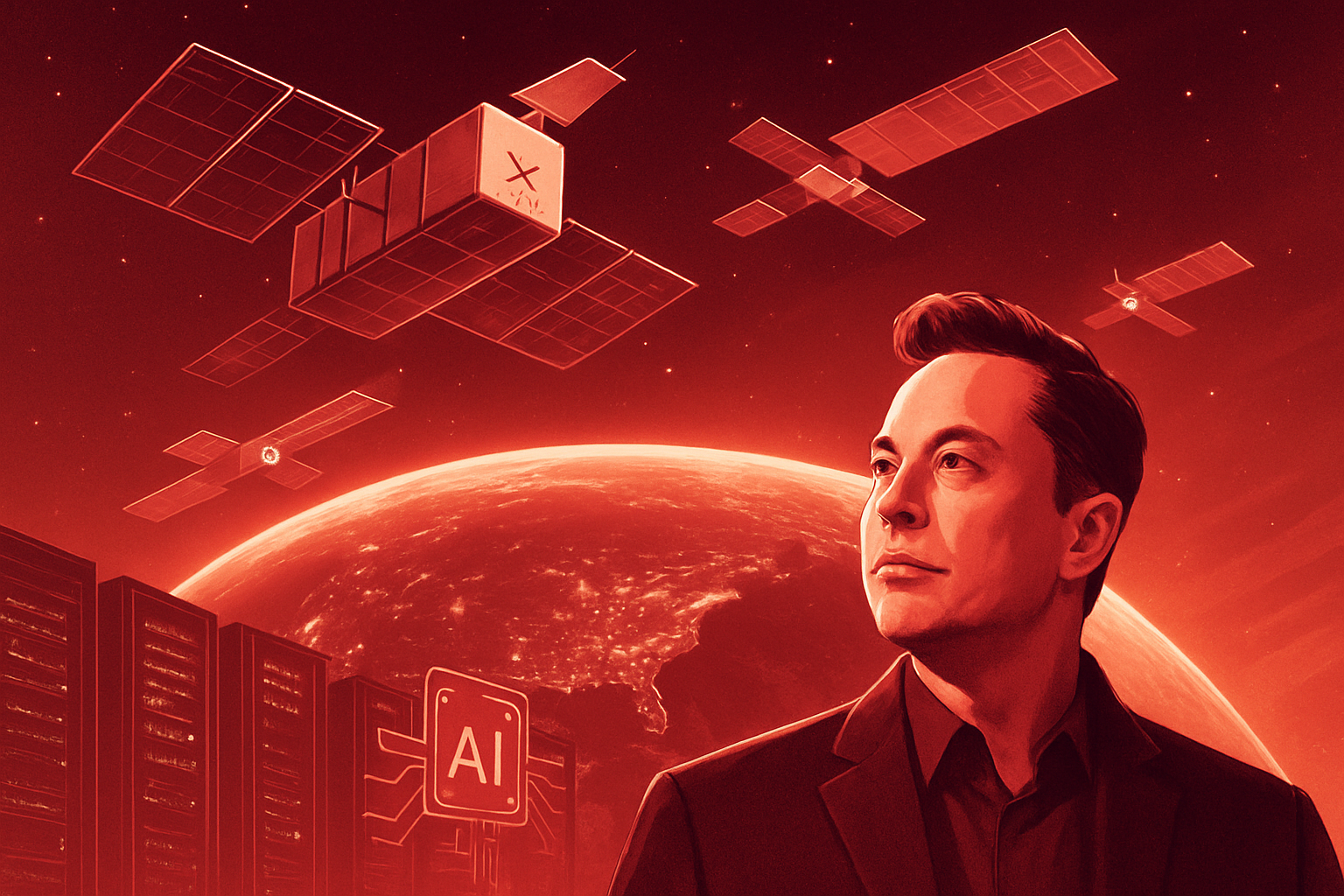
The future of SpaceX is closely tied to its initiatives in the satellite and language model sectors. Starlink's connectivity activities, the company's AI data centers, and the upcoming Grok models are identified as the main growth drivers for the coming year. These sectors currently generate the most revenue for SpaceX, while the Starship and Falcon rocket projects have received less attention.
Since its inception, SpaceX has never recorded a profit. Its high valuation relies on forecasts of strong revenue growth over the next five years. With the involvement of public investors, it becomes crucial to deliver on some of these promises sooner than expected.
The Falcon 9 rockets, while among SpaceX's most impressive assets, are not yet profitable. This underscores the need for the company to diversify its revenue sources.
Musk's Bold Promises
During the conference call, Elon Musk presented impressive figures and ambitious promises regarding the expansion of SpaceX's activities, including Starship, Starlink, and AI, over the next ten years. While some of his statements may seem "super sci-fi" and "totally crazy," they often reveal an underlying strategic direction.
Musk reiterated the importance of the Starship and Falcon projects for SpaceX. He expressed his desire for the company's rockets to deliver 10 million tons of material into orbit each year, although he did not specify a timeline. Currently, SpaceX rockets deliver about 2,500 tons per year.
Most of his speech focused on the technology of Starlink V3 satellites and the future AI capabilities of Grok. Musk claimed that the latest generation of Starlink satellites is ten times more efficient than previous ones, although he did not provide specific metrics. He plans to launch ten times more V3 satellites, which could significantly increase the delivered bandwidth.
Musk predicted that Starlink could provide the majority of global internet access in countries where SpaceX is allowed to operate. This bold prediction is based on the fact that the service reached 12 million subscribers this quarter.
SpaceX is also developing its physical computing power, with AI data centers and supercomputers. The company aims to achieve over two gigawatts of computing capacity by the end of the year, with a goal of 15 gigawatts by next year.
Grok AI is also a major focus for SpaceX, despite controversies surrounding the creation of non-consensual images. Musk announced the launch of two new Grok models in the coming months, with a significant improvement in the pace of AI development.
Musk informed investors that SpaceX could achieve an annual revenue of $1 trillion as early as 2029, moving up the timeline originally set for 2031. This claim is based on projections of exponential growth.
While some of Musk's assertions may be debatable, SpaceX continues to add tangible assets to its balance sheet and create pathways for generating additional revenue. Currently, Starlink is the only true revenue generator for the company.
The Current Financial Situation of SpaceX
Gwynne Shotwell, president of SpaceX, and Bret Johnsen, CFO, shared details about the company's financial performance. SpaceX's combined annual revenue stands at approximately $7.8 billion, but the aerospace and AI units are operating at a loss. Only Starlink's connectivity business is profitable, generating $1.66 billion in profit this year.
The growth of Starlink is attributed to a record number of subscribers and an increase in revenue from businesses and governments. SpaceX plans to secure more contracts with these sectors to bolster its profitability.
Shotwell mentioned that the rollout of Starlink Mobile next year could make the connectivity segment even more financially viable. She expressed confidence in SpaceX's ability to attract customers from major U.S. mobile operators.
Despite the controversies surrounding xAI and the losses from SpaceX's AI unit, Grok remains a potential growth driver. Johnsen noted an increase in X subscriptions, reflecting the growing integration of Grok into daily operations.
It remains to be seen how SpaceX will make its AI unit profitable. Musk has expressed confidence in the ability of its models to handle various digital tasks by the end of next year. If the company decides to pivot, its computing power could be leveraged to create a new revenue stream.
SpaceX's first earnings conference call provided a much clearer path for the company. While its valuation at the IPO largely relied on Musk's cult of personality and his ambitious plans for a mission to Mars, the immediate investment in satellites and AI hardware has placed tangible physical assets on the balance sheet.
Although it generated $2.56 billion in revenue, SpaceX's AI unit has recorded a loss of $1.26 billion so far this year. This loss alone accounts for over 75% of Starlink's annual profits.
Now, SpaceX is increasingly integrating into the circular economy of AI. During the call, Musk announced that all future AI computing power for his company will be derived from Nvidia hardware. A partnership with what could be a key player in the AI industry indicates that SpaceX's spending on AI will only increase in the coming years.
SpaceX has also entered into a data center agreement with Anthropic, which could open new revenue opportunities and strengthen its position in the AI sector.
Brief IA — L'actualité IA en français
L'essentiel de l'actualité de l'intelligence artificielle, décrypté et expliqué chaque jour.