Stargate: The $7 Billion Data Center Dividing Michigan
A Controversial Project in the Heart of Michigan
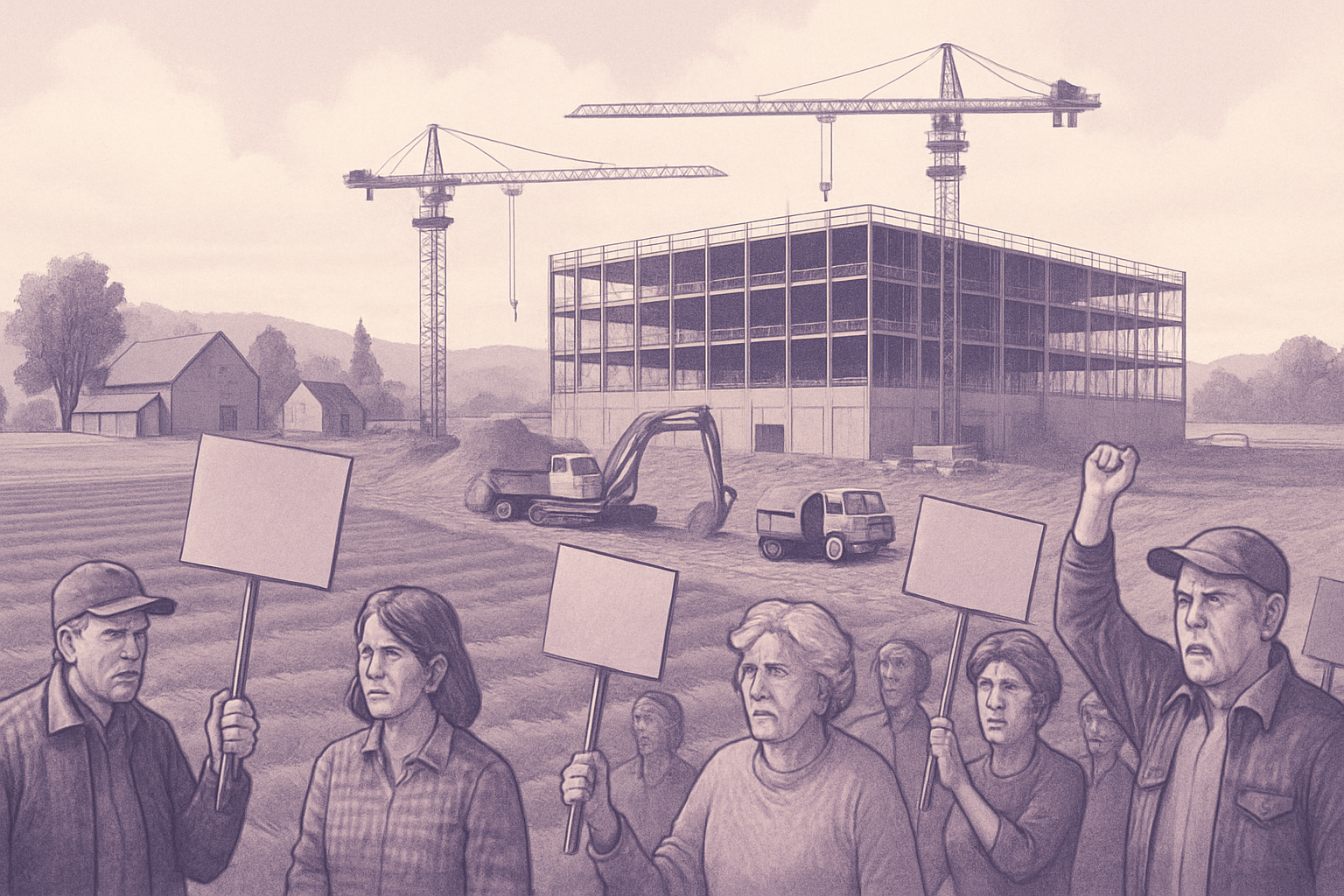
In southeastern Michigan, a rural area is in turmoil over a colossal data center construction project named Stargate. Set to rise on agricultural land, this $7 billion project has sparked fierce opposition among local residents. The deadline for the start of this construction is set for December 1, 2025, but tensions are already rising. Residents are gathering to express their dissatisfaction with this transformation of their environment.
A Digital Paradigm Shift
The evolution of artificial intelligence, particularly in its generative form, is a cause for concern. This technology, which has taken a prominent place in the digital landscape, seems to stray from the initial promises of a human-driven internet. The silent consensus among astute observers is that generative AI, despite all the hype, has yet to prove its worth.
The Hidden Costs of AI
Overinvestment in AI is beginning to weigh heavily on the social fabric and the established order. The internet, once a space for discovery and connection, is now perceived as demoralized by the proliferation of content generated by questionable-quality AIs. In a ruthless job market, this situation raises questions about the intentions behind these technological developments. The resulting financial fragility directly affects individuals, making the situation even more concerning.
Greed at the Expense of Well-Being
AI is increasingly associated with a form of greed that erodes the social contract. Four years after the launch of ChatGPT, the impact of AI on the internet and human culture is deemed disappointing. Far from enriching the digital experience, it contributes to a fracture of the internet and a devaluation of workers, while offering uncertain economic benefits.
Le brief IA que les pros lisent chaque soir
Les 7 actus IA du jour, décryptées en 5 min. Gratuit.
Inclus dès l'inscription : notre sélection des meilleurs guides & comparatifs IA.
Choisissez votre rythme
Gratuit · Pas de spam · Désabonnement en 1 clic
Growing Anger
The unfulfilled promise of AI generates palpable anger. Not only has it failed to meet expected goals, but it also contributes to inflation and economic and psychological costs that are difficult to quantify. Despite the billions invested by OpenAI and other venture capital players, generative AI is perceived as a large-scale fraud, threatening the collective future.
A Divisive Movement
Generative AI, far from uniting or emancipating, divides. The quality of generated content is often poor, and the technology seems to favor corruption rather than align with principles of fairness or real growth. The impact of this technology, far from being positive, is considered concerning.
A Failed Promise
The massive funding of AI, based on unfulfilled promises, could have devastating consequences. Unlike other general-purpose technologies, generative AI does not seem to provide significant added value to society. It is crucial to recognize this reality and articulate it clearly.
An Uncertain Future
Generative AI has not lived up to the expectations raised by the sudden emergence of ChatGPT. As models become more complex and spending increases, tangible benefits are still awaited. The dangers to society are not sufficiently mitigated, and technological monopolies continue to grow without adequate regulation. If nothing changes, the situation could become uncontrollable by the end of the decade.
A Technological Ponzi Scheme
The United States, while innovative, are not always the best stewards of such powerful technologies. The development of generative AI resembles a Ponzi scheme, inflating monopolies and making the internet increasingly dystopian. Users are left wondering where the button is to disengage from this technological spiral.
Cultural Degradation and Reinvented Economic Opportunities
The rise of generative AI is accompanied by a degradation of culture and a reinvention of economic opportunities. The initial promises of this technology have not materialized, giving way to a darker and more divided reality.
Brief IA — L'actualité IA en français
L'essentiel de l'actualité de l'intelligence artificielle, décrypté et expliqué chaque jour.