Substack Unveils Tool to Track AI in Newsletters
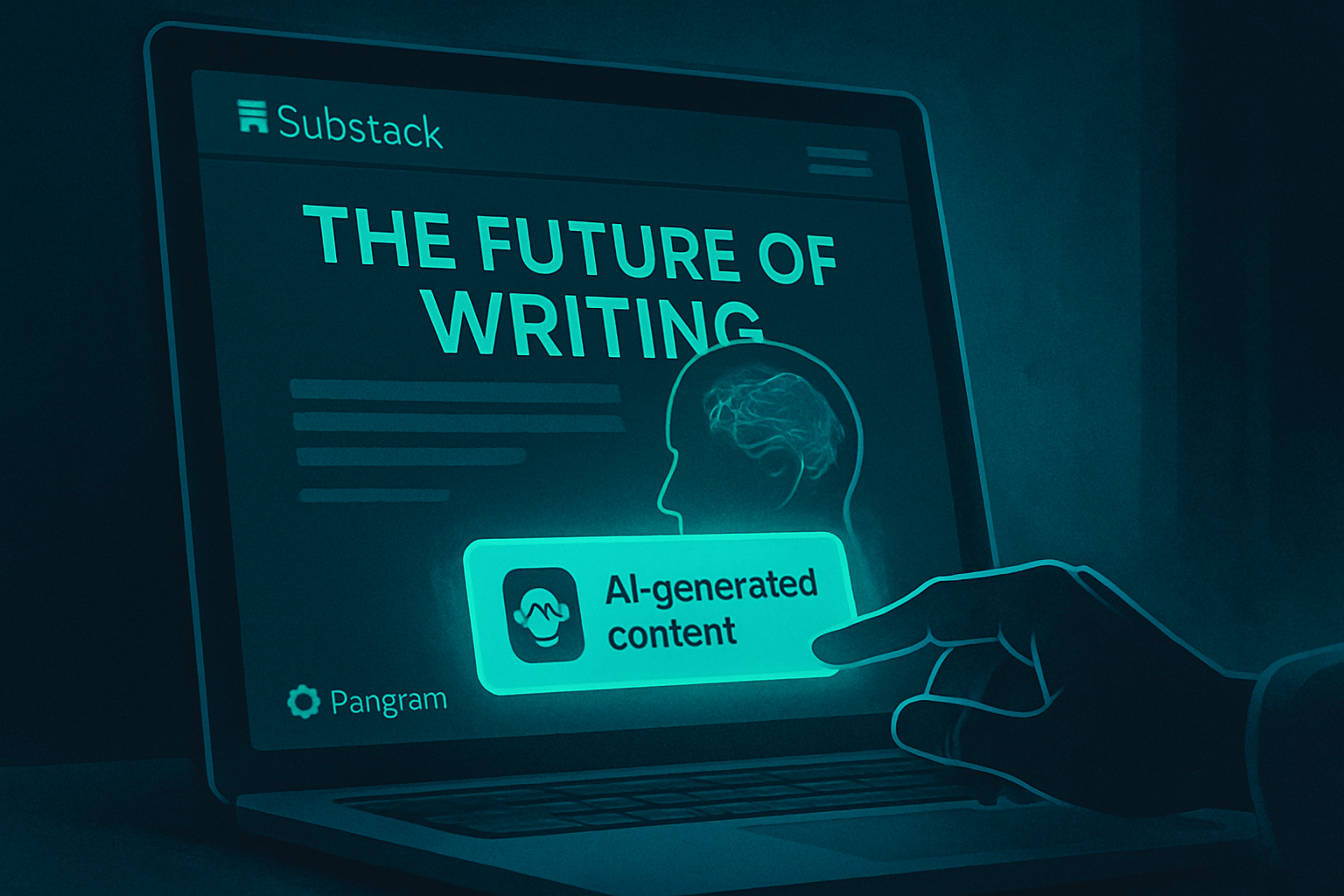
Substack Introduces AI Detector in Newsletters
Substack, the well-known platform for newsletters and writing tools, has recently introduced a new feature that allows users to determine whether the newsletters from their favorite authors are written with the help of artificial intelligence. This initiative marks a turning point in how content is perceived on the platform.
This week, Substack announced a collaboration with Pangram, software specialized in detecting AI-generated content. Thanks to this integration, Substack users will now be able to analyze posts, comments, and replies to assess the proportion of text written by humans compared to that generated by machines. This feature offers increased transparency regarding the origin of the content.
Potential Impact on Substack's Reputation
In the short term, this new feature could pose a challenge for Substack. By revealing the share of AI-generated content, the platform risks highlighting newsletters that are not entirely the product of human effort. This could potentially erode trust in the independent information and blogging ecosystem of the platform, and even harm its reputation as a host of high-quality content.
However, in the long term, this approach could prove beneficial. By clearly distinguishing human content from AI-generated content, Substack could strengthen user trust in the platform. The AI detection features could help keep Substack free from "low-quality AI-generated content." Readers would thus be assured of the quality of the texts they engage with, knowing they were written by people, or at least being aware of the AI's involvement in the creation process.
Le brief IA que les pros lisent chaque soir
Les 7 actus IA du jour, décryptées en 5 min. Gratuit.
Inclus dès l'inscription : notre sélection des meilleurs guides & comparatifs IA.
Choisissez votre rythme
Gratuit · Pas de spam · Désabonnement en 1 clic
Towards a Standard for AI Content Labeling
Substack is not the only platform moving towards labeling AI-generated content. With the growing importance of AI in content creation, other sectors are also adopting similar measures. For example, social media platforms have begun labeling photos and videos generated by AI, while music streaming services are taking steps to identify and sometimes penalize music created by algorithms.
Chris Best's Vision, CEO of Substack
Chris Best, the CEO of Substack, has shared his perspective on this new feature. He believes that AI can be used wisely to lighten the load for writers but emphasizes the importance of maintaining a human element in creation. According to him, the central idea of a newsletter should remain the work of a person, as it is this idea that deserves to be read and shared. The software, on the other hand, should handle more secondary tasks.
Features and Options for Authors
The new feature will be accessible via the Substack app for any post, note, reply, or comment exceeding 100 characters. Additionally, Substack offers authors the option to include an optional author note regarding the use of AI. This option allows creators to transparently disclose their use of AI in the writing process.
Substack clarified that this tool is not intended to prohibit or penalize AI-assisted writing. On the contrary, it aims to encourage authors to explain their working methods by adding a statement "how I do this." Publishers also have the option to use Pangram to check their drafts before publication and to report or correct any potential detection errors.
Brief IA — L'actualité IA en français
L'essentiel de l'actualité de l'intelligence artificielle, décrypté et expliqué chaque jour.