Substack Introduces Tool to Unmask AI-Generated Texts
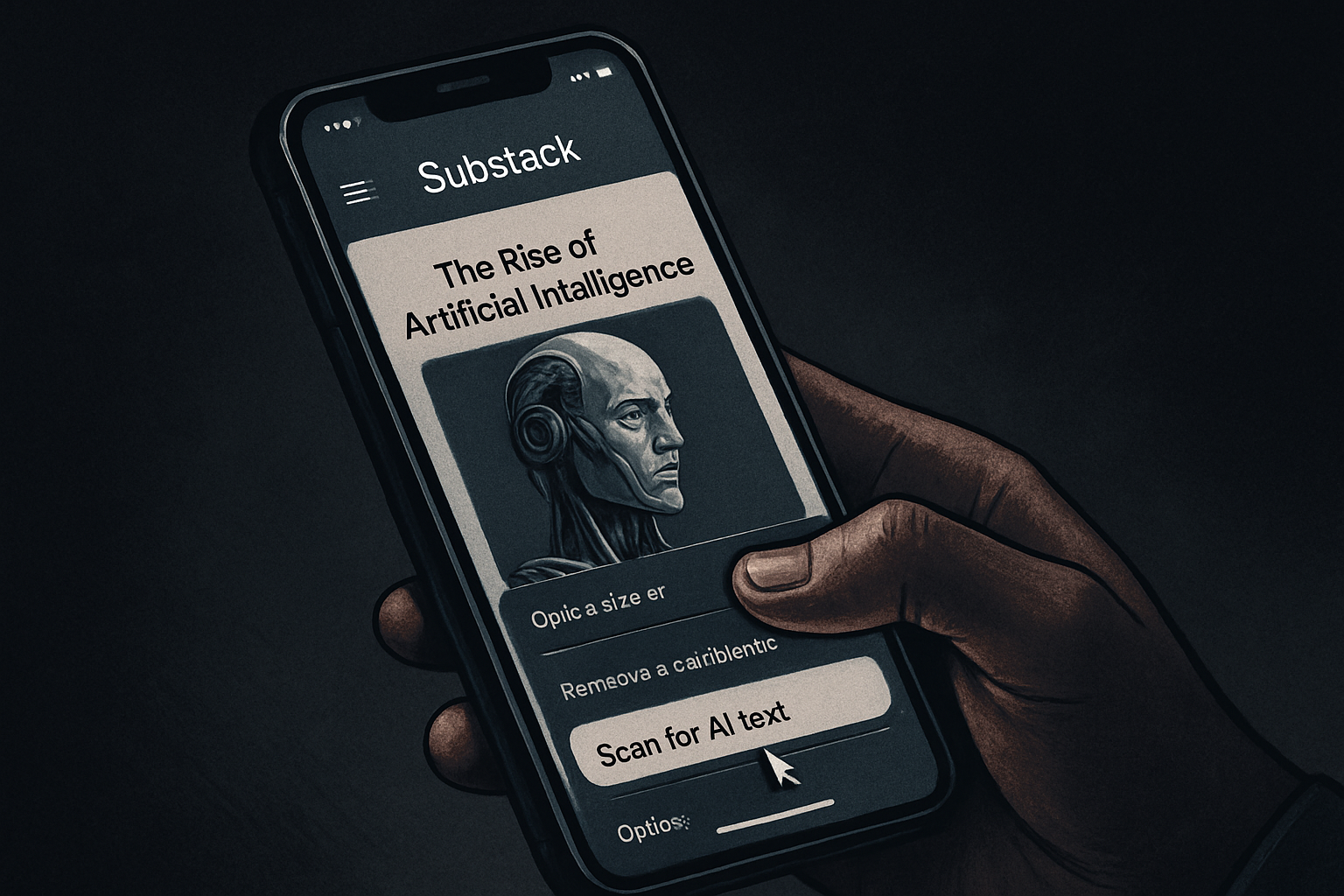
Substack Integrates Tool to Unmask AI-Generated Texts
Substack will now help users determine if what they are reading may have been written by an AI. A new tool, set to be deployed on the platform, can analyze posts, notes, replies, and comments to provide an estimate of the amount of text that could be generated by an AI or written with its assistance, according to a blog post published on Tuesday.
The tool is powered by an AI detection company called Pangram and will be available on the web as well as on the iOS app, with a launch on Android planned "soon." Readers can analyze content of more than 100 words by selecting the "Scan for AI text" option in the three-dot menu at the top right of a post.
Substack co-founder and CEO Chris Best explains that the integration of Pangram aims to increase transparency on the platform as AI becomes more prevalent on social media. "The central issue is not the use of AI, nor the quality of its output," writes Best. "The problem arises when there is a disconnect between a reader's expectations and reality, especially when they unknowingly invest their attention in something that was not conceived by a human. This is what is called Claudefishing."
Le brief IA que les pros lisent chaque soir
Les 7 actus IA du jour, décryptées en 5 min. Gratuit.
Inclus dès l'inscription : notre sélection des meilleurs guides & comparatifs IA.
Choisissez votre rythme
Gratuit · Pas de spam · Désabonnement en 1 clic
In connection with this change, Substack will also allow creators to explain their writing process to readers through a new statement titled "How I Do This." Writers will also be able to scan their drafts with Pangram and will have the option to report inaccurate results.
Best emphasizes that "Pangram can only detect whether AI was used to create the text, not whether significant human care was taken in its creation, nor whether AI tools were used as a source." But the goal, according to Best, is to make it easier for someone to choose to invest their time in reading a blog post. "When readers have to wonder if what they are reading is real, it undermines trust in the author and threatens the livelihoods of writers — including those who use AI tools thoughtfully to produce work they believe in," writes Best. "Platforms that reward misinformation will create a race to the bottom."
Brief IA — L'actualité IA en français
L'essentiel de l'actualité de l'intelligence artificielle, décrypté et expliqué chaque jour.