Syensqo Leverages AI to Design Materials for AI
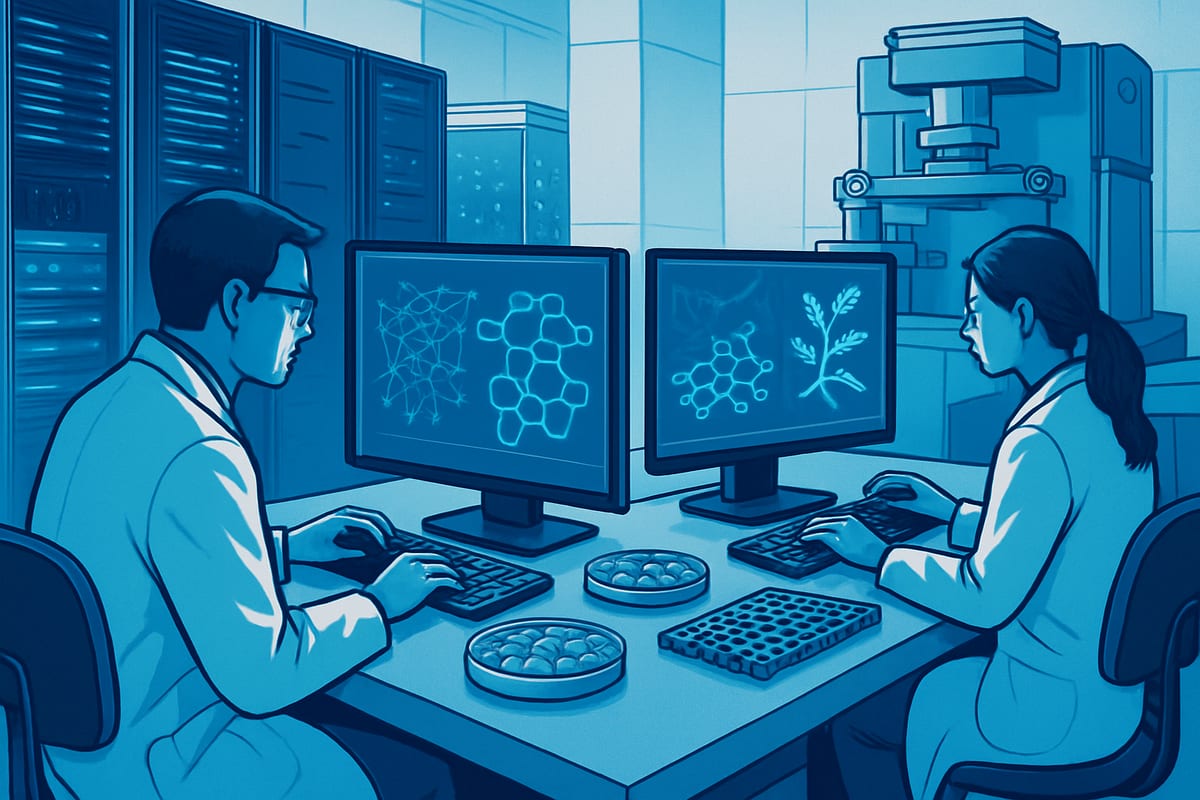
The chemist Syensqo applies AI agents to explore millions of molecular combinations and accelerate the selection of lab-tested candidates. The company targets the needs of data centers and semiconductor manufacturing, with solutions for high voltage, sealing, and immersion cooling. Mike Finelli advocates for an approach where technical performance and sustainability are considered together and discusses an innovation loop between AI and materials.
Generative AI in the Lab: Molecular Selection and Innovation Loop
Syensqo uses artificial intelligence agents to digitally generate millions of potential molecular combinations. These agents predict the performance and durability characteristics of these molecules, then narrow this vast set down to a much smaller group for lab testing. Mike Finelli notes that this method allows for a broader and deeper exploration, more quickly, while giving scientists more time to tackle complex engineering problems. He envisions a cycle where AI contributes to the development of materials that enhance AI infrastructure, which in turn allows AI to accelerate the discovery of new materials. According to him, this feedback loop could establish a cycle of innovation and expand the possibilities of future technologies.
Le brief IA que les pros lisent chaque soir
Les 7 actus IA du jour, décryptées en 5 min. Gratuit.
Inclus dès l'inscription : notre sélection des meilleurs guides & comparatifs IA.
Choisissez votre rythme
Gratuit · Pas de spam · Désabonnement en 1 clic
Industrial Targets: High Voltage, Sealing, and Immersion Cooling
Syensqo is developing materials intended for data center infrastructures operating under high voltage. The company is also creating advanced sealing solutions for semiconductor production as well as products for thermal management, such as fluids designed for direct immersion cooling. Some materials originally designed for the electric vehicle industry can also meet the growing demands for high voltage and energy density in data centers.
Increased Constraints and Environmental Considerations Integrated from Design
The development of artificial intelligence brings new hardware requirements for semiconductors and data centers regarding performance, heat management, energy efficiency, and reliability. Mike Finelli highlights the accumulation of criteria to be met: resistance to high temperatures, purity, electrical efficiency, chemical resistance, plasma durability, and long-term stability, a sophistication he refers to as the "top of the pyramid." He believes that advanced materials are increasingly setting the limits of what is possible. Furthermore, the definition of performance is evolving: customers now expect materials to combine technical requirements with reduced environmental impact. Mike Finelli asserts that the goal is to eliminate the trade-off between performance and sustainability by integrating sustainability from the outset of the research process, rather than as an added requirement afterward.
Brief IA — L'actualité IA en français
L'essentiel de l'actualité de l'intelligence artificielle, décrypté et expliqué chaque jour.