TechBBQ: Sovereignty and Privacy Dominate AI Debates
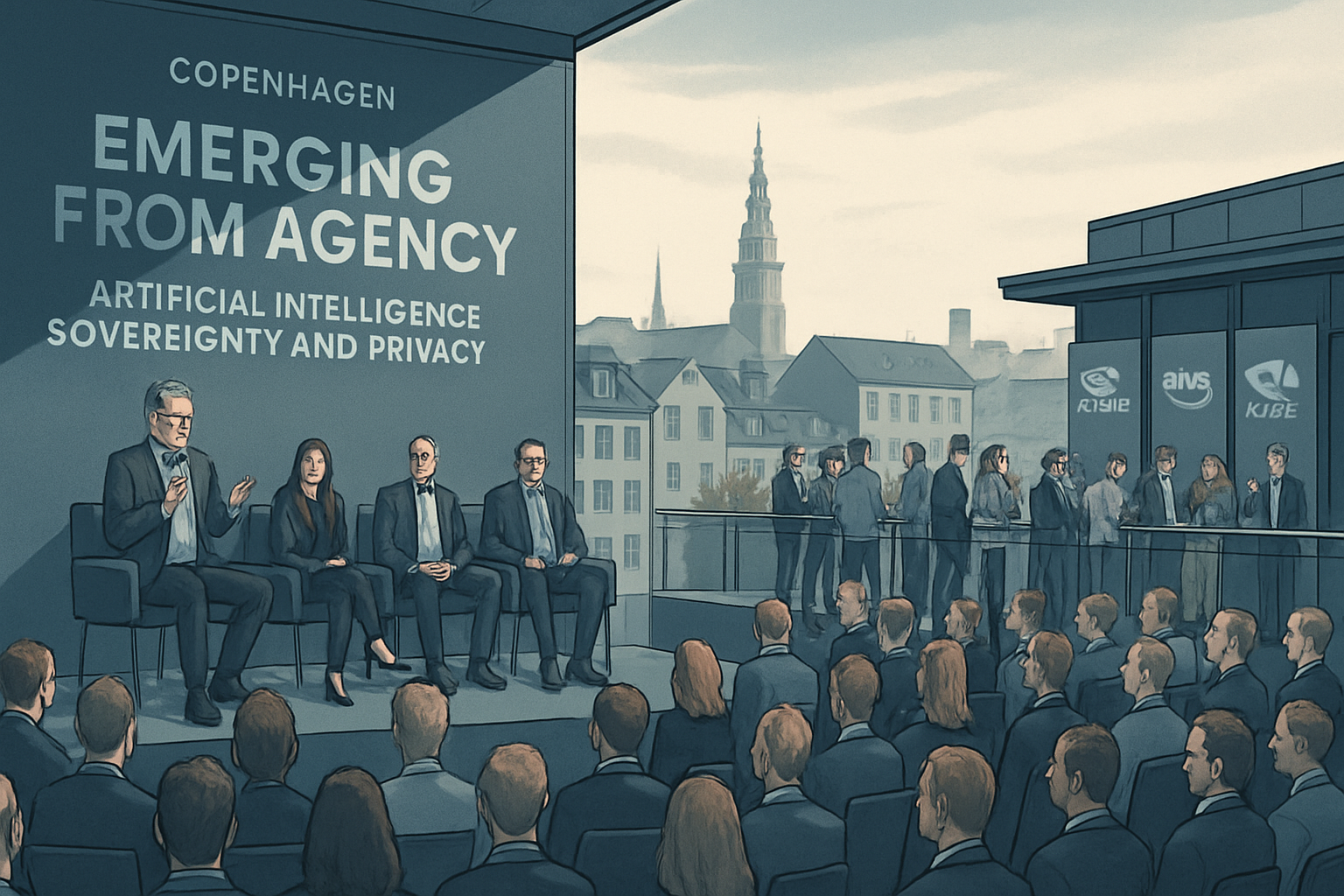
In Copenhagen, the question of who truly holds the reins of AI attracted panels and corridors alike. From the concentration of power in a few laboratories to the criticism of integrating assistants into operating systems, the debates intertwined issues of sovereignty and privacy. In the background, an episode of unavailability of Anthropic models reignited concerns about European dependency.
Power, Agents, and Control: Sovereignty Redefined by Opposing Voices
Emad Mostaque defined sovereignty as the ability to resist power exerted over oneself and spoke about the concentration of power among a few AI laboratories. He asserted that inevitably every country will be governed by AI and that the person who controls AI controls the country. In contrast to a narrative of machines gaining autonomy, Ellen de Brever argued that the era of AI agents mainly corresponds to humans deciding what they are willing to relinquish, and that the debates revolve around human judgment and who remains in control. In a message after a panel, Mia Negru suggested that if agents perform cognitive work and robots take on more physical tasks, it may be necessary to rethink ownership, work, democracy, economic participation, and who has the right to participate in society.
Privacy vs. Integrating Assistants into Operating Systems
During a panel dedicated to the coexistence of privacy and AI, Signal President Meredith Whittaker criticized the integration of AI assistants and agents into operating systems, citing the example of ChatGPT's integration with iMessage. She described the current era as a data collection apparatus and accused AI laboratories of using clever marketing to overshadow the collateral consequences of data collection. She noted that there is still a huge market need for privacy and, given sovereignty concerns, predicted that customers would emerge in Europe.
Le brief IA que les pros lisent chaque soir
Les 7 actus IA du jour, décryptées en 5 min. Gratuit.
Inclus dès l'inscription : notre sélection des meilleurs guides & comparatifs IA.
Choisissez votre rythme
Gratuit · Pas de spam · Désabonnement en 1 clic
A Wake-Up Call: Unavailability of Mythos and Fable Outside Europe
This year, access to Anthropic's Mythos and Fable models was revoked for users located outside Europe. According to a startup executive, this situation significantly disrupted his software development team, while another executive tempered this view by considering that while dependency on the United States and China could pose challenges in the future, the current situation remained generally satisfactory. This event brought back to the forefront the question of the importance of owning one's own models and infrastructure, rather than relying on other powers. In this context, discussions frequently centered on how to achieve better European control over AI technology, echoing the theme "Emerging from Agency" and a session that concluded on August 27.
Panels, Capital, and Informal Scenes Anchor the Debate in Copenhagen
Beyond the grand principles, panels explored the future of women's health, collaboration between Nordic and African ecosystems in innovation and investment, as well as pathways to secure more growth capital in Europe. On the sidelines, a rooftop barbecue co-hosted by Lovable, Nvidia, OpenAI, AWS Startups, and HSBC led to discussions about the growing tech hubs in Denmark. Ada Ventures gathered participants at the Bird bar, where innovation in women's brain health was discussed. A speakers' dinner on an island with international press and fire dancers preceded an after-party that lasted until the bar's closing note. In this Copenhagen setting, Ellen de Brever reminded that the memorable moments remain those of human face-to-face connections, the sharing of ideas, and what technology cannot replace.
Brief IA — L'actualité IA en français
L'essentiel de l'actualité de l'intelligence artificielle, décrypté et expliqué chaque jour.