TechCrunch Disrupt 2026: Session on Platform Risk
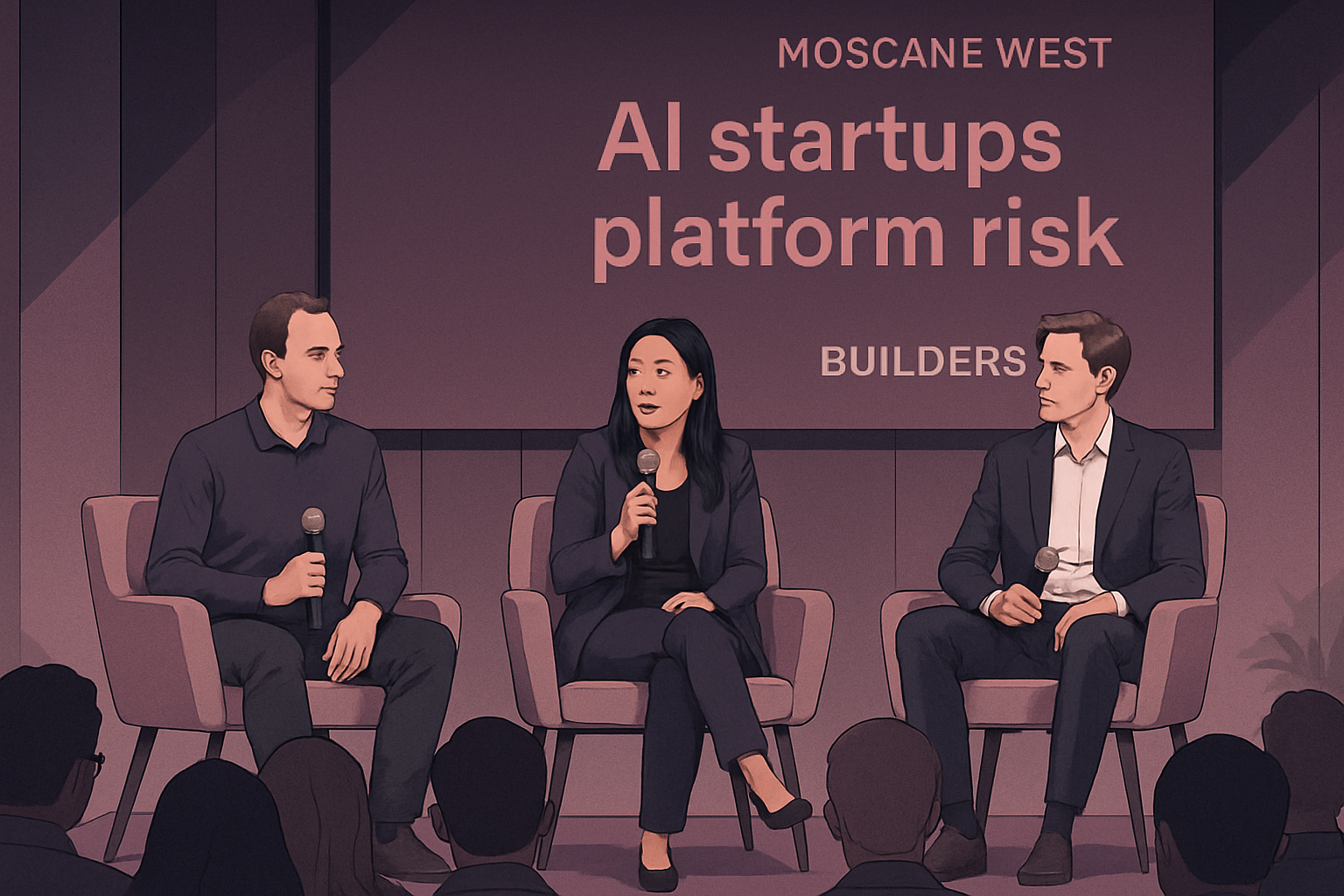
In mid-October in San Francisco, a session at the Builders Stage will bring together Airbyte, Webflow, and Radical Ventures to address a very real danger for AI startups: when the platform integrates the feature they have just built. With a focus on defensibility, reactions to model giants, and investment criteria, the meeting promises concrete insights.
Seeking Defensibility Against Model Updates
Fundamental models continue to advance, forcing founders to rethink their differentiation. Future successes in AI may not depend on the most advanced model, but rather on what these models cannot easily replace: integrated workflows, proprietary data, solving specific problems, and the trust gained from customers. In this context, the central question for product teams becomes whether their solution will retain value after the next evolution of models. The highlighted risk is building a solid product that ultimately becomes just a feature integrated by a dominant platform.
What the Session Promises to Address for Founders
The announced session aims to explore where defensible positions in AI still exist and how to react when giants enter adjacent markets. It seeks to clarify what distinguishes a mere feature from a standalone and sustainable business. The program emphasizes creating lasting value as the underlying technology evolves, software differentiation in a context of customer expectations transformed by AI, and the criteria that convince investors that a company will remain relevant in three years. The stated goal is to provide concrete insights rather than react to every new model release.
Le brief IA que les pros lisent chaque soir
Les 7 actus IA du jour, décryptées en 5 min. Gratuit.
Inclus dès l'inscription : notre sélection des meilleurs guides & comparatifs IA.
Choisissez votre rythme
Gratuit · Pas de spam · Désabonnement en 1 clic
Speakers and Insights: Airbyte, Webflow, and Radical Ventures
Three perspectives will be represented: founder, operator, and investor. Michel Tricot, CEO and co-founder of Airbyte, will share insights from his experience with an open-source data integration platform boasting over 7,000 clients, including 18% of the Fortune 500. This background gives him visibility into companies built beyond the fundamental model. On the operator side, Linda Tong, CEO of Webflow, leads a visual development platform recognized as one of the best, currently undergoing a major transition in SaaS, following roles at Google, Cisco, and the NFL. From the investment perspective, Rob Toews, a partner at Radical Ventures, evaluates AI startups daily to identify where competitive advantages remain and where a product risks becoming just a feature.
Where and When: Builders Stage in San Francisco, October 13–15
The session "What Happens When OpenAI Delivers Your Roadmap" is scheduled for the Builders Stage at TechCrunch Disrupt 2026. The event will take place from October 13 to 15 at Moscone West in San Francisco and is presented as a flagship gathering for startups. Over 10,000 founders, investors, and operators are expected for more than 250 sessions. The session is announced as interactive.
A Recurring Strategic Risk: When the Product Becomes a Function
The shift in competitive gravity is highlighted: the platform can become the primary threat as players like OpenAI, Anthropic, or Google rapidly integrate new capabilities. This dynamic influences product strategy, fundraising, and valuation, shifting the feasibility question toward appropriability. The described risk is that once-differentiating capabilities transform into standard blocks, placing startups in competition with platforms that both nourish the ecosystem and compete with new entrants.
Brief IA — L'actualité IA en français
L'essentiel de l'actualité de l'intelligence artificielle, décrypté et expliqué chaque jour.