Terence Tao Sees the End of "Romanticism" in Math with AI
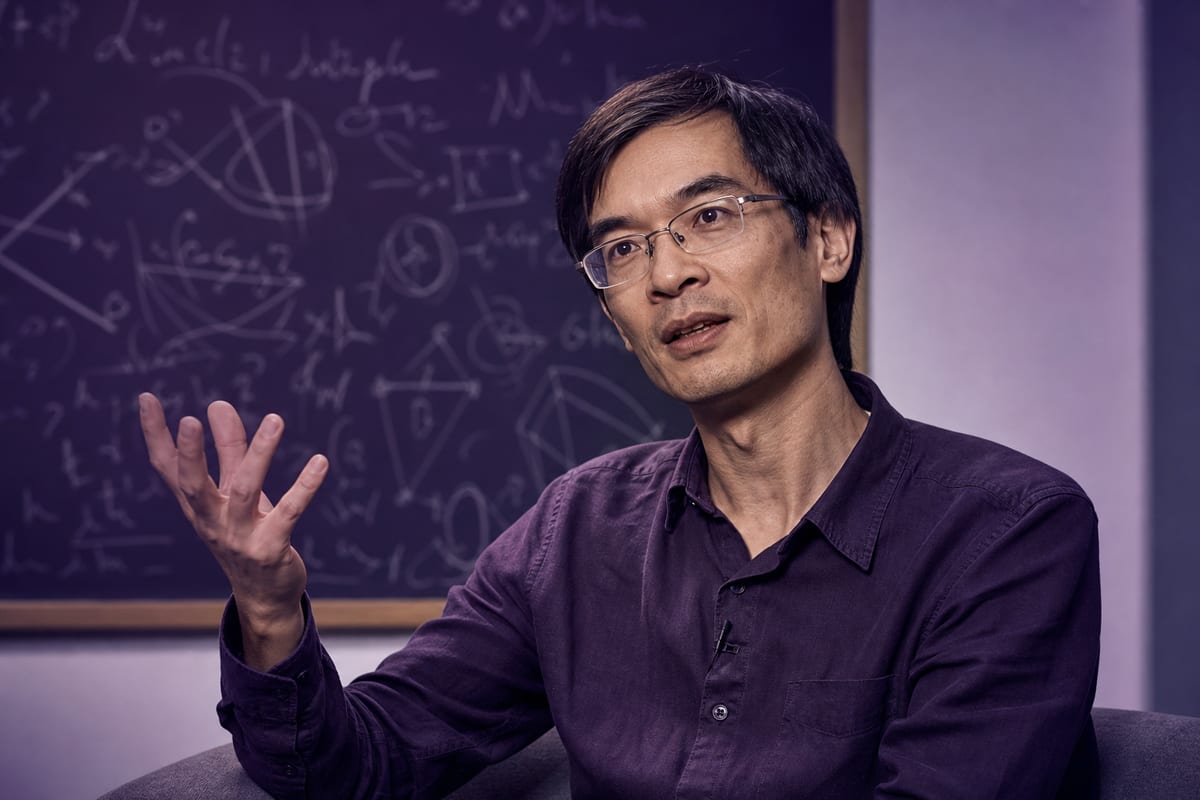
Researchers mention "annihilated" research programs and a withdrawal of sponsorship, while students fear for the future of doctoral positions. In this context of tension, Terence Tao, a professor at UCLA, describes a shift towards a more industrial practice of mathematics in the age of AI. OpenAI, for its part, claims to have resolved up to 700 problems after targeting the Navier-Stokes equation.
Disrupted Work and Uncertain Careers, According to Industry Stakeholders
Professor Tristan Buckmaster at New York University states that OpenAI's recent publication has disrupted the work of young mathematicians and that "entire research programs" were annihilated on Tuesday by this release. In September, OpenAI also withdrew its sponsorship from an AI "mathathon" organized by Caltech students, following complaints from a group of more experienced academics, even as the event encouraged the use of AI to solve equations. The organizers believe their professors are out of touch with the evolution of the field, and one of them, Caiman Moreno-Earle, expresses uncertainty about whether there will be open positions in graduate school when their generation defends its thesis. The revelation of an AI resolution of the Navier-Stokes equation has simultaneously raised concerns among enthusiasts, while mathematicians lament the lack of explicit reasoning from the model, leaving them responsible for verification. Some researchers and professors are already contemplating their potential obsolescence.
Le brief IA que les pros lisent chaque soir
Les 7 actus IA du jour, décryptées en 5 min. Gratuit.
Inclus dès l'inscription : notre sélection des meilleurs guides & comparatifs IA.
Choisissez votre rythme
Gratuit · Pas de spam · Désabonnement en 1 clic
Tao Describes a Shift to an Industrial Era of Mathematics
Terence Tao believes that mathematics is leaving a "heroic" period: with AI tools capable of performing preparatory work and tackling hundreds of problems through simple instructions, the daily life of researchers is changing. He explains that high-level teams now find themselves sorting through vast corpuses of proofs generated by AI systems, rather than solving questions in isolation. In his view, the discipline is transitioning to an industrial era, on a much larger scale, where unprecedented possibilities are emerging, while acknowledging that some things are being lost and that the stakes are as much spiritual as they are practical. He anticipates that the narratives cherished by math enthusiasts will weigh less, referencing "mythological stories" like that of Andrew Wiles working for seven years in isolation on a difficult equation, a symbol of an age perceived as romantic. These statements were made during an interview on Numberphile, a YouTube channel dedicated to mathematics. Tao, who completed his PhD at 20, notes that his own work is evolving in this context.
OpenAI Claims Navier-Stokes and 700 Other Problems
OpenAI marks the beginning of its foray into mathematics with the resolution of the Navier-Stokes equation, classified among the Millennium Problems, announced in early September. Earlier this month, the company claimed to have solved 700 additional problems. OpenAI also states that it is taking steps to ensure that human academics retain their role in this new phase.
Brief IA — L'actualité IA en français
L'essentiel de l'actualité de l'intelligence artificielle, décrypté et expliqué chaque jour.