TerraPower Develops Thermal Storage Reactor for AI Data Centers
Le brief IA que les pros lisent chaque soir
Les 7 actus IA du jour, décryptées en 5 min. Gratuit.
Inclus dès l'inscription : notre sélection des meilleurs guides & comparatifs IA.
Choisis ton rythme
Gratuit · Pas de spam · Désabonnement en 1 clic
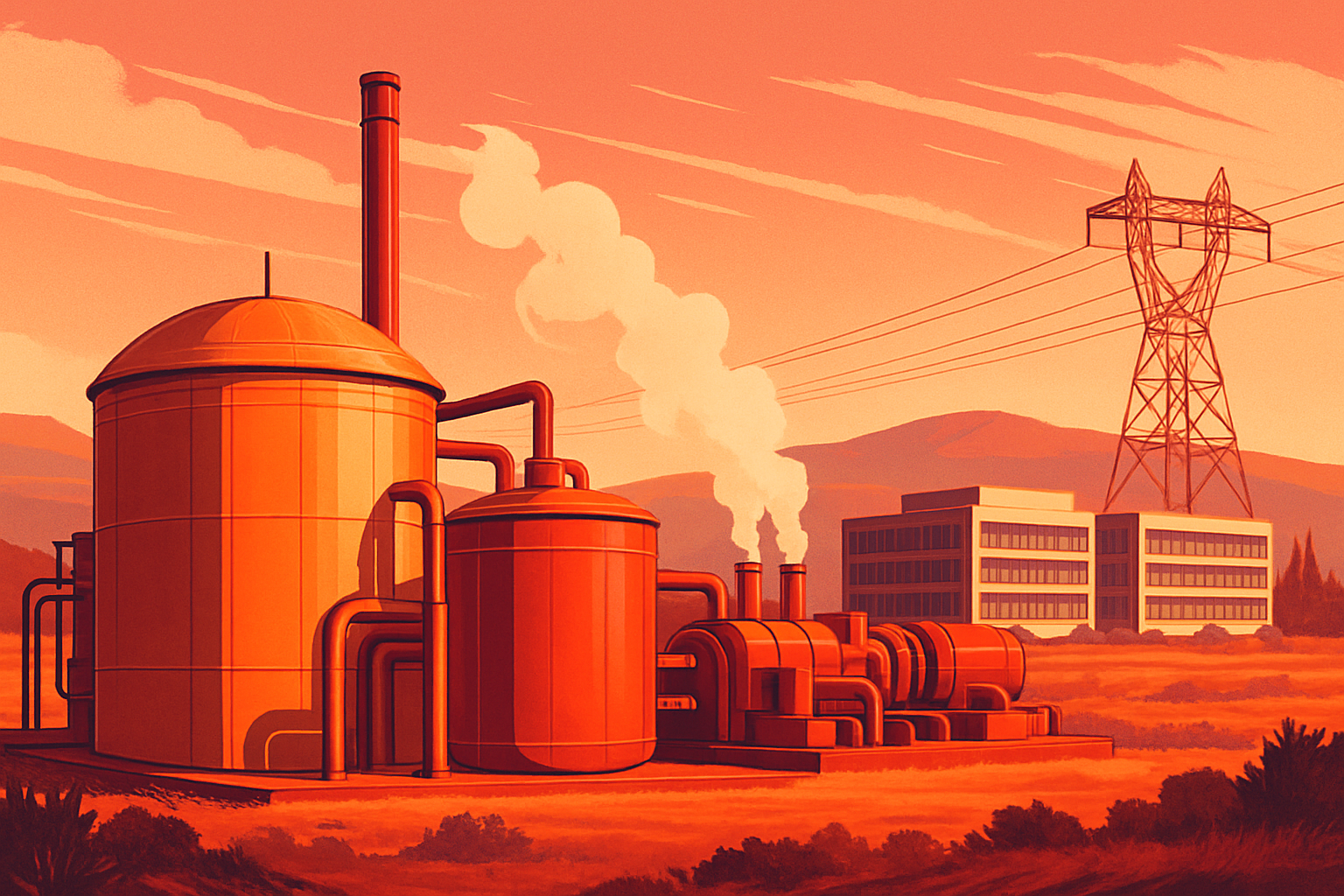
TerraPower combines a molten salt reactor with sodium heat storage to respond to rapid fluctuations in electricity demand without reducing the power of the nuclear core. This architecture aims to meet the changing needs of data centers and renewable networks. A first data center project is planned for 2027, following the construction of the plant in Wyoming. In January, TerraPower announced an agreement with Meta for eight Natrium units.
TerraPower Modulates via Stored Heat Without Lowering Reactor Output
To quickly respond to peaks, TerraPower maintains the reactor's power instead of modulating it. Excess heat is stored in a large molten sodium reservoir and then released as steam to drive turbines during demand surges. This strategy keeps the expensive equipment operational even during low demand, spreading the amortization over more hours. The 345-megawatt reactor, cooled by molten salt, is designed to complement wind and solar energy through rapid power delivery variation. By combining a high capacity factor with energy storage, the facility can integrate into a highly renewable grid or power a data center.
Data Centers Impose Rapid Load Variations
Data centers, particularly those powered behind the meter, must manage highly variable loads. During AI training or responding to queries, GPUs adjust their effort, causing rapid fluctuations in power demand. These fluctuations have stressed natural gas turbines, some of which have begun to fail. To smooth out these spikes, large-capacity batteries are deployed, at a significant cost.
Nuclear Prefers Full Power for Economic Reasons
Nuclear reactors operate most efficiently at full load, achieving a capacity factor of 92.5% in the United States. Current facilities vary slowly, around 5% of total power per minute according to the National Laboratory of the Rockies, while SMRs aim for about 10% per minute. However, producing less impacts profitability, especially since nuclear bears the highest investment costs among power generation technologies. Startups are betting on the mass production of SMRs to compress these costs, a promise yet to be proven, and whose effects, if realized, may not materialize for a decade or more. All acknowledge that their first plants will be expensive, pushing them to aim for full-capacity operation as often as possible.
Data Center Project Planned for 2027, Client Not Revealed
TerraPower plans to announce its first data center project this year, with a targeted launch in 2027. The identity of the client has not been disclosed. This site would be the company's second plant, the first being under construction in Wyoming. TerraPower, founded by Bill Gates, also indicated in January that Meta had agreed to acquire eight Natrium plants.
A Design Tailored for Renewables, Relevant for AI
The initial specifications aimed to support intermittent renewables, rather than a specific data center use case. However, renewables and data centers share a common intermittency, with supply for the former and demand for the latter. TerraPower presents energy storage as its differentiating asset in this context, as not all reactors are suited for powering data centers. This flexibility could provide the company with an advantage in powering AI, a market where many nuclear startups are positioning themselves as providers of always-available energy.
Brief IA — L'actualité IA en français
L'essentiel de l'actualité de l'intelligence artificielle, décrypté et expliqué chaque jour.