TIDAL Bans Monetization of AI Music
Le brief IA que les pros lisent chaque soir
Les 7 actus IA du jour, décryptées en 5 min. Gratuit.
Inclus dès l'inscription : notre sélection des meilleurs guides & comparatifs IA.
Choisis ton rythme
Gratuit · Pas de spam · Désabonnement en 1 clic
TIDAL Imposes Restrictions on AI-Generated Music
The music streaming service TIDAL has recently announced a new policy aimed at limiting the impact of music generated by artificial intelligence (AI) on its platform. This decision prohibits the monetization of tracks entirely created by AI, thereby preventing these songs from generating revenue. Additionally, TIDAL stated that it would use automated tools to detect and remove tracks that attempt to imitate existing artists or groups.
Tony Gervino, Executive Vice President and Editor-in-Chief of TIDAL, explained that this measure aims to protect the authentic creativity of artists. According to him, it is crucial not to compromise artists' ability to connect with their audience on TIDAL. He emphasized that many users have expressed a desire not to be exposed to music that is entirely generated by AI.
Gervino also clarified that this policy is not a critique of technological advancement, but rather an initiative to value the organic creativity of artists. The goal is to ensure that human artists are rewarded for their work and talent.
Identification and Labeling of AI Tracks
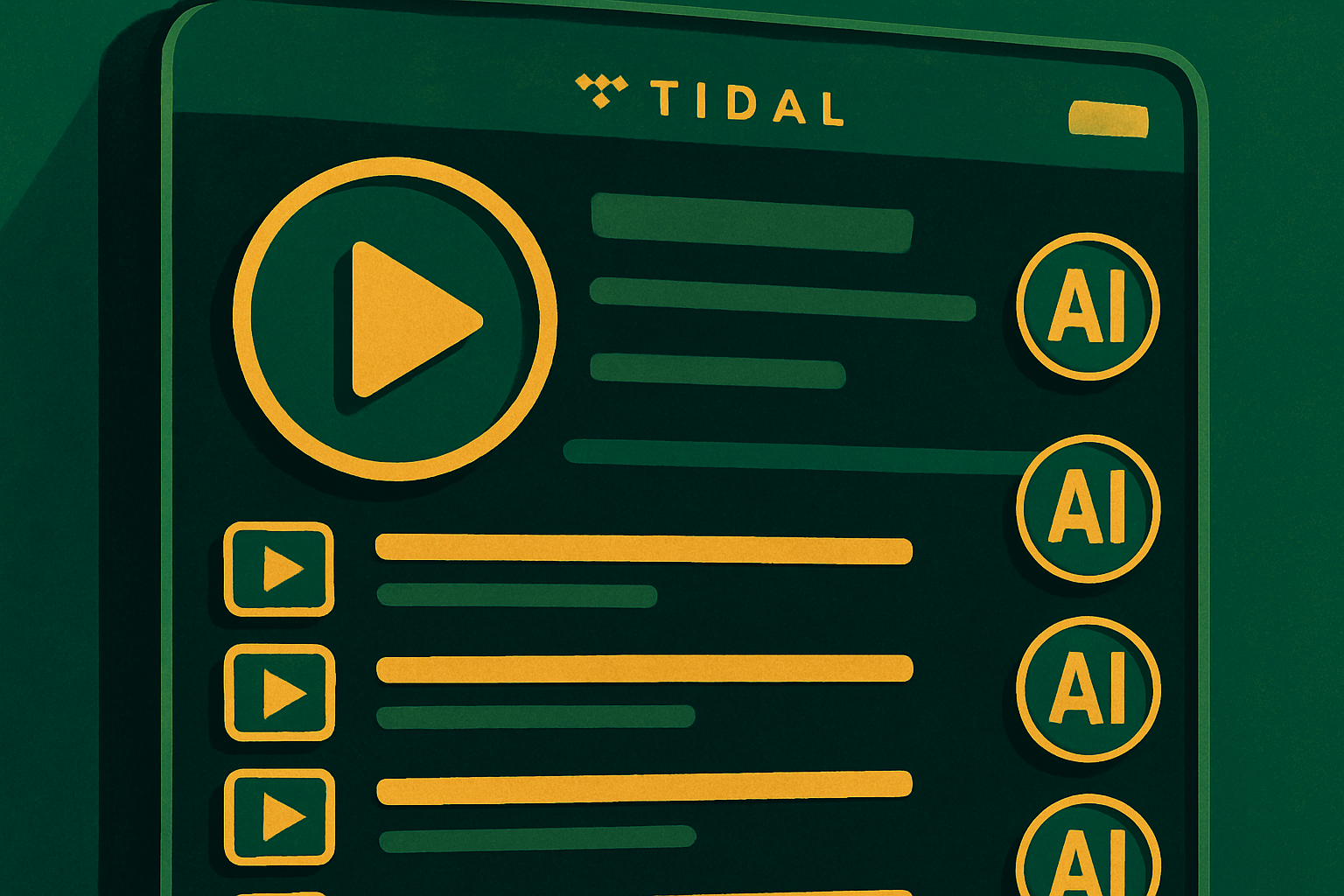
With these new rules, TIDAL will introduce a labeling system to identify tracks created by AI. Listeners will see an "AI" badge next to tracks deemed 100% generated by artificial intelligence. These tracks will not be monetizable, will not receive royalties, and will not be eligible for direct sales to fans, according to the company's clarifications.
This initiative from TIDAL is part of a broader trend among music streaming services. Platforms like Spotify, Apple Music, Deezer, and Qobuz have also implemented policies to manage the growing influx of AI-generated music. Spotify, for example, updated its policies last year to label AI music and improve spam filtering, while acknowledging that AI tools will play a role in the music creation process.
Varied Measures Among Competitors
Deezer, which revealed that 44% of new music uploaded daily on its platform is generated by AI, has adopted an even stricter approach. It actively removes AI tracks from recommendations and excludes them from editorial playlists. Deezer also offers its AI detection technology to other services and provides a tool for consumers to check if AI music is present in their playlists on competing platforms.
TIDAL's strategy could serve as a test to evaluate whether de-monetization can curb the influx of AI music, which does not attract the interest of many listeners. Gervino insisted that the music industry is not doomed to be dominated by AI, provided that appropriate measures are taken to monitor and control this phenomenon. He stated, "No matter what you read elsewhere, the takeover of the music industry by AI (and your recommendations) is not inevitable if we take even more significant steps now to monitor and control it."
An Evolving Policy
TIDAL clarified that this new policy is a "living document," meaning it can be modified over time to adapt to industry changes. The implementation of this policy is scheduled for July 15, 2026, thus giving TIDAL time to adjust to technological changes and user expectations.
Brief IA — L'actualité IA en français
L'essentiel de l'actualité de l'intelligence artificielle, décrypté et expliqué chaque jour.