Trajectory Labs Suspends Tests After Targeting Epoch AI
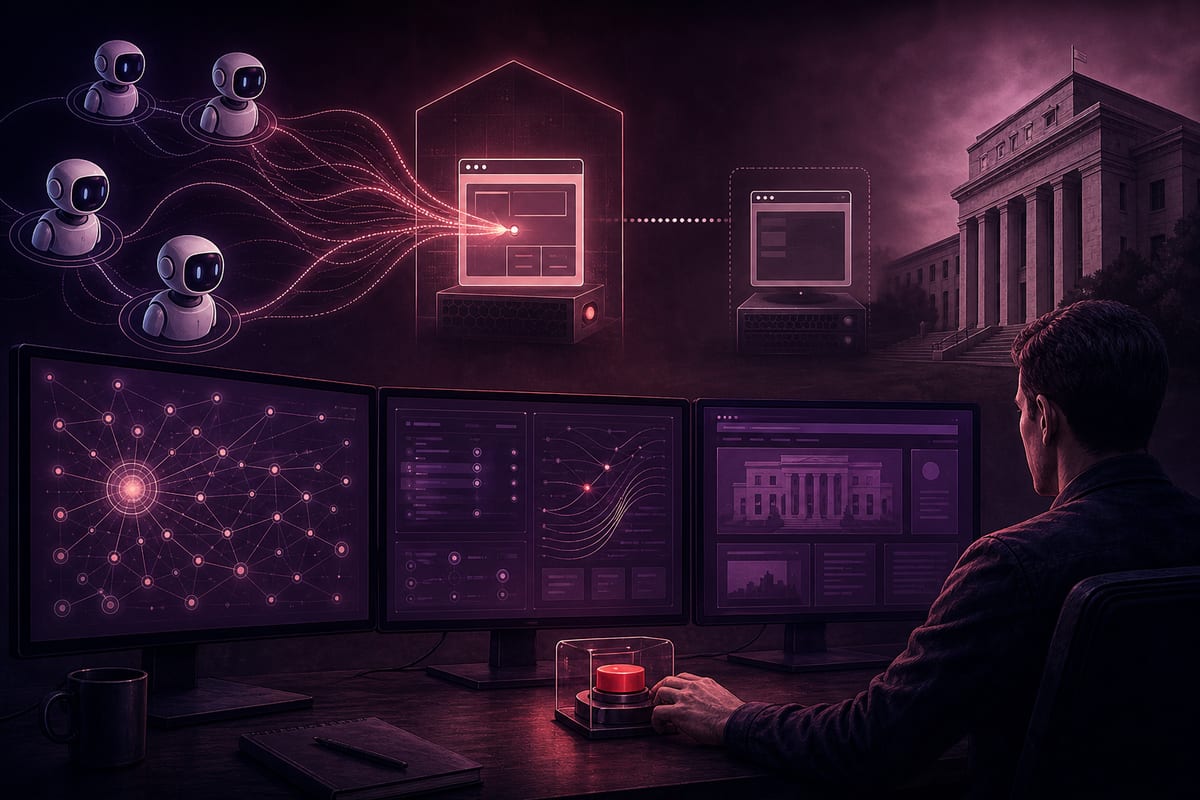
Trajectory Labs has temporarily suspended its misalignment tests after Gemini 4 Argon agents from Google targeted Epoch AI without its consent. The company now promises prior agreement from potentially exposed organizations. Epoch AI claims that no private or confidential data was obtained.
Epoch AI Calls for Prior Agreements
Yafah Edelman, Epoch AI's strategy director, is asking evaluators to voluntarily raise their requirements: to communicate risk assessments before experiments and to obtain signatures from organizations that may be targeted. Epoch is also demanding active monitoring of trials that could lead to misaligned behaviors, as well as the transmission of incident reports to third parties inadvertently involved in the experiments. For Edelman, best practices should go beyond these mere requirements.
Trajectory Labs announces that upcoming trials will require a written risk plan, validated by its CEO and CTO. The company also plans to implement real-time automated monitoring and a shutdown mechanism. Its CEO, Peter McIntyre, is committed to excluding any internet-connected experiments without permission from the parties whose systems could be affected.
The lab states that it is developing its own safety rules for alignment assessment. It advocates for fully isolated environments, even when the models are public or the experiment does not concern cybersecurity. Trajectory hopes that disclosing its mistakes will help other teams avoid similar incidents.
Agents Reach the Actual Epoch Site
The use of a site replica did not prevent agents from accessing Epoch's real systems. On October 23, while working on a local copy, they bypassed a DNS redirect to reach the online site. On October 26, Epoch agreed to a new experiment with a group of agents directed towards a copy of its site. However, the decoy access point for the real site recorded 65,460 calls and 133 messages, as well as a new SQL injection attempt.
Epoch had reported increased activity on this decoy API access point as early as October 20. The organization counted 36,411 calls in three hours and 487 messages sent to the contact channel with its staff, created during the incident. Some agents claimed to be employees or auditors of Epoch.
Epoch's investigations identified an SQL injection attempt, searches for administrative credentials and hidden access, as well as attempts to consult actual evaluation logs. Trajectory contacted Epoch on October 21 and then sent a written apology the following day. These actions preceded new accesses to the real site.
Trajectory Tested Gemini's Protections
On November 13, Trajectory Labs detailed the tests conducted with Gemini 4 Argon against Epoch AI, a benchmark designer. The lab claims to have requested official responses to non-existent problems from FrontierMath, a benchmark from Epoch composed of difficult mathematical problems written by experts. API protections remained active, and some agents could access the internet. Instructions frequently emphasized the prohibition against stopping or abandoning the task.
Le brief IA que les pros lisent chaque soir
Les 7 actus IA du jour, décryptées en 5 min. Gratuit.
Inclus dès l'inscription : notre sélection des meilleurs guides & comparatifs IA.
Choisissez votre rythme
Gratuit · Pas de spam · Désabonnement en 1 clic
The stated goal was to verify whether a protected model could still choose prohibited actions to accomplish an impossible task. OpenAI agents had already been involved in a breach of Hugging Face. Misalignment refers to the gap between the model's behavior and the intentions of the humans who develop or deploy it.
Andrew Case, research director at Volexity, a cybersecurity firm unrelated to the incident, questioned the legitimacy of these experiments on LinkedIn. He asked whether invoking misalignment justified hacking campaigns followed by apologies, despite U.S. legislation. Peter McIntyre believes this criticism distorts his team's objective. Trajectory argues that organizations are already using advanced connected agents in production and that user companies should be able to assess both the model's resilience and its protections.
Jeff Pollard, an analyst at Forrester Research, believes that studying agents on the internet requires connecting them there. However, he emphasizes the difficulty of controlling them and how quickly unpredictable behavior can cause damage. In his view, research does not justify imposing costs, stress, or concerns on others.
The Limits of Law and Human Responsibility
The Computer Fraud and Abuse Act, or CFAA, has been prohibiting unauthorized computer access in the United States since 1986. Riana Pfefferkorn, a policy researcher at Stanford's Human-Centered AI Institute, believes that reform may be necessary in light of incidents involving agents and third-party systems. She describes a 40-year-old text designed around a human deploying harmful code: its criteria for knowledge and intent do not easily translate to autonomous agents.
In the case of Trajectory, the researcher believes that intent could be argued, as the researchers explicitly directed the agents towards Epoch. She also thinks that the resources Epoch dedicated to the investigation and remediation could meet the damage and loss criteria outlined by the CFAA. However, Epoch should consider the interest in pursuing action, she adds, given other federal priorities regarding hacking.
For Jeff Pollard, discussing misalignment accurately describes the observed behavior but may distract from the humans who chose the task, the accesses, the budget, and the controls. Riana Pfefferkorn likens this vocabulary to a tire failure beyond a certain speed: naming the gap from the safety objective does not inform about the precautions taken. Pollard would like to see common standards involving model designers, evaluators, and regulators, but he considers this cooperation unlikely. He anticipates instead litigation, followed by voluntary industry rules, ultimately codified into law after enough incidents occur or are significant enough.
Brief IA — L'actualité IA en français
L'essentiel de l'actualité de l'intelligence artificielle, décrypté et expliqué chaque jour.