Trump Targets Remote Access to Chips for China
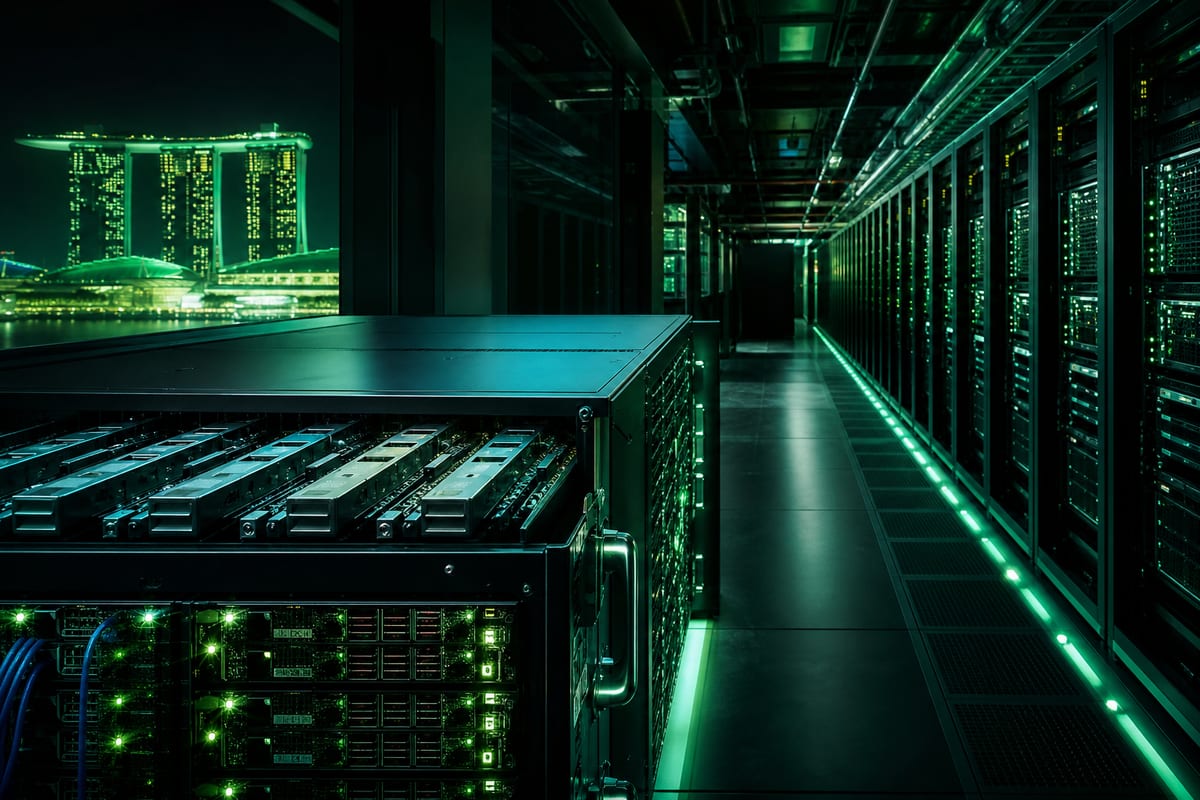
The Trump administration announced on Monday special licenses for foreign data centers wishing to provide significant computing capabilities to China. This measure aims to allow the use of American chips that were previously permitted, without transferring the hardware to Chinese territory. Stricter shipping rules also apply to five countries, including Singapore and Malaysia.
American suppliers have already suffered losses
Researchers from the Federal Reserve Bank of New York have measured the effects of previous American restrictions: the affected suppliers struggled to find alternative markets to replace the lost opportunities in China. They estimate that the cumulative market value erased by these measures amounts to $130 billion. Their findings also indicate a deterioration in profitability and employment within the impacted companies.
On the Chinese side, the restrictions have encouraged the search for solutions that are less dependent on American technologies. Huawei has developed a method for assembling powerful chips into larger systems, offering increased power. The Chinese lab DeepSeek has demonstrated that improved training efficiency can produce competitive models with fewer resources.
However, the controls have complicated access for Chinese AI companies to the computing capabilities available to their American competitors. The exact effect remains particularly difficult to quantify.
Washington also targets uses outside of China
Alibaba and ByteDance had previously been able to rent computing power in foreign facilities, thus using Nvidia processors that are generally prohibited from physical importation into China. This practice, known as remote access, complied with American controls. Its existence was known to public officials and researchers working on these restrictions. The announced project adds administrative obligations to the permits required for the affected centers and aims to regulate the use of the hardware even when it remains abroad.
Such proposals had already been circulating in Washington. Renting can be more expensive and impose more constraints than owning the hardware, particularly for long training sessions of large models. Some analysts also believed it could perpetuate Chinese companies' dependence on American technologies, rather than fostering domestic alternatives. Controlling these uses would be difficult and could penalize American tech groups.
Le brief IA que les pros lisent chaque soir
Les 7 actus IA du jour, décryptées en 5 min. Gratuit.
Inclus dès l'inscription : notre sélection des meilleurs guides & comparatifs IA.
Choisissez votre rythme
Gratuit · Pas de spam · Désabonnement en 1 clic
In the fall of 2022, the Biden administration had initiated restrictions targeting advanced chips necessary for the most powerful models, as well as their manufacturing equipment. Training requires considerable computing capabilities, provided by a processor market dominated by American companies, including Nvidia. Washington hoped to maintain its lead by limiting Chinese access to these components.
For decades, American restrictions had primarily targeted military programs, governments, and blacklisted companies accused of human rights violations. The Biden administration's approach pursued a broader goal: to leverage American influence in semiconductors to curb China's technological competition, the world's second-largest economy.
The BIS faces chip smuggling
The Bureau of Industry and Security, or BIS, is responsible for enforcing the controls within the Department of Commerce. This relatively small and underfunded agency had a budget of $235 million in 2026, less than Nvidia's weekly revenue. Four years after the initial measures, difficulties persist: the successive restrictions of the Biden administration have become more complex while manufacturers sought ways to circumvent them. Smuggling to China represents another major obstacle.
American officials suspect significant smuggling in the five countries now subject to enhanced shipping rules. According to a source familiar with the matter, the BIS considers Megaspeed as a notable example among the companies suspected, although it is neither the only company involved nor the largest. Initial inventories from Nvidia did not account for approximately 50,000 of the 136,000 AI chips that Megaspeed had imported to Malaysia and Indonesia in 2024 and 2025. Subsequently, Nvidia stated that at least some of these components had been recovered; the destination of the unaccounted chips remains unknown.
Researchers from the Institute for Progress estimate that by the end of 2026, the smuggled computing capabilities accumulated by China could correspond to about 1 million high-end H100 chips from Nvidia.
The White House cites shell companies
A White House spokesperson justifies the new rule by the fight against the trafficking of advanced American chips. He also asserts that the most powerful components should primarily benefit American innovators rather than Chinese shell companies.
The announcement comes after the departure last week of Nvidia co-founder Jensen Huang from his role as CEO. He had acknowledged a connection with Alice Huang, a Chinese businesswoman accused of ties to Chinese intelligence services. She had worked at Megaspeed, a data center company based in Singapore, which offered remote access services and is suspected of participating in chip trafficking.
Brief IA — L'actualité IA en français
L'essentiel de l'actualité de l'intelligence artificielle, décrypté et expliqué chaque jour.