Trump Wants to Replace AI with "Super Intelligence"
Le brief IA que les pros lisent chaque soir
Les 7 actus IA du jour, décryptées en 5 min. Gratuit.
Inclus dès l'inscription : notre sélection des meilleurs guides & comparatifs IA.
Choisis ton rythme
Gratuit · Pas de spam · Désabonnement en 1 clic
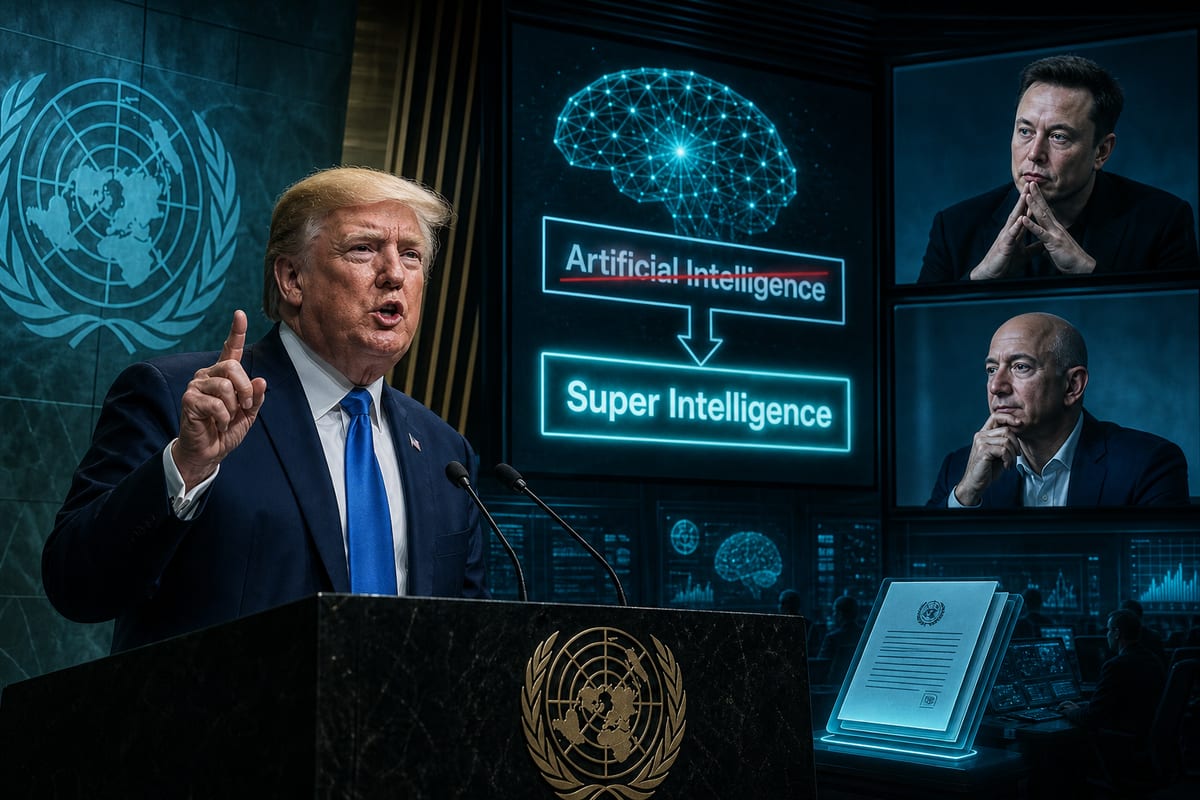
Donald Trump has initiated a rebranding of artificial intelligence as "super intelligence," through a speech at the UN and a decree limiting the use of "AI." Several tech figures, from Elon Musk to Jensen Huang, are adopting this terminology, while Sam Altman praises the term without renaming OpenAI. However, Congress is not obliged to abandon "artificial intelligence," and the concept of "superintelligence" already has an established technical meaning.
Congress Retains "Artificial Intelligence" and Existing Texts
Donald Trump cannot prohibit Congress from using the term "artificial intelligence." This term appears in existing laws such as the Take It Down Act, which government agencies will still need to reference in legal proceedings. Additionally, Senator Bernie Sanders is relying on the previous definition of superintelligence in his efforts to restrict powerful AI and co-sponsored a bill titled Ban Artificial Superintelligence Act earlier this September.
Speech at the UN and Decree to Ban the Acronym "AI"
Last month at the UN, Donald Trump stated that "the use of the word artificial makes intelligence false" and promised to rename the technology as "super intelligence." He then issued a decree last week aimed at prohibiting the use of the term "AI" as much as possible. This initiative is part of a broader rebranding effort decided by decree, as he discourages self-regulation in the sector.
Official Renamings and Newspeak in Federal Communication
The American Center for Standards and Innovation in AI (CAISI), which had already succeeded the AI Security Institute following a name change, is now called the Center for the Advancement of Innovation and Standards for Super Intelligence (CAISSI). Press releases issued by the Department of Justice have been revised to adopt this new terminology, to the extent of describing a case spanning from 2017 to 2024 as "super intelligence-assisted music streaming fraud."
Tech Leaders: Public Endorsements and Nuances
Several leaders have adopted the new terminology. Elon Musk has promised to rename SpaceXAI to SpaceXSI. Jeff Bezos expressed his appreciation for the term, stating that "artificial is not very flattering." Jensen Huang also embraced the label after being called on stage by Donald Trump last month, at which point the latter claimed that "robots will not take control." Sam Altman welcomed the phrase while clarifying that OpenAI will not change its name.
Trump's Political Line: Accelerate AI, Value Data Centers, and Toughen Vocabulary
Donald Trump believes that the security risks associated with AI are overstated and encourages American companies to ramp up their development, particularly by multiplying data centers he describes as "very popular." On Thursday, he stated that the White House considers anyone who uses the term "Artificial Intelligence" instead of "Super Intelligence" as "THE ENEMY." He wishes to replace the phrase "fake news media" with "artificial media." During a meeting on October 5, he labeled fears of price increases related to the war as "artificial" and suggested that Iran could "eliminate" Los Angeles and San Diego. In recent weeks, he has associated AI with the qualifier "super" while making "artificial" a pejorative term, continuing a pro-AI commitment strengthened after a sector discussion on the "pace" of development at the border last month.
A Preexisting Technical Term Diverted from Its Original Meaning
The term "superintelligence" (as one word) is not new: Nick Bostrom popularized it in 2014 to refer to a highly advanced AI that could surpass human thought. This term does not encompass the entire category of AI. It exists alongside other industry concepts, such as general artificial intelligence or "useful general intelligence," which seek to describe what will follow the current iteration of the technology.
Brief IA — L'actualité IA en français
L'essentiel de l'actualité de l'intelligence artificielle, décrypté et expliqué chaque jour.