UFORCE Predicts the Rise of AI-Controlled Naval Drones
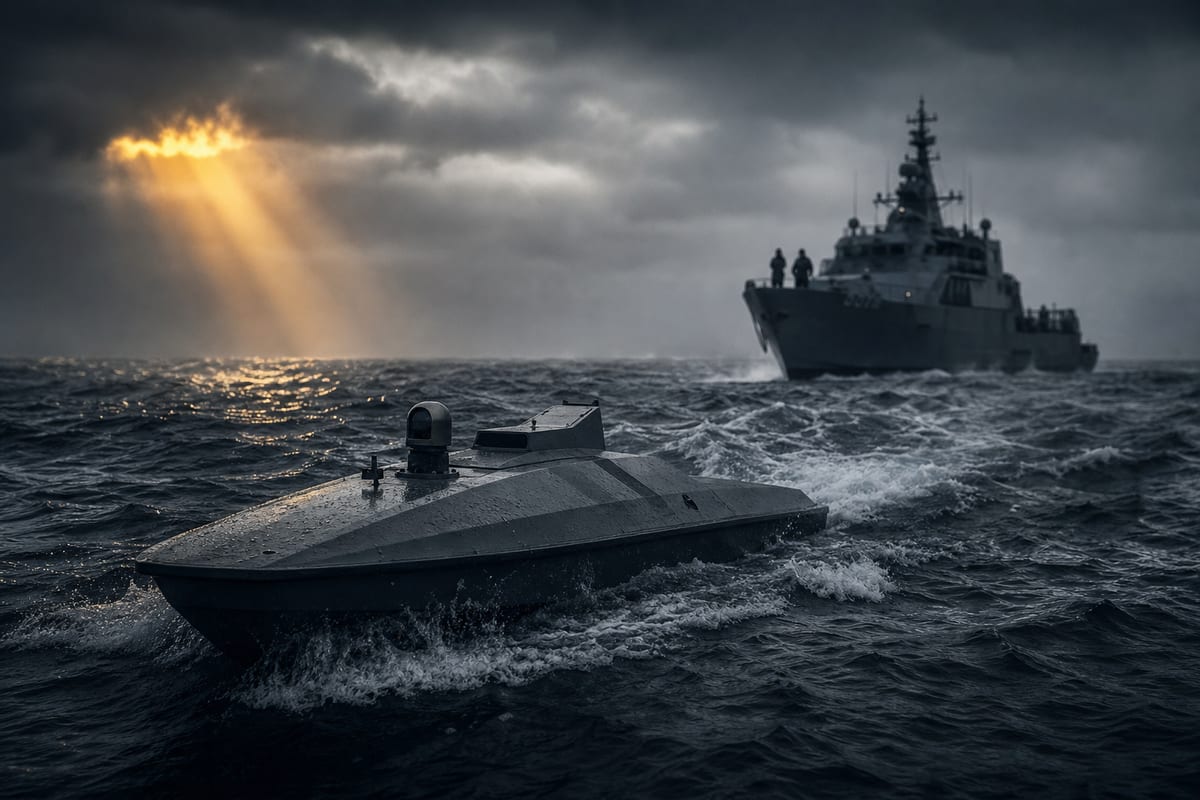
UFORCE, the manufacturer of Ukrainian Magura drones, predicts that almost all navies will acquire low-cost naval assets controlled by AI. The company has just raised $700 million. Ukraine's allies are developing mixed fleets, but most European navies are still far from having AI-piloted fleets.
The British Learn from the Ukrainians
Several European navies are employing or testing unmanned units to search for mines or monitor waters. Allies are observing Ukrainian operations and, according to NATO military officials, are learning lessons about both the construction and use of drones during joint exercises and specialized training.
Commander Magill, head of Interflex, a British maritime countermeasures training program, emphasizes that the learning benefits not only the Ukrainian forces for whom it is intended. The Royal Navy is also gaining from their experience in contested environments, the integration of autonomy, and new systems that the British are also bringing into service. He believes these exchanges will prevent them from having to relearn the combat lessons acquired by the Ukrainians when they employ these systems.
The Magura Strikes Beyond Ships
Manufactured by UFORCE, the Magura drones have participated in operations against the Russian fleet in the Black Sea, despite Ukraine not having a conventional surface fleet. Their targets include military vessels, helicopters, aircraft, and air defense systems. Onboard missiles have been used to shoot down Russian planes and helicopters.
These devices have also contributed to launching FPV drones against ground targets, including air defense systems. Ukraine has quickly expanded the missions of its naval drones beyond one-way attacks against ships. The United States and other partners cite this experience as they increase their investments.
The AI brief the pros read every evening
The 7 best AI stories, the essentials in 5 min. Free.
Included when you join: our pick of the best AI guides & comparisons.
Choose your rhythm
Free · No spam · Unsubscribe in 1 click
The British and American Fleet Projects
The Royal Navy has established its first autonomous squadron this month. According to Vice Admiral Steve Moorhouse, commander of the fleet, this squadron complements the ships, submarines, and aircraft traditionally operated by sailors and Royal Marines. He believes these assets will enhance the fleet's destructive power, resilience to attacks, and adaptability. The British project envisions a network of unmanned equipment alongside manned vessels and submarines to extend capabilities without relying solely on expensive crewed ships.
The United States is also developing a mixed fleet. Its navy has already fired weapons from unmanned units and used drones for surveillance, reconnaissance, rescue, or attack. It has long advocated for low-cost, expendable means for dangerous missions, amid rapid shipbuilding by China. Many partners are investing in these assets, which can perform certain tasks in hazardous waters at a significantly lower cost than some conventional means.
In September, Admiral Daryl Caudle, chief of naval operations for the United States, described medium-sized unmanned surface units as adaptable additional capabilities to threats and dispersible across the theater of operations, without unnecessary risk to sailors. He also attributes to them the ability to quickly accommodate new sensors, armaments, or payloads based on operational needs and technological advancements.
UFORCE Reaches a $6 Billion Valuation
Founded in Ukraine and based in London, UFORCE is expanding its production and examining international interest in its equipment. Its recent fundraising has brought its valuation to $6 billion. Its founder and CEO, Oleg Rogynskyy, predicts a near-universal spread of unmanned, expendable, and low-cost assets under AI control.
The executive states that partner countries are already considering operations that coordinate naval drones and crewed vessels. He also mentions future possibilities such as autonomous maritime patrols and entirely crewless navies.
Brief AI — AI news in French
The essentials of artificial intelligence news, decoded and explained every day.