ByteDance: Zhang Chi Warns of China's AI Lag
Le brief IA que les pros lisent chaque soir
Les 7 actus IA du jour, décryptées en 5 min. Gratuit.
Inclus dès l'inscription : notre sélection des meilleurs guides & comparatifs IA.
Choisis ton rythme
Gratuit · Pas de spam · Désabonnement en 1 clic
Zhang Chi Critiques the Delay of Chinese AI
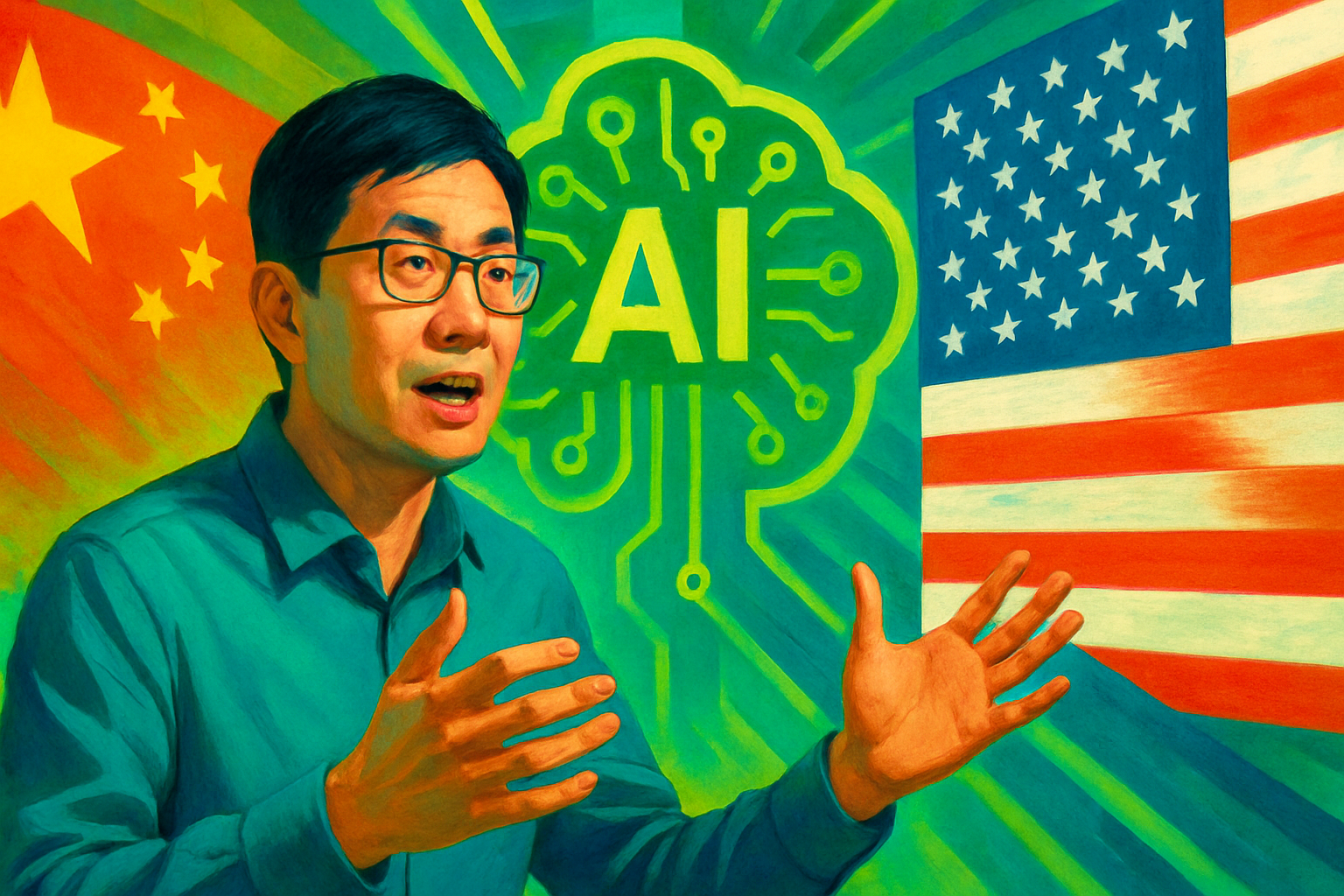
Zhang Chi, a former engineer at ByteDance, recently expressed his concerns about the position of the Chinese artificial intelligence industry compared to that of the United States. Although models developed in China show good performance on benchmarks, Zhang argues that these results do not translate into concrete and effective applications in the real world.
Influential figures in the tech sector, such as Elon Musk and Jensen Huang, believe that China is closing its gap and may even surpass the United States. However, Zhang Chi, who now teaches at Peking University, has a different perspective. He voiced his doubts during an episode of the podcast "Into Asia," stating, "I don't even agree with the assumption that Chinese models are catching up — I believe we are still very far behind. I suppose the gap is widening, very sadly."
The Limitations of Chinese Models
Zhang, who spent about a year working on AI models at ByteDance before returning to academia, emphasizes that the perceived progress of Chinese startups does not necessarily reflect reality. While companies like ByteDance, the parent company of TikTok, and Alibaba develop models that perform well on paper, Zhang believes they are not sufficiently effective in practice. "On paper, every major tech company in China has a good model," he said. "But I don't think they are good enough."
He also noted that many teams focus on "benchmaxxing," meaning optimizing test scores rather than practical performance. ByteDance and Alibaba have launched highly publicized AI models, such as Seedance and Qwen, but these initiatives have also faced criticism for issues related to deepfakes, copyright disputes, and the viability of models in real-world situations.
Speed, a Key Factor
Zhang highlights speed as a major issue. He explained that large American companies, like Google, can iterate on their models much more quickly. "Google can train or complete a full training cycle of an LLM, both pre-training and post-training, in three months," he specified. "But at ByteDance — we probably can only do one iteration in six months."
Furthermore, Zhang pointed out the structural disadvantages that China faces, including limited access to advanced chips, less developed infrastructure, and lower quality training data. "There is a huge difference between Google's infrastructure and ByteDance's," he stated. "I don't think we are getting high-quality data."
Dependence on American Models
Zhang also mentioned that some Chinese companies rely on distilling results from leading American models, rather than developing their own data pipelines. This approach could limit long-term progress. He also noted that American companies benefit from stronger user feedback loops. Products like ChatGPT, Claude, and Gemini improve through constant interaction with users, which helps refine their models over time. In contrast, Chinese models risk falling into a negative cycle.
"Chinese models started off not very well, so no one really uses them for truly important things," Zhang said. "And the models continue to not be that good."
Diverging Perspectives
Zhang's opinion sharply contrasts with that of some of the most prominent voices in the tech sector, who assert that China is rapidly closing the gap and may even take the lead. Nvidia CEO Jensen Huang warned that the U.S. risks falling behind, while Elon Musk stated that China's advantage in energy and computing could help it surpass its rivals. AI pioneer Geoffrey Hinton also claimed that the U.S. lead might be narrower than it appears, cautioning against erosion over time.
Others take a more nuanced view. Alibaba President Joe Tsai stated that the race will be decided less by the strength of the models than by the speed of AI deployment. Nevertheless, Zhang's assessment reflects a more pessimistic perspective from within the Chinese AI ecosystem — a view suggesting that the gap with the United States could widen. "To be fair, I don't think a Chinese company can catch up anytime soon," he concluded.
Brief IA — L'actualité IA en français
L'essentiel de l'actualité de l'intelligence artificielle, décrypté et expliqué chaque jour.