ChatGPT and AlphaFold: A Controversial Hope for Canine Cancer
Le brief IA que les pros lisent chaque soir
Les 7 actus IA du jour, décryptées en 5 min. Gratuit.
Inclus dès l'inscription : notre sélection des meilleurs guides & comparatifs IA.
Choisis ton rythme
Gratuit · Pas de spam · Désabonnement en 1 clic
An Innovative Treatment for Rosie Thanks to AI
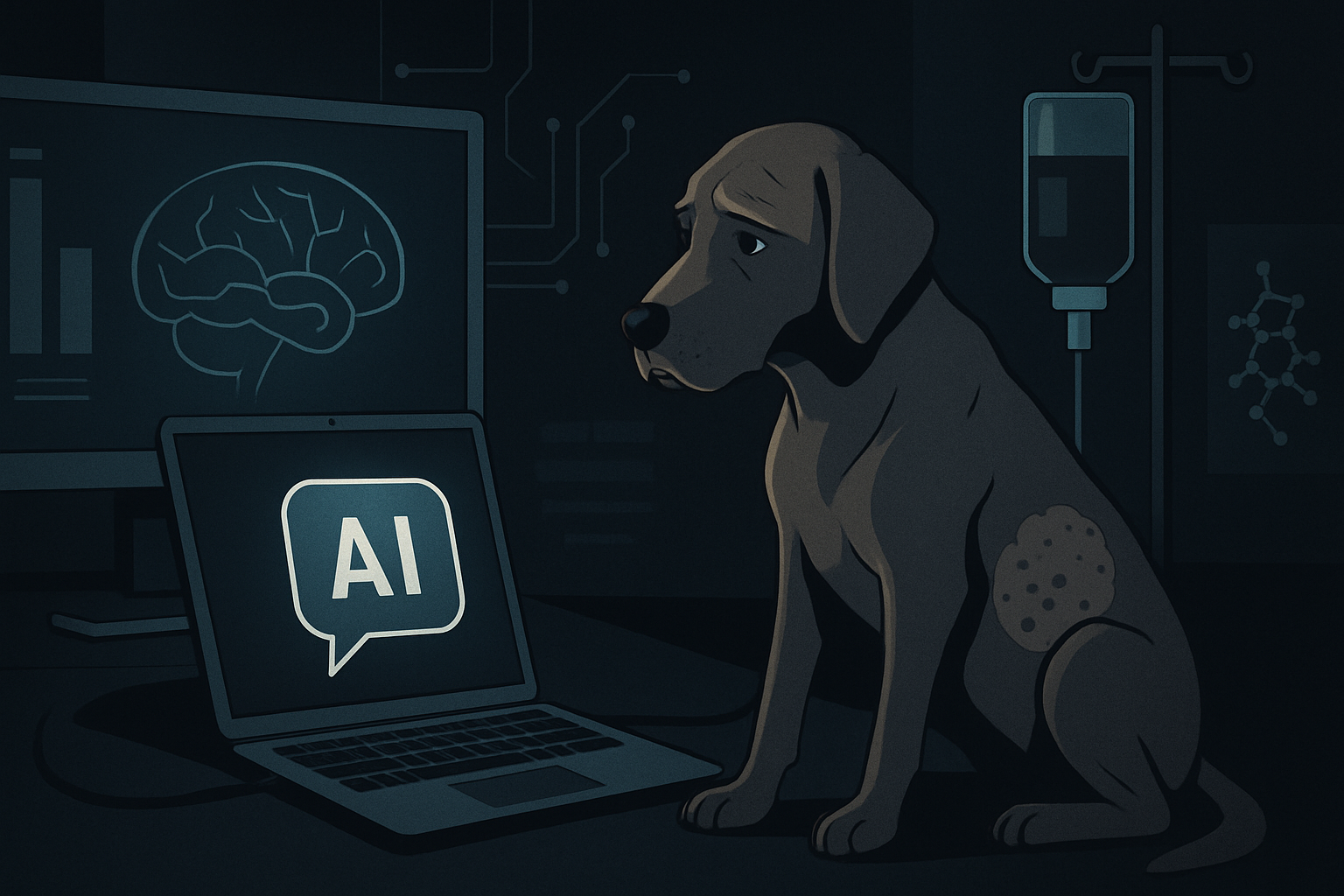
Paul Conyngham, an artificial intelligence consultant based in Australia, has utilized advanced technologies in an attempt to treat his dog Rosie’s cancer. Rosie, suffering from terminal mast cell cancer, has benefited from an approach that combines ChatGPT, Google’s AlphaFold, and genomic sequencing. Conyngham launched this ambitious project in November 2024, hoping to find a solution for his pet.
On the recommendations of ChatGPT, Conyngham had both Rosie’s healthy genome and that of her tumor sequenced at the Ramaciotti Centre for Genomics at UNSW Sydney. This process, which cost him $3,000, helped identify a target protein and a substance already approved by the FDA that could assist Rosie. The use of the AI model Grok enabled the design of a vaccine administered to Rosie. Since then, Conyngham reports a 75% reduction in the cancer, although the dog is not yet cured. Photos showing the progression of the cancer from November 2025 to January 2026 have been shared, attracting the interest of figures like Greg Brockman, president of OpenAI, and Demis Hassabis, CEO of DeepMind.
Experts' Concerns About the Use of AI
Patrick Heizer, a researcher in cell and gene therapy, warns against excessive enthusiasm. He explains that fighting tumors in the lab is relatively straightforward, but proving that a therapy is both safe and effective in controlled clinical trials is a far more complex challenge. A major issue lies in precision: proteins in the body often look very similar, so a therapy targeting a tumor protein could also affect similar proteins in healthy organs like the heart. Moreover, results obtained in animals do not directly translate to humans, as mice and dogs have different proteins than humans. Pharmaceutical companies and regulators must ensure long-term safety over five years or more, which is impossible to measure with short-lived laboratory animals.
Egan Peltan, co-founder of a biotech startup and holder of a PhD in chemical biology from Stanford, is not swept up in the excitement. He asserts that the role of AI in this story is exaggerated: all of this could have been achieved without ChatGPT. Peltan also points out that the dog was receiving conventional immunotherapy at the same time, so it is impossible to say whether the mRNA vaccine actually had an effect. He estimates the real cost of the treatment to be between $20,000 and $50,000. Personalized mRNA vaccines for cancer have been in development for years without clear success in large-scale trials, he notes. The field needs phase 3 results, not anecdotes, before anyone starts arguing that regulators are hindering access to life-saving treatments, Peltan concludes.
A Debate on the Future of AI Treatments
While Rosie’s story demonstrates the potential of AI to help develop personalized treatments, it also raises crucial questions about the efficacy and safety of these experimental methods. Experts are calling for caution and rigorous validations before considering a broader adoption of these technologies in oncology.
Brief IA — L'actualité IA en français
L'essentiel de l'actualité de l'intelligence artificielle, décrypté et expliqué chaque jour.