Lazer Logistics: Uncle Phil AI Revolutionizes Logistics
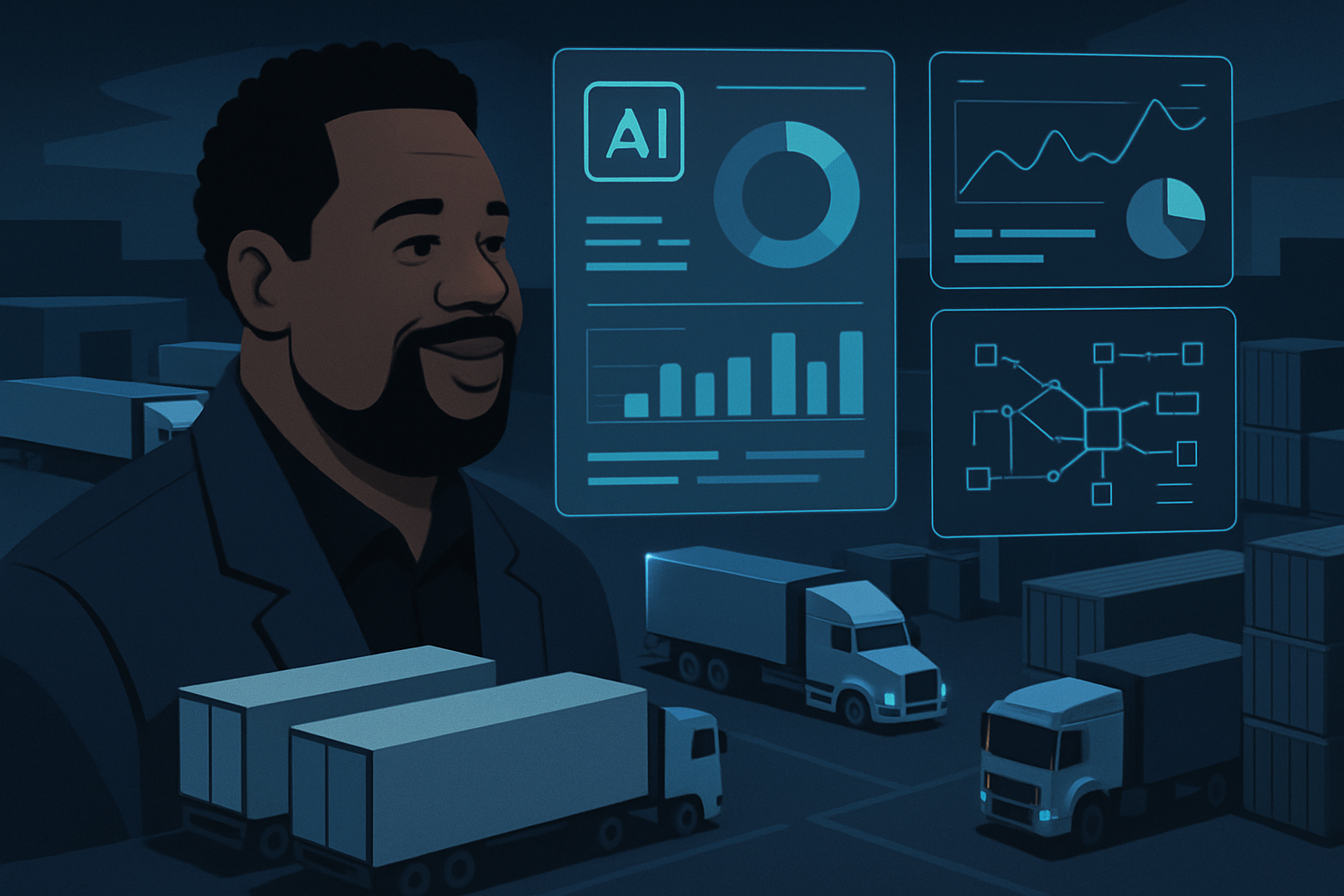
Lazer Logistics, a leader in the logistics sector, recently launched an innovative artificial intelligence tool, Uncle Phil AI, to enhance yard management. This tool draws inspiration from the expertise of COO Phil Newsome, who has 36 years of experience in the field. Uncle Phil AI is designed to optimize operations across 750 sites by providing real-time operational insights.
Lazer Logistics collaborates with retailers and manufacturers to transport their goods from docks to highways and warehouses. The Uncle Phil AI tool improves loading dock management by offering real-time operational information. Based on Phil Newsome's expertise, this tool optimizes decision-making across 750 sites. The AI-powered platform integrates data systems to enhance yard operations and increase efficiency.
Mike Murphy, senior vice president of solutions and innovation at the company, developed an AI coaching tool integrated into its operating system. Named Uncle Phil AI and modeled after COO Phil Newsome, it gives site managers access to the type of institutional knowledge that was previously only available in Newsome's mind, said Melanie Sandlin, director of information systems at Lazer Logistics.
"You put Phil in any yard, and within minutes, he sees what works, what doesn't, and exactly what needs to change. Drivers love him. Site managers learn from him. He is what every operator in our network would wish to have at their disposal every day," Sandlin told Business Insider about Newsome, who has 36 years of experience in logistics. "The problem is, there’s only one Phil, and there are 750 sites, so we asked ourselves: 'What if we could change that?'"
Uncle Phil AI extracts data from all of Lazer Logistics' connected systems that manage truck telematics, in-cab videos, maintenance, driver inspection reports, workforce data, and loading dock management workflows onto a single platform. This way, site managers have access to real-time information and actionable insights that they would not otherwise see.
"Instead of a manager having to open four different systems and piece together a picture themselves, Uncle Phil highlights what’s important: here’s what’s happening, here’s why it might be happening, here’s what a great operator would do about it," Sandlin explained.
Unlike warehouses, which have become increasingly automated over the past few decades, the yard — which manages the flow of trucks, trailers, and containers entering and exiting a facility — is one of the last parts of the supply chain to benefit from a technological upgrade, said Bart De Muynck, strategic supply chain advisor and independent consultant with over 35 years of experience in the field, including roles at Gartner, project44, and YMX Logistics.
"We have very clear KPIs for the warehouse, we have very clear KPIs for transportation, but no one has KPIs for the yard," De Muynck said. "No one really has visibility into their inefficiencies or how it actually affects their organization."
AI has the potential to help those managing yard operations see this data, allowing them to shift from reactive decision-making to predictive decision-making, De Muynck added. In a yard environment where conditions are constantly changing — due to weather, equipment failures, employee absences, and spikes in freight volume — Sandlin stated that quick decision-making is essential.
Le brief IA que les pros lisent chaque soir
Les 7 actus IA du jour, décryptées en 5 min. Gratuit.
Inclus dès l'inscription : notre sélection des meilleurs guides & comparatifs IA.
Choisissez votre rythme
Gratuit · Pas de spam · Désabonnement en 1 clic
"Most yard operations today still lack real-time awareness of what’s actually happening on their site," Sandlin said. "Where is that trailer? Why is this dock congested? Which truck has been idle for two hours, and why? Without answers to these questions as they arise, you are always reacting."
Part of the ability to make quick and accurate decisions is having the knowledge to support them — something Sandlin said Lazer Logistics has only found in its most experienced employees.
Sandlin explained that Uncle Phil AI was trained on three decades of Newsome's operational knowledge so that it can act as a partner for operators who do not have that level of experience to rely on when managing a problem. This works particularly well in yard operations, she added, because they are based on patterns.
"The movements, sequences, and conditions that lead to delays or incidents are not random; they follow patterns that can be learned, and AI is exceptionally good at recognizing these patterns at a scale that no human team could manage across 750 sites simultaneously," Sandlin said.
For a site manager making dozens of decisions each day — such as where to prioritize movements, how to respond to a breakdown, when to adjust staffing, or whether a driver needs coaching — this type of guidance, Sandlin said, is what drives real changes in how trucks are handled, making operations faster and safer while reducing costs.
Since implementing Uncle Phil, Sandlin stated that Lazer Logistics has seen operational returns, where digitizing its vehicle inspection reports and eliminating paper from the process has allowed site managers to reclaim more time in their day that was previously spent on manual entry.
"These aren’t flashy AI numbers, but they represent something important: our best assets, our people, are spending less time on administrative friction and more time on the work that really matters: coaching drivers, serving customers, and managing better yards," Sandlin said. "Clean, consistent, real-time data is now flowing from the field in a way that has never happened before, which is the fuel that makes Uncle Phil AI possible."
Sandlin noted that before Uncle Phil AI, Lazer Logistics prioritized investments in its data infrastructure. She explained that most companies trying to deploy AI often work with sparse, inconsistent, or siloed data and wonder why it doesn’t work well.
"What we chose to do was build the database first," Sandlin said. "Connecting our truck telematics, in-cab video security systems, loading dock management workflows, maintenance and repair records, workforce and scheduling data into a single governed and reliable data layer required real discipline, but that’s why what we’re doing with AI actually works now."
Regarding yard operations, De Muynck stated that updating data collection processes is where most companies' technological journeys should begin. He added that using AI on poor data will only amplify bad suggestions and actions.
"In the past, we simply used data for business analysis, so if the data was incorrect, it was already in the past, but now we use data to predict things and prescribe actions as well as to automate workflows," De Muynck said. "If you build this on poor data, everything that comes out will also be poor and could lead to much bigger problems."
Brief IA — L'actualité IA en français
L'essentiel de l'actualité de l'intelligence artificielle, décrypté et expliqué chaque jour.