A Startup Spends $30,000 on AI: The Quest for Speed at Any Cost
Le brief IA que les pros lisent chaque soir
Les 7 actus IA du jour, décryptées en 5 min. Gratuit.
Inclus dès l'inscription : notre sélection des meilleurs guides & comparatifs IA.
Choisis ton rythme
Gratuit · Pas de spam · Désabonnement en 1 clic
An Unexpected $30,000 Bill in AI Tokens
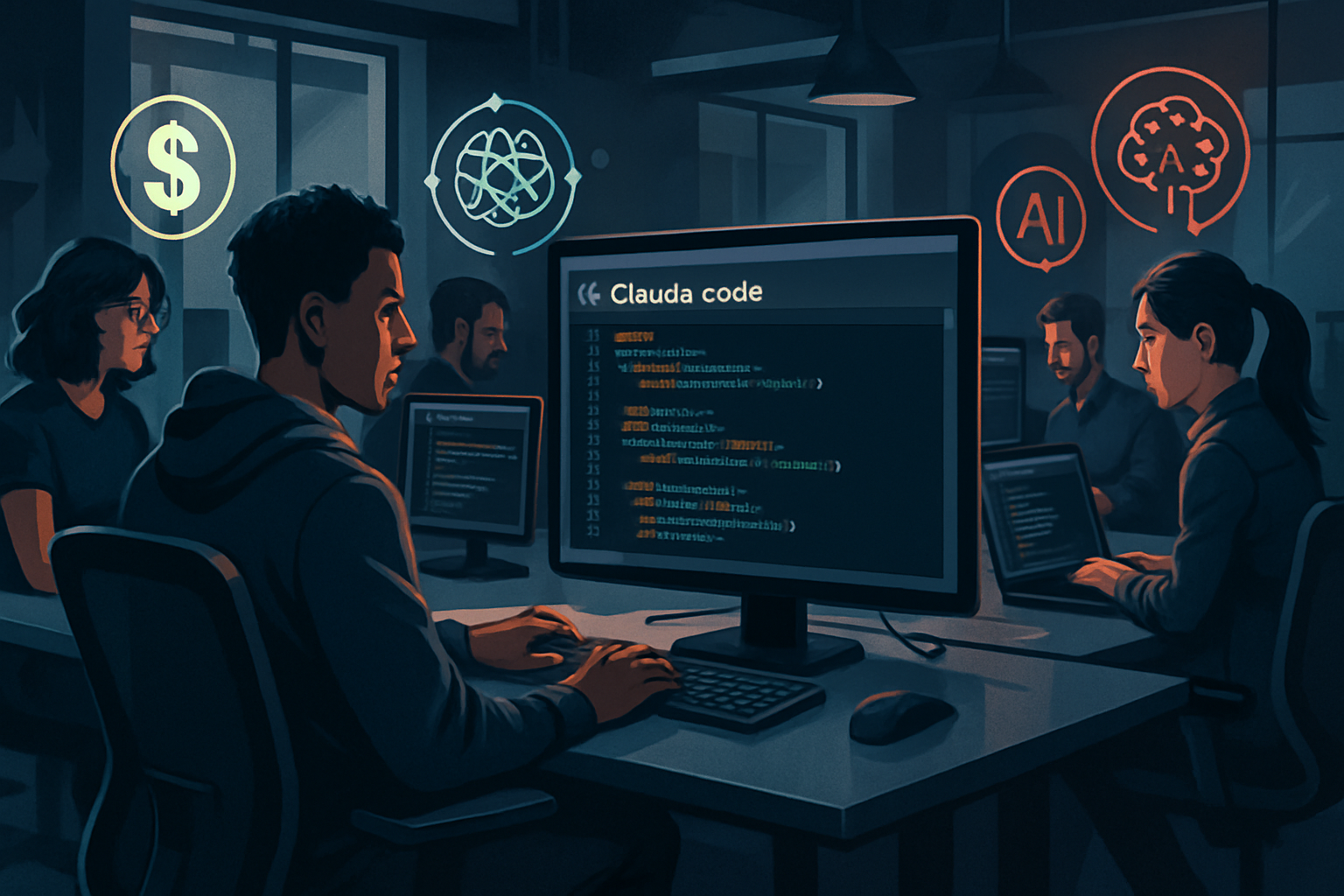
In April, the startup co-founded by Sarthak Dhawan saw its spending on AI tokens skyrocket to $30,000. Dhawan explained that this amount was inadvertently spent in one month, without a specific budget being established for these tokens. The focus was on speed of execution rather than cost management. However, a modification of their Claude Code tool's settings allowed them to reduce these expenses.
That month, the startup accidentally spent around $30,000 on Claude Code tokens, a situation far from ideal. Dhawan does not view this expenditure as a total mistake, but rather as a learning opportunity. The month was marked by intense activity, which is reflected in the spending. High token expenses are often synonymous with innovation or experimentation.
The company, founded by Dhawan and his co-founder Rudy, launched its AI learning application in January 2024. The two left university to fully dedicate themselves to their business the previous year. For them, the main obstacle is the speed of delivery, not the spending on tokens. Slowing down to control these costs would have hindered their momentum.
The Evolving Role of the Engineer with AI
Today, Dhawan's work has evolved from writing code to reviewing it. His daily routine now involves planning and overseeing the operation of systems at a strategic level while revising the code generated by AI. This transition involves numerous intuitive checks throughout the process.
Dhawan feels a decline in his coding skills, a sentiment shared by other engineers using Claude Code. The more AI takes over coding, the less engineers master their own codebase. Twenty years ago, engineers had a deep understanding of every aspect of their code, having participated in its creation.
With AI writing the code, the codebase becomes a less comprehensible entity. However, it is difficult to do without AI, as it significantly boosts productivity. The difference in speed is incomparable.
AI Costs Without a Fixed Budget
The growing use of AI in coding has made it challenging to establish a strict budget for AI tokens. Although the team monitors these costs, there is no formal approval process for the use of tokens.
The team, consisting of about 10 people, has seen its costs rise with the increased use of AI for various tasks. As long as these expenses generate results, they are accepted. On average, the company spends about $20,000 per month on AI tools for software development.
To assess costs per developer, the approach is simple: each person uses what they need, and this method is maintained for now.
A Bill Inflated by a Claude Setting
In April, the AI token bill reached around $30,000. This increase is partly explained by the unintentional use of Claude's fast mode, which is more expensive per token.
Claude Code's fast mode seems to speed up work, but it is also more costly. When Dhawan activated this mode without realizing it, costs skyrocketed.
Now, the fast mode is only used during pair programming where latency is crucial. Outside of these situations, the normal mode is preferred, as it offers sufficient speed without compromising quality, allowing for significant savings.
Simple Strategies to Save Tokens
To reduce token costs, the team opts for simple solutions: using the standard mode by default, choosing lighter models for simple tasks, and avoiding loading the entire codebases into context. However, they are not worried about every dollar spent.
The company has surpassed $13 million in cumulative revenue this year. It remains convinced that if the use of AI improves productivity, it is worth the long-term investment.
Brief IA — L'actualité IA en français
L'essentiel de l'actualité de l'intelligence artificielle, décrypté et expliqué chaque jour.