United States: AI Workshops Replace Some Happy Hours
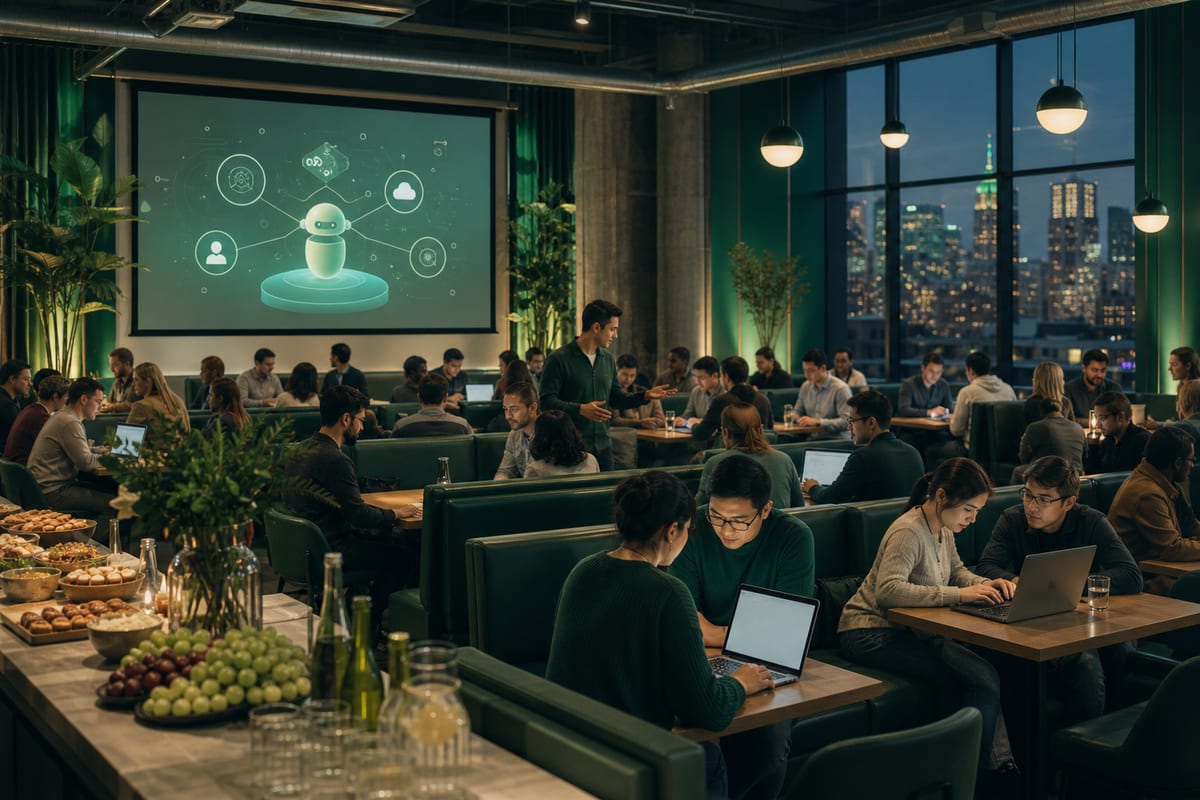
Across the Atlantic, evenings are no longer just about networking over drinks. Practical workshops, hackathons, and themed meetings dedicated to AI are gaining traction, attracting a diverse range of profiles, often non-technical. Supported by data, organizers and companies describe a social learning experience that is more effective and in demand.
Learning Formats that Break Isolation and Accelerate Growth
Learning in groups is seen as more enjoyable than panels or solo coding, and some companies have adopted these formats internally. At Sonar, CEO Tariq Shaukat describes an in-person hackathon that brought together remote and in-office teams. In just one week, he estimates that he saw more progress in new skills than in the previous four months, citing an unstructured environment and playtime that foster experimentation and the sharing of what he calls "tribal knowledge." For freelancers and project creators, these gatherings also serve a social need while prioritizing the acquisition of tangible AI skills. The perceived pace of evolution encourages careful selection of events. This new form of gathering appeals to individuals who are still socially numb after years of remote work and tired of interactions filtered by algorithms. They see it as an antidote to loneliness and the frustration of a failing job search, with an approach centered on experimentation and mutual support. Participants accept chosen "assignments," and if a friendship blossoms alongside an AI agent, that's a bonus.
Numbers Confirming the Shift in Usage
At the end of last year, a Harris poll for Express Employment Professionals indicated that three-quarters of workers view networking as more transactional and less personal, while socializing among colleagues has decreased. This year, participation in happy hours has dropped by 9%, amid rising prices and remote work. In contrast, Eventbrite reports a 23% increase in micro-events in 2024, and last year, nearly 60% of people said they preferred activities where socialization is not the main goal. Practically, Devpost recorded a rise from 369 community AI hackathons in 2024 to 706 last year. On Luma, there are about a dozen AI workshops in New York next week, and an average of two to three per day in San Francisco. The success of "no-frills" events, where attendees come as they are, aligns with a long-standing quest for authenticity.
Le brief IA que les pros lisent chaque soir
Les 7 actus IA du jour, décryptées en 5 min. Gratuit.
Inclus dès l'inscription : notre sélection des meilleurs guides & comparatifs IA.
Choisissez votre rythme
Gratuit · Pas de spam · Désabonnement en 1 clic
In the Room: Pairs, Laptops, and Agents to Build
On a Tuesday evening in Manhattan, around 60 people gathered in an industrial space for a hands-on workshop on building AI agents. The atmosphere was distinct from a happy hour or a conversation with tech figures: food and drinks at the start, discussions at the end, and above all, a classroom setup. While some followed a presentation on the fundamentals of agents, others worked in pairs on their computers, quietly discussing their projects. The formats extend beyond workshops: hackathons, walk-and-talks, fitness classes for founders, with the hope from organizers of fostering richer interactions than a discounted appetizer and more engaging than coding alone.
Organizers and Communities Focus on Social Learning
AI After 5, launched this year by Mina Abdulla to help women train in AI, cultivates a playful and collective spirit. The organizer circulates among the tables and emphasizes the social learning that makes AI more accessible. In the same vein, Paige Kehoe founded Audacious AF for women who build and learn AI. She observes that many do not feel capable of learning alone and seek training, even in their free time. In the spring, her first workshop on Claude offered only fifty spots but attracted nearly 1,000 people on the waiting list. Older still, No-Code NYC has been organizing meetings since 2018 for non-techies interested in drag-and-drop tools or a career as a developer. Its founder, Erik Israni, notes a resurgence of interest related to AI, from developers to novices, with beneficial exchanges between experts and beginners. He points to a general uncertainty about the future of work and the skills required, increased accessibility of coding through AI, and a strong sense of FOMO.
Why These Evenings Are Replacing Entire Happy Hours
The shift towards these formats reflects a turning point in networking. After the Covid period, many want to see each other again but are relearning how to interact. The tension between companies' demand for AI skills and a flood of eager candidates adds urgency to these gatherings. Non-techies, worried about being left behind, find workshops open to diverse profiles. Andrea Huspeni, an entrepreneur, also attends to reduce her costs through AI and asserts that hearing about use cases and tips in person differs from online monitoring. Unlike polished happy hours, these groups, present from Boston to Boise, provide a framework for practicing, exchanging ideas, and preparing for a rapidly changing technological environment.
Brief IA — L'actualité IA en français
L'essentiel de l'actualité de l'intelligence artificielle, décrypté et expliqué chaque jour.