Florida State University: AI is Transforming Education
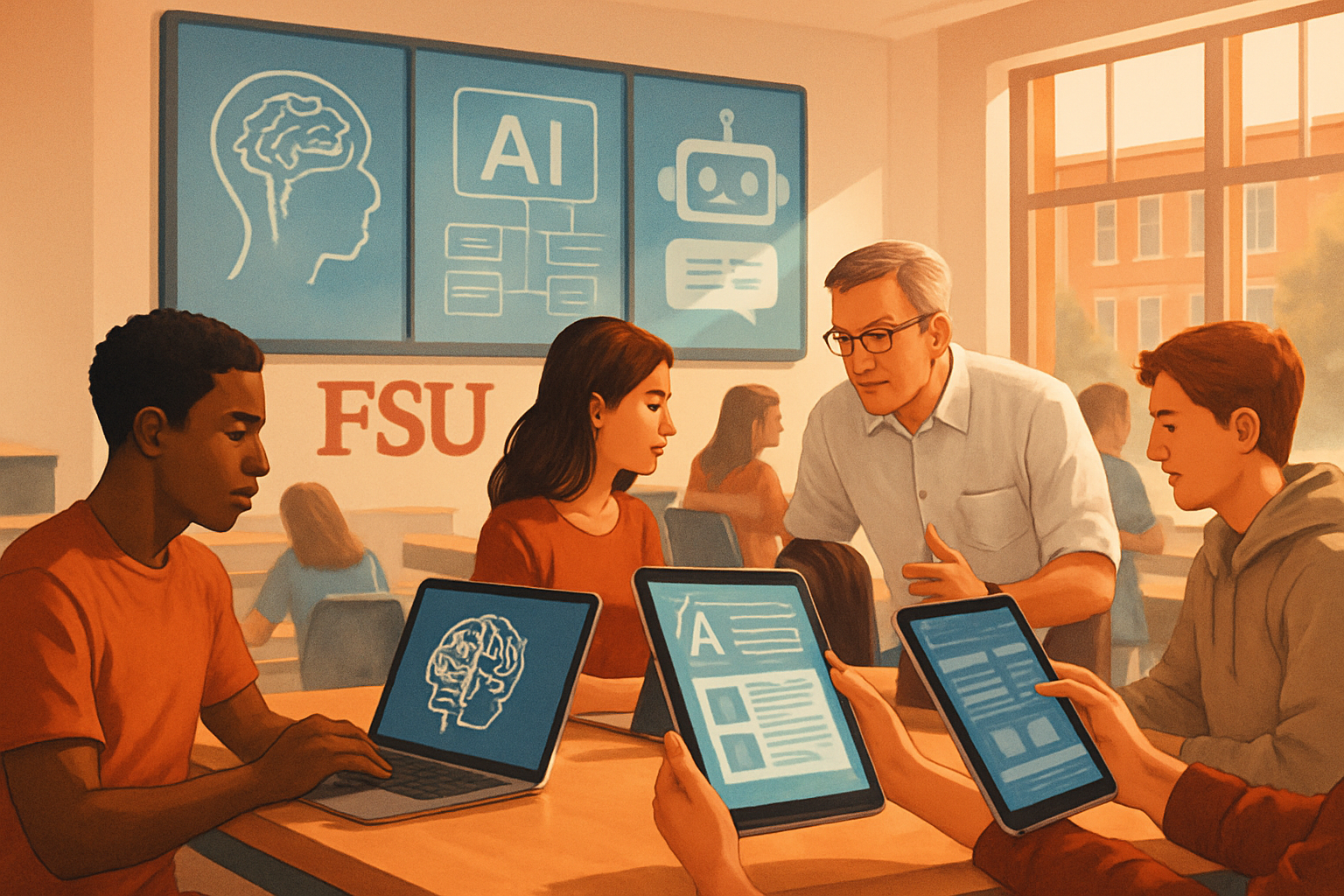
Florida State University: AI is Transforming Education
Teachers, students, academic researchers, as well as staff and administrators working behind the scenes at colleges and universities across the country are all harnessing artificial intelligence to teach, learn, and work more effectively.
A recent survey revealed that 95% of students and educators are actively using AI tools. Although the adoption of AI in higher education began in 2022 with the launch of ChatGPT by OpenAI, it is now driven by a wide range of platforms from both established and emerging companies.
In this context, an increasing number of colleges are creating programs to ensure that the official AI solutions on their campuses align not only with their academic and administrative needs but also with their institutional policies. The IT Services department at Florida State University has shared some of its strategies for success.
Partnerships Aligned with Campus Use Cases
For some institutions, the conversation around AI ultimately converges on a single trusted provider, but FSU has chosen to leverage the power of multiple partnerships.
“Our strategy has been to work with companies that are pushing the boundaries of what could exist in the AI world,” explains Rebekah Dorn, head of university experience and support. “We are looking for solutions that match our use cases, the AI tools that best meet those needs.”
Use cases are identified through structured pilot programs designed to allow the campus community to evaluate solutions and provide feedback. During a trial in 2025 of Microsoft 365 Copilot, for example, graduate students from the university's computer science program experimented with the tool to better understand complex data sets. More recently, 30 instructors from departments across the university participated in a pilot called AI Sparks, where they learned to use Google Gemini and NotebookLM for everything from literary analysis to creating mock interviews for business students.
Le brief IA que les pros lisent chaque soir
Les 7 actus IA du jour, décryptées en 5 min. Gratuit.
Inclus dès l'inscription : notre sélection des meilleurs guides & comparatifs IA.
Choisissez votre rythme
Gratuit · Pas de spam · Désabonnement en 1 clic
Teachers (Primarily) Leading the Adoption
Regarding the role of the IT department in deciding which AI vendors to retain, “we’ve tried to put teachers in the driver’s seat,” says Robert Fuselier, head of academic technology. FSU technologists are “behind the scenes evaluating these tools,” he explains, “but our main goal is to help teachers find ways to implement AI in their courses.”
The main condition for this: before an AI solution is introduced to the campus community, data protection agreements must be in place. “This is, without exception, the first thing we care about,” says Dorn. “Only once we are confident that we have a secure environment and that the vendor will not use our data to train other language models do we allow our staff and teachers to use it.”
The Adoption of Multiple Tools Allows Users to Develop Their AI Proficiency
Today, the list of AI tools licensed for student use at FSU includes Gemini, NotebookLM, Copilot, Zoom AI Companion, and an AI-powered coaching service from LinkedIn Learning. Faculty and staff can also use these solutions, and they also have access to Adobe Creative Cloud and the Falcon Complete Next-Gen cybersecurity service from CrowdStrike, powered by AI.
Additionally, Dorn notes that the university recently launched a campus-wide portal containing over 100 language models for academic and research purposes. Called ArtesAI, this cloud-based platform was built on Microsoft Azure and serves as a central hub for users to securely access and build custom AI tools while maintaining strict data privacy.
Finally, FSU's Advisory Committee on AI in Education meets regularly to discuss the impact of technology on teaching and learning, while its AI Policy Task Force is responsible for developing policies and guidelines for the responsible use of AI. Over time, Fuselier hopes to enhance AI proficiency among students, aiming to prepare FSU graduates for a future where AI solutions are ubiquitous.
“It’s so important that they gain experience with these tools while they’re here,” he says. “We know they will need these skills to be competitive in the job market.”
Brief IA — L'actualité IA en français
L'essentiel de l'actualité de l'intelligence artificielle, décrypté et expliqué chaque jour.