Universities: AI Advances with Confidence
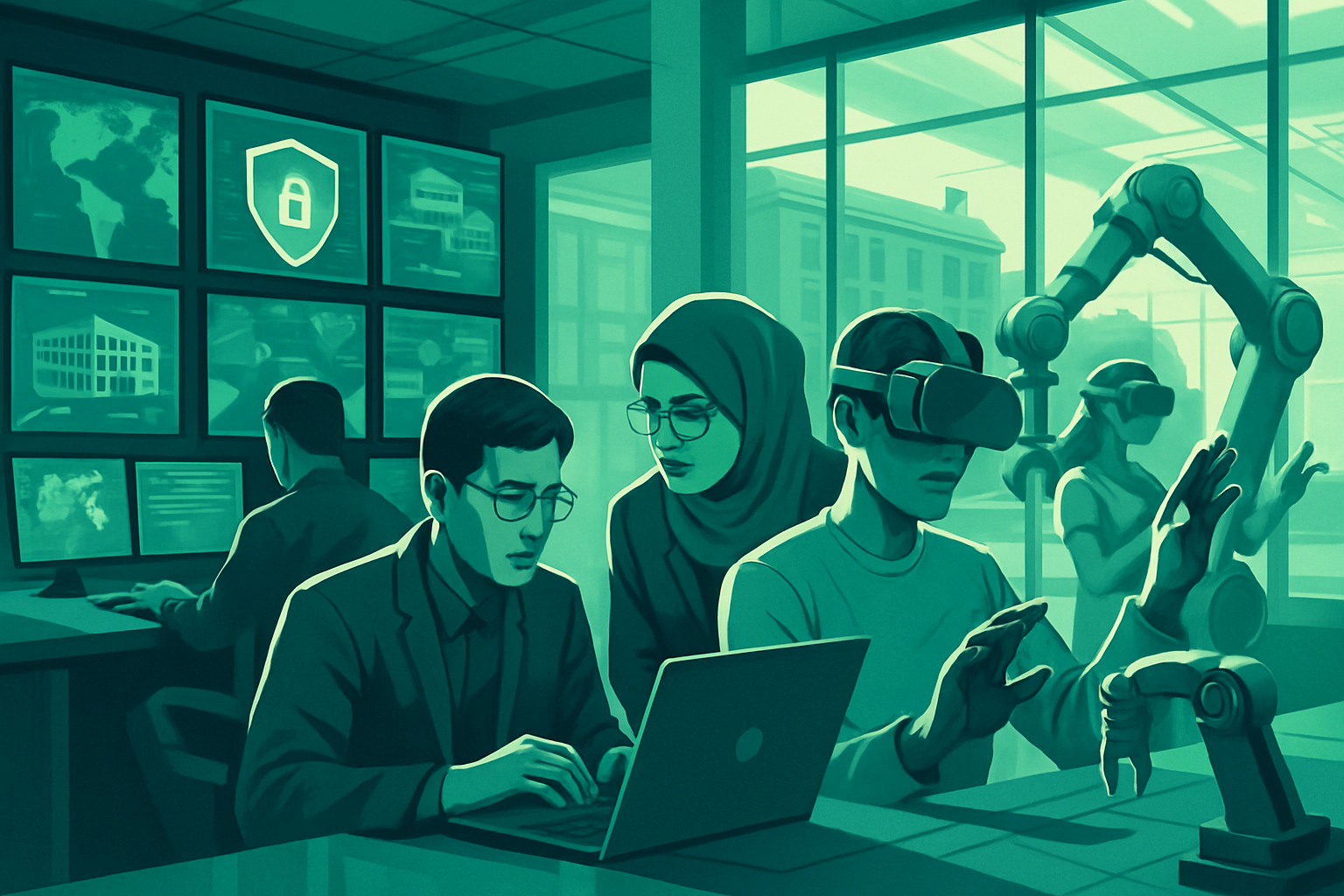
In higher education, AI is establishing itself where trust is conceived as a component of the system. Centralization of cybersecurity, data sharing of research with third parties, and virtual reality training illustrate this approach. Institutions that succeed in this regard treat governance and the human factor on par with technology.
Cybersecurity and Data: Supervision Changes Scale
Community colleges are increasingly centralizing their cybersecurity operations to protect multiple institutions at once, rather than just a single campus. At the same time, academic researchers are implementing technical systems to collaborate with external partners without exposing their research data. In these situations, the trust placed in the systems transcends usual boundaries and requires a different level of supervision than what IT managers are accustomed to. To achieve this, institutions explicitly integrate trust-building into their practices, particularly through governance and transparency structures.
Le brief IA que les pros lisent chaque soir
Les 7 actus IA du jour, décryptées en 5 min. Gratuit.
Inclus dès l'inscription : notre sélection des meilleurs guides & comparatifs IA.
Choisissez votre rythme
Gratuit · Pas de spam · Désabonnement en 1 clic
Dining Services and Laboratories: Concrete Uses Framed by Trust
On campuses, AI systems are used in dining services to provide consumption data that helps managers make decisions. However, these tools are only effective if the staff views them as true operational partners. In research laboratories, students learn to work with robots through virtual reality. This virtual environment adds a layer of safety and helps to bolster students' trust in their collaboration with autonomous machines.
Decision-Makers and Users: A Collaboration Framework to Clarify
Trust is essential for enabling effective collaboration between humans and automated technologies. Technology leaders must be able to rely on the tools they deploy to assist them in decision-making while maintaining the necessary human oversight. Institutions that succeed in this area place equal importance on the human factor as they do on technical aspects. Despite these advancements, the adoption of AI remains hindered by concerns about the potential replacement of humans and the obsolescence of skills. The challenge lies in organizing collaboration with AI in a way that enhances the value of each party involved.
Brief IA — L'actualité IA en français
L'essentiel de l'actualité de l'intelligence artificielle, décrypté et expliqué chaque jour.