USA: Embracing AI, Local Rejection of Data Centers
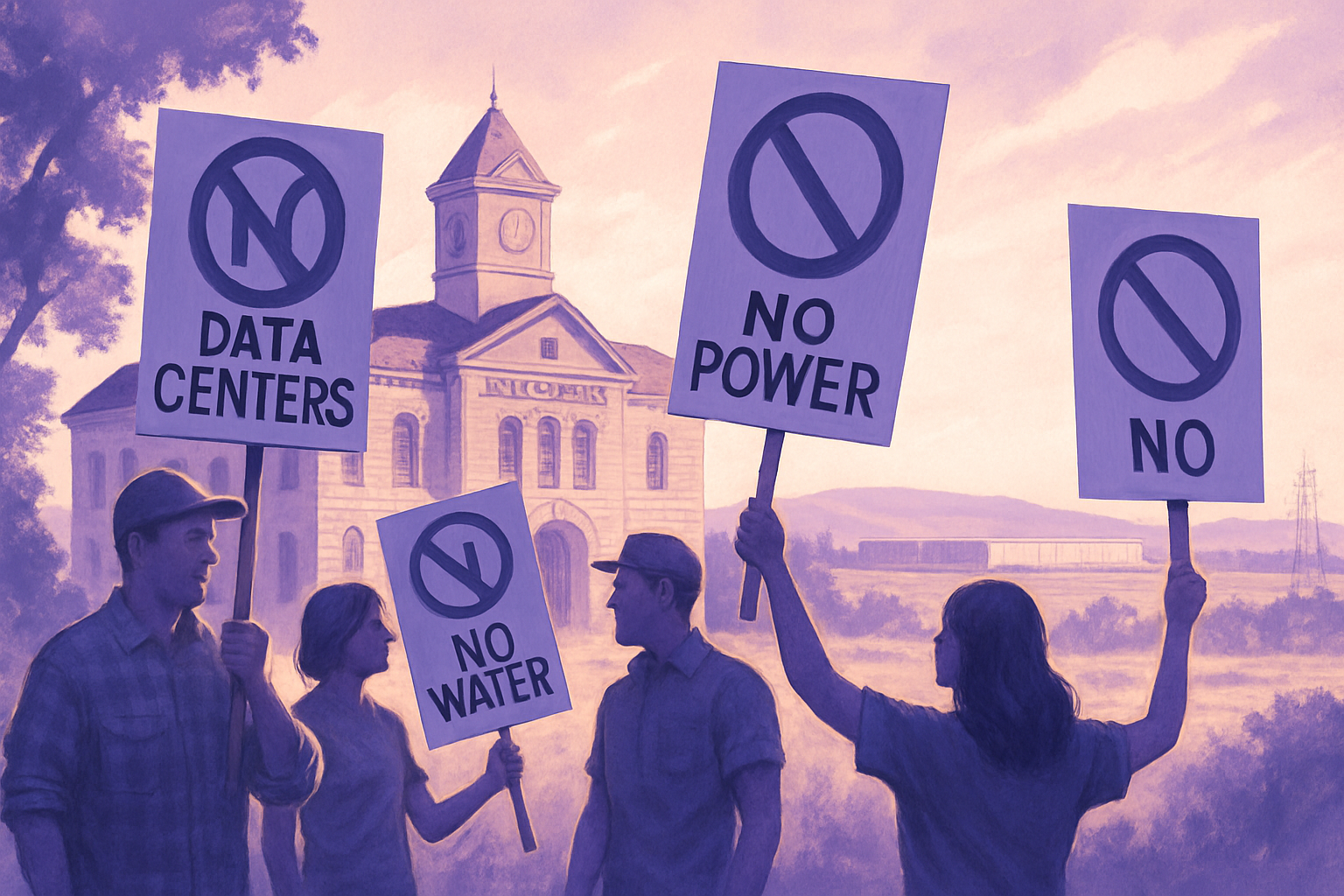
The use of AI is increasing, but the infrastructure projects that support it are facing local resistance. Between federal acceleration measures, reversals by key state officials, and canceled projects, data centers are crystallizing concerns about energy, water, and employment.
Counties in Revolt and Stopped Projects
In Hood County, Texas, where Donald Trump garnered over 80% of the votes in 2024, residents have turned out in large numbers at local meetings to contest data center projects, citing risks to water, the electrical grid, and the rural landscape. Commissioners have tightened development rules, imposing detailed disclosures on water and energy consumption. This opposition has led to the abandonment of at least one project: earlier this summer, a conceptual plan was revoked by a 3-to-2 vote. The site in question covered 862 acres, with a request for 100 megawatts of electricity and up to 20,000 gallons of water per day. One project anticipated 2,000 construction jobs, but only 200 permanent positions once the facility was operational.
High AI Usage, Marked Hostility to Infrastructure
More than half of Americans used an AI chatbot in July, according to Morning Consult, but 70% oppose the construction of AI data centers in their community. Protests have occurred in several regions, driven by concerns about aesthetics, noise, and the high energy and water consumption of these infrastructures. This contrast between the adoption of AI tools and the rejection of their infrastructure has become a recurring political issue. Ben Green from the University of Michigan points out that the integration of AI into search engines, workplaces, and other products makes it difficult to avoid their use, but this does not translate into widespread support for the technology. He notes that workers are sometimes forced to train in AI, and believes that the perceived value of these tools does not offset the local costs associated with data centers.
Reversals by Local Officials and Electoral Calculations
Republican political consultant Mike Madrid believes there is no political cost for elected officials who oppose data centers, arguing that local hostility reflects broader concerns about technological change, wealth concentration, and corporate power over data. This opposition has led some officials to change their positions. In Pennsylvania, Governor Josh Shapiro imposed stricter requirements for new data centers, such as increased transparency and local approval, after previously seeking to attract billions in investments. In Texas, Greg Abbott issued two directives and instituted a temporary pause on development, having previously supported these projects. Madrid also doubts there will be a delayed electoral cost for officials who block data center projects today.
Le brief IA que les pros lisent chaque soir
Les 7 actus IA du jour, décryptées en 5 min. Gratuit.
Inclus dès l'inscription : notre sélection des meilleurs guides & comparatifs IA.
Choisissez votre rythme
Gratuit · Pas de spam · Désabonnement en 1 clic
Federal Push: Accelerating While Managing Bills
Donald Trump presents the acceleration of data centers as a national security imperative to maintain an edge over China. His administration claims it wants to expedite their development without causing an increase in electricity costs for households. The White House specifies that these infrastructures should be established only in willing communities and pay for their own utilities. On the regulatory front, an executive order has established a fast-track permitting regime, the Department of Energy must identify suitable federal lands, and the Federal Energy Regulatory Commission is to consider new interconnection rules for hyperscale centers. The Environmental Protection Agency has proposed eliminating notification and comment requirements for certain so-called minor air permits, which may pertain to backup generators used by data centers. This measure is presented as an administrative relief, but environmental groups fear it could make local opposition to these projects more difficult. Despite expectations of favorable reception in some areas, local dissent remains strong.
Jobs, Tax Revenues, and Calls for Guarantees
Labor organizations, particularly those in the construction sector, support data center initiatives, which presents a specific challenge for Democrats who rely on their backing. Dan Diorio, a representative of the Data Center Coalition, believes the economic benefits extend beyond construction jobs, mentioning significant tax revenues for schools as well as support for millions of jobs in construction, manufacturing, technology, and local services. However, he admits that rapid growth raises questions about land use, energy consumption, and water management, and advocates for open dialogue with residents. Conversely, Ben Green doubts that better communication will suffice to alleviate ongoing material concerns regarding electricity rates, water, and the low number of permanent jobs, arguing that the industry has pushed its advantage too far.
Presidential Messaging and Public Framing
Donald Trump supports the construction of data centers and warns of the economic risks for communities that oppose them, claiming that rejecting these projects could render some areas backward and poor. He has touted the importance of construction jobs and stated that if he were mayor or governor, he would want to host a data center for the jobs and tax revenues generated. A senior White House official indicates that Trump is monitoring unfavorable polling regarding data centers and has intensified his messaging on social media to advocate for their adoption, while acknowledging that the issue weighs on the midterm elections and seeking to highlight the economic and national security benefits.
Brief IA — L'actualité IA en français
L'essentiel de l'actualité de l'intelligence artificielle, décrypté et expliqué chaque jour.