Claude Code: HTML Surpasses Markdown for Dynamic Outputs
Le brief IA que les pros lisent chaque soir
Les 7 actus IA du jour, décryptées en 5 min. Gratuit.
Inclus dès l'inscription : notre sélection des meilleurs guides & comparatifs IA.
Choisis ton rythme
Gratuit · Pas de spam · Désabonnement en 1 clic
HTML, a Strategic Choice for Claude Code
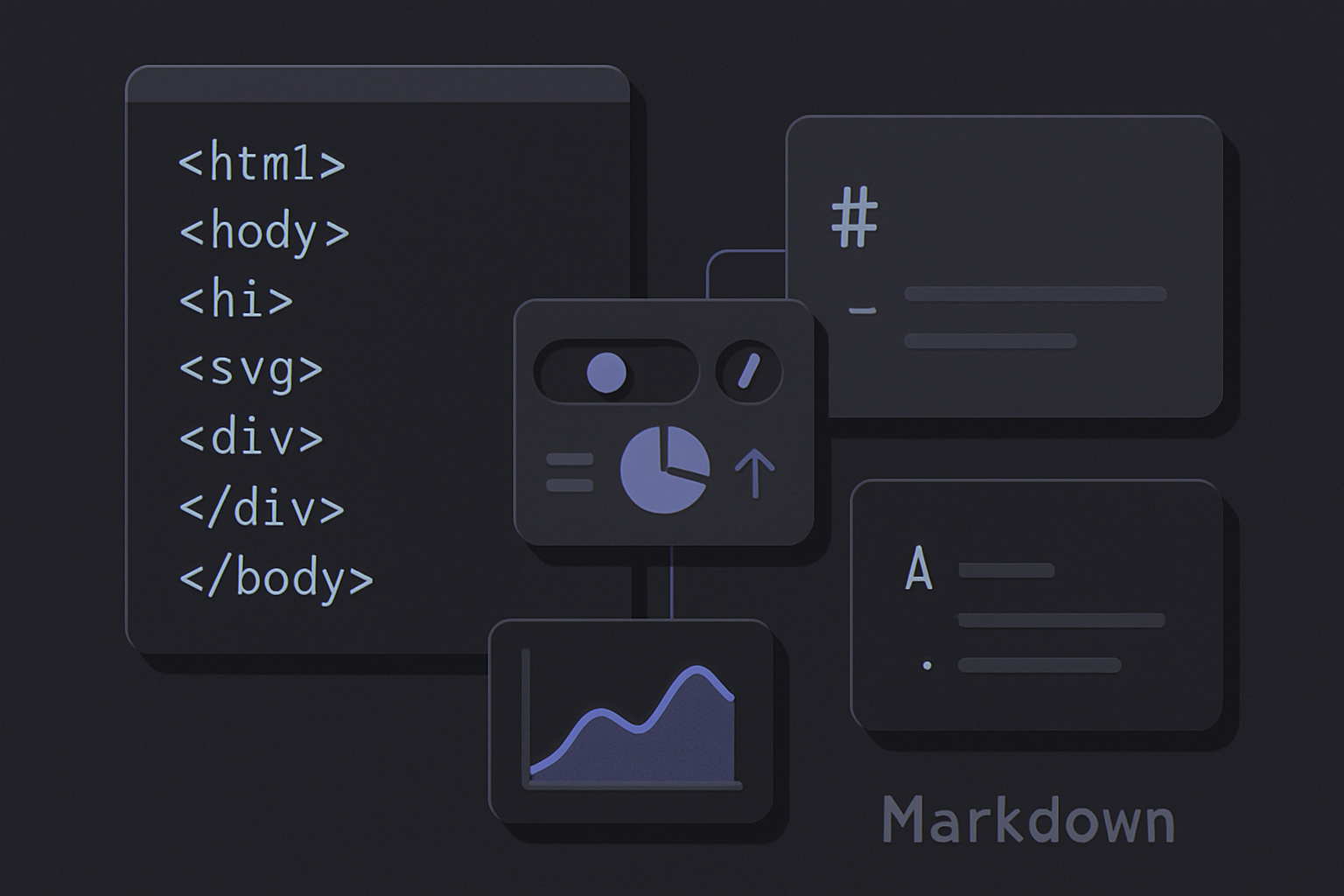
In a provocative article, Thariq Shihipar from the Claude Code team at Anthropic defends the use of HTML format over Markdown for outputs generated by Claude. This preference is based on HTML's ability to provide enhanced interactive and visual features, unlike traditional Markdown.
The article is filled with interesting examples collected from the site, such as a prompt asking Claude to create an HTML artifact to describe a pull request (PR), focusing on concepts like streaming logic and backpressure. The idea is to make the differences visible through inline annotations and colors indicating the severity of the results.
The Limitations of Markdown Compared to HTML
Historically, Markdown has been favored, especially since the era of GPT-4, due to its efficiency in terms of tokens, with a limit of 8,192 tokens. However, Shihipar's article encourages a reconsideration of this approach, particularly for outputs requiring a more dynamic presentation.
By requesting explanations in HTML, Claude can incorporate elements such as SVG diagrams and interactive widgets, significantly enriching the user experience by making information more accessible and engaging.
Experimentation with HTML Explanations
Shihipar has previously explored useful models for building HTML tools, focused on interactive utilities. He expresses his enthusiasm for experimenting with rich HTML explanations in response to ad hoc prompts.
Case Study: copy.fail
A practical example of this approach is the analysis of a Linux security vulnerability documented on the site copy.fail. This vulnerability is accompanied by a proof of concept distributed in the form of obfuscated Python. To generate an HTML explanation of the exploit, a curl command is used:
curl https://copy.fail/exp | llm -m [gpt](/glossaire/gpt)-5.5 -s 'Explain this code in detail. Reformat it, elaborate on the confusing parts, and dive deep into what it does and how it works. Output HTML, well-styled and using the capabilities of HTML, CSS, and JavaScript to make the explanation rich, interactive, and as clear as possible'
Although the result was satisfactory, it would have been preferable to focus more on explaining the exploit itself rather than the surrounding Python code.
Brief IA — L'actualité IA en français
L'essentiel de l'actualité de l'intelligence artificielle, décrypté et expliqué chaque jour.