UX and AI: Controlled Agents, Metrics, and Uses
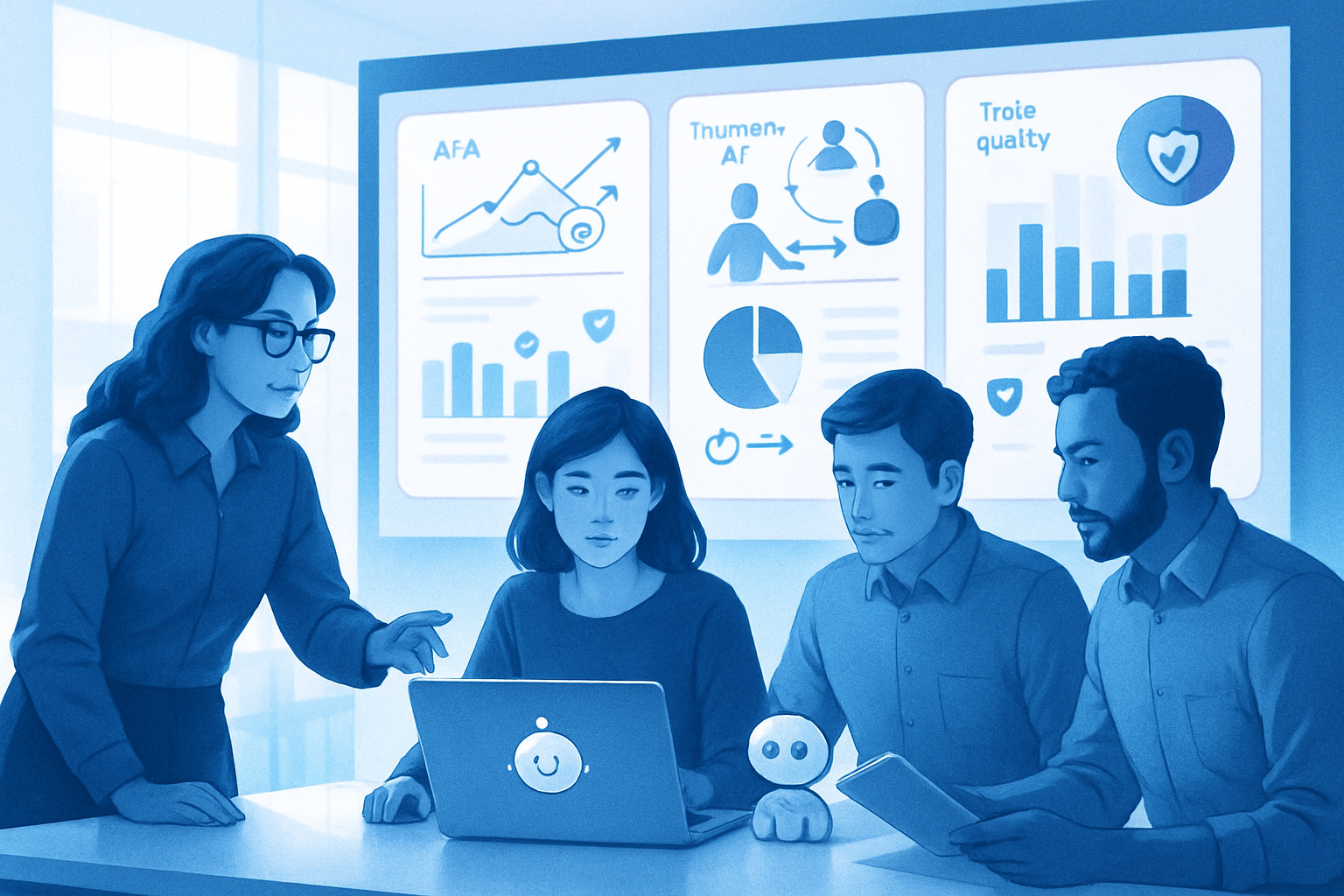
AI is becoming a staple in the toolbox of UX designers, without claiming to replace the discipline. With agents set to act on behalf of users, service metrics to be revised, and targeted research approaches, the challenge remains to frame software assistance through human criteria and oversight.
AI Agents Set to Act and Metrics to Revise
AI agents are increasingly tasked with performing a growing number of actions on behalf of users and organizations, transforming the way services are offered and received. This evolution necessitates adapting service design metrics to evaluate the performance of AI-to-AI interactions, collaboration between humans and AI, the quality of data used, and the trust placed in these systems by users.
UX Research: Accelerating Preparation, Maintaining Control Over Analysis
AI proves particularly useful during the planning and analysis stages of UX research. It can help develop detailed research plans, step by step. During analysis, AI acts as a thought partner, but the interpretation of results must remain under human control, as the final quality always depends on the expertise of professionals. For AI-powered systems to be useful and usable, it is essential to integrate user needs and design judgment into precise evaluation criteria.
Le brief IA que les pros lisent chaque soir
Les 7 actus IA du jour, décryptées en 5 min. Gratuit.
Inclus dès l'inscription : notre sélection des meilleurs guides & comparatifs IA.
Choisissez votre rythme
Gratuit · Pas de spam · Désabonnement en 1 clic
In Practice: Specific Roles for AI in UX Teams
In UX teams, generative AI is used as a content editor, research assistant, ideation partner, and design assistant. Professionals leverage it to complement their work while maintaining control over deliverables and exploring new ways of working.
Framing Usage: Strategy, Virtues, and Established Limits
Many organizations encourage the adoption of AI tools to enhance the quality and efficiency of UX outputs. However, entrusting the entire UX process to AI is not deemed appropriate. The recommended approach is to adopt a strategic posture, using AI to augment capabilities while retaining human control. It is advisable to aim for usage virtues to prevent AI from undermining professional skills. The integration of AI requires critical reflection and continuous adaptation, with the goal of improving efficiency without allowing AI to replace the UX discipline.
Brief IA — L'actualité IA en français
L'essentiel de l'actualité de l'intelligence artificielle, décrypté et expliqué chaque jour.