Vercel: The End of the Single Partnership Era in AI
Le brief IA que les pros lisent chaque soir
Les 7 actus IA du jour, décryptées en 5 min. Gratuit.
Inclus dès l'inscription : notre sélection des meilleurs guides & comparatifs IA.
Choisis ton rythme
Gratuit · Pas de spam · Désabonnement en 1 clic
Multiple Alliances in AI, a New Norm According to Vercel
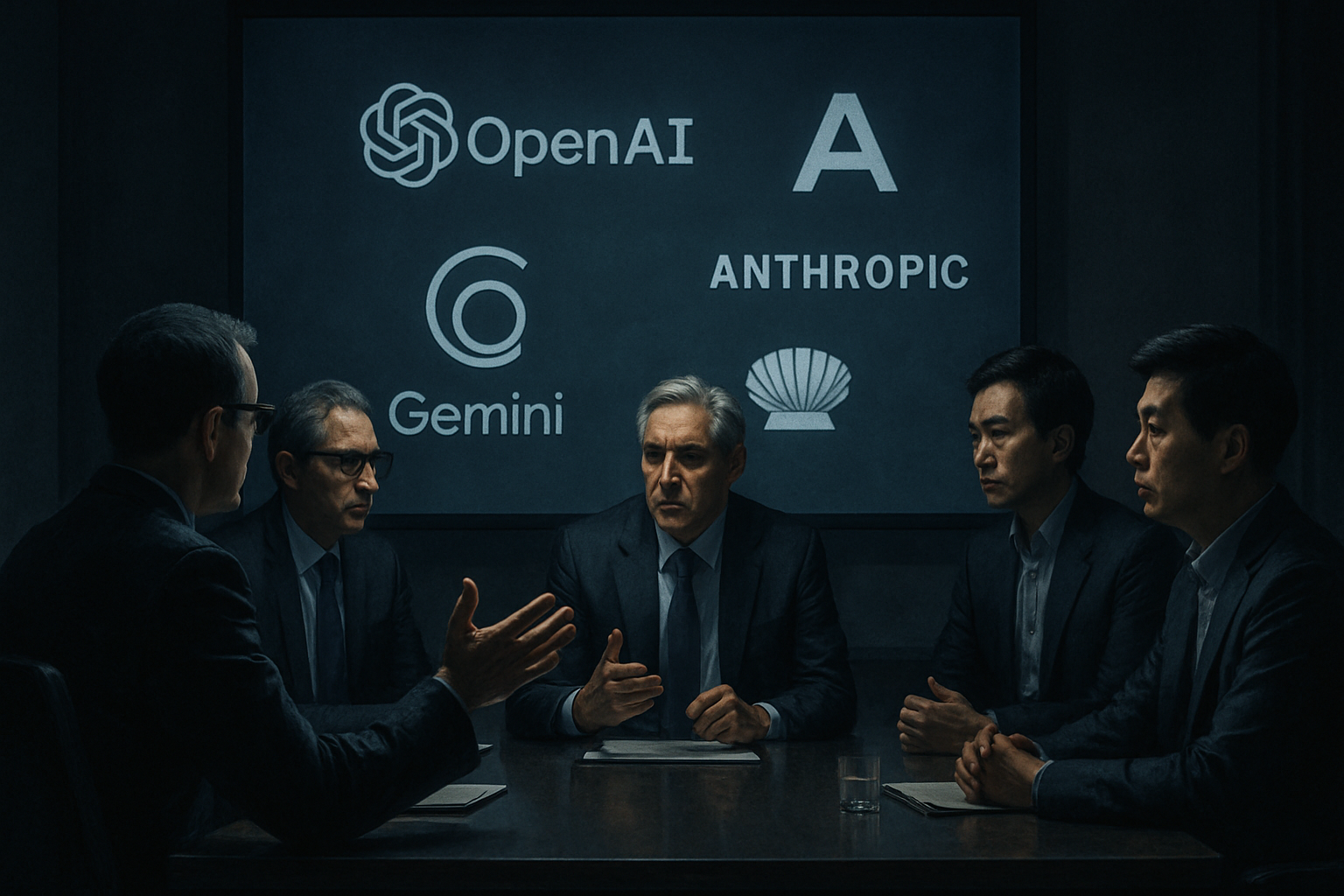
Guillermo Rauch, the CEO of Vercel, recently shared a clear vision of the evolution of partnerships in the field of artificial intelligence during an interview with TechCrunch. According to him, the era when companies partnered exclusively with a single AI lab is over. Today, companies choose to collaborate with multiple labs to meet varied and specific needs.
A Diversified Approach for Increased Efficiency
Rauch explained that companies are adopting a more segmented approach to integrating AI into their operations. Rather than relying on a single provider, they prefer to select different labs for different components of their tech stack. This strategy maximizes the efficiency of AI spending, a crucial aspect in an era where budgets must be justified by tangible returns on investment.
The Prototyping Era is Over
Last year, many companies tended to tie themselves to a single partner, such as OpenAI or Anthropic, to develop their AI solutions. However, Rauch noted that this trend is changing. Companies now have a better understanding of the various parts of the AI stack, from models to data platforms, testing environments, and gateways. This increased knowledge allows for a "plug and play" approach, where each component can be selected and integrated independently.
The Rise of New Players
Among the labs gaining popularity, Gemini stands out for its performance and competitive costs. Rauch also mentioned the growing adoption of Chinese models like DeepSeek and Z.ai's GLM-5.2, which are attracting attention due to their rapid evolution. The Gemini models, in particular, offer impressive price/performance characteristics when it comes to scalability. This diversity of choices provides companies with the necessary flexibility to adapt their AI strategies based on their specific needs.
From Theory to Practice
Last year was marked by an intense phase of prototyping in the AI field, where companies were widely experimenting with AI agents. Today, they are entering a more pragmatic phase, seeking to deploy these agents in production while overcoming the challenges associated with this transition.
Vercel and Resource Optimization
Based in San Francisco, Vercel is a cloud platform that facilitates the deployment of websites and applications. Rauch's observations come at a time when companies are realizing that investments in AI do not always translate into direct added value for their customers. The era when employees were encouraged to consume as many AI tokens as possible is over. Now, the focus is on optimizing spending and effectively utilizing AI resources.
The Example of Coinbase
Brian Armstrong, CEO of Coinbase, shared a similar experience on the platform X in June. He mentioned experimenting with Chinese language models, such as GLM-5.2 and Kimi AI's K2.7, which prove to be less expensive alternatives to American models. Armstrong also discussed the concept of model routing, where prompts are directed to the most suitable models for each task, thus avoiding the use of costly models for simple tasks.
Towards a Multi-Lab Strategy
Rauch's comments on diversifying AI partnerships echo the evolution of cloud strategies. In the past, companies turned to a single major provider like Amazon Web Services or Microsoft Azure. Today, they are adopting multi-cloud strategies to avoid dependency on a single provider and optimize costs. This approach could very well become the norm in the field of AI, offering companies increased flexibility and resilience in the face of technological challenges.
Brief IA — L'actualité IA en français
L'essentiel de l'actualité de l'intelligence artificielle, décrypté et expliqué chaque jour.