Vint Cerf and Experts: AI, a Challenge of Trust and Responsibility
Le brief IA que les pros lisent chaque soir
Les 7 actus IA du jour, décryptées en 5 min. Gratuit.
Inclus dès l'inscription : notre sélection des meilleurs guides & comparatifs IA.
Choisis ton rythme
Gratuit · Pas de spam · Désabonnement en 1 clic
Reflections from Three Technology Pioneers on AI
Key Points of Analysis
The integration of artificial intelligence into our professional and personal lives requires a formalization of business practices to establish balanced relationships between humans and machines. The future of work is envisioned as a collaboration between humans and AI, where each contributes to value creation. Furthermore, the governance of AI, particularly what is termed agentic AI, must clarify shared responsibilities and accountability.
Expert Perspectives
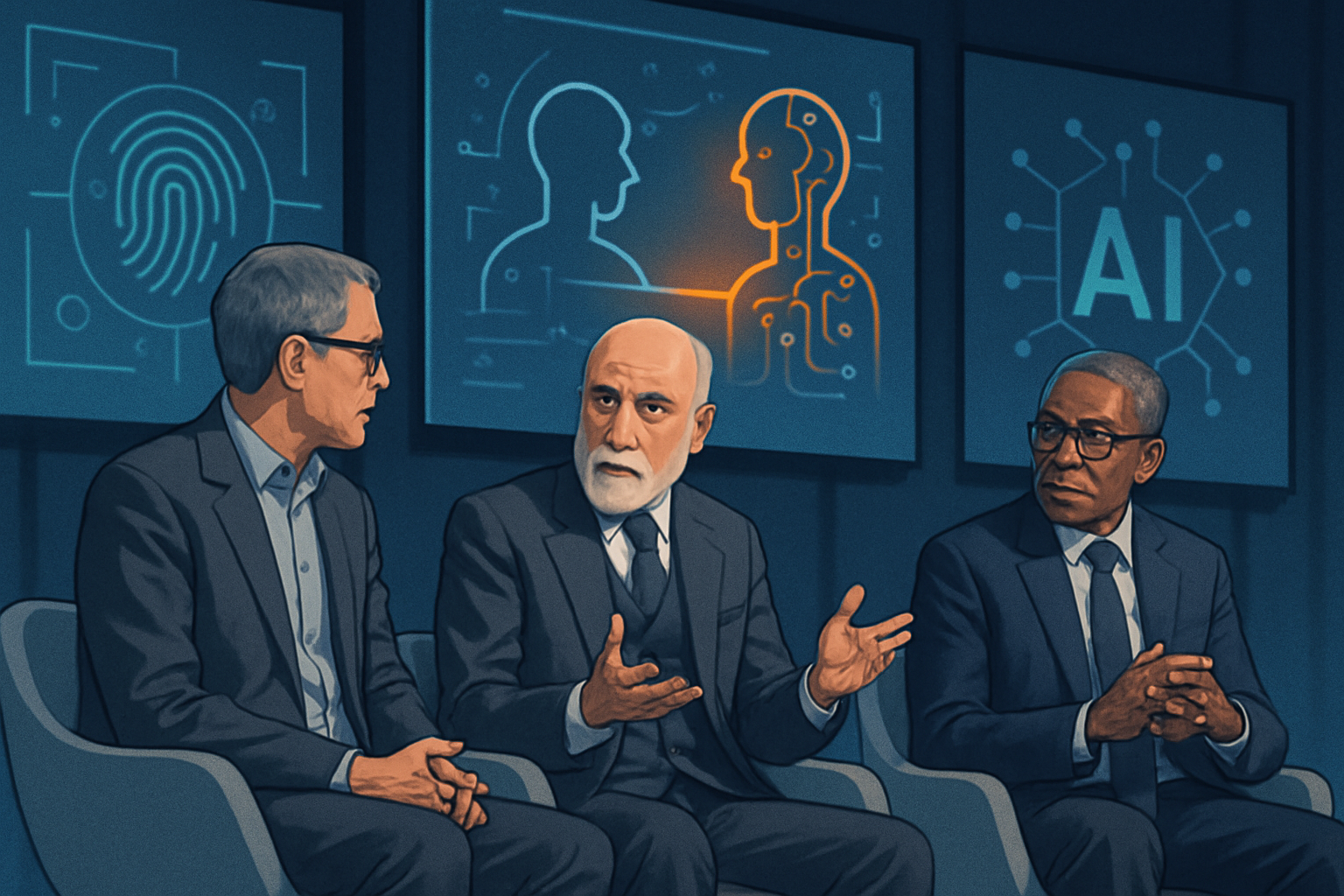
Dr. Vint Cerf, recognized as one of the founding fathers of the Internet, compares the emergence of AI to the discovery of a new form of life. He emphasizes that our professional interactions with AI could be fundamentally different from those we have with other humans.
Dr. David Bray, a seasoned technology leader, suggests rethinking our approach by characterizing AI as extraterrestrial interactions. This perspective aims to avoid the mistake of anthropomorphizing machines, acknowledging their fundamentally distinct nature.
Cheryl Strauss Einhorn, an investigative journalist and founder of Decisive, highlights that AI, indifferent to our fate, leaves us responsible for explaining and managing the consequences of its actions. This underscores the importance of the relationships we establish with AI to ensure commercial success.
The Dynamics of AI-Human Relationships
These experts agree that the way we integrate AI into our work will determine both individual and collective success in the years to come. For business leaders and decision-makers, it is crucial to exercise discernment in the trust placed in the results provided by AI.
Preventing Misunderstandings in AI Instructions
Vint Cerf stresses the importance of proactive thinking to avoid misunderstandings in the instructions exchanged between AI systems. He expresses a major concern: "The big problem that worries me is that agents are talking to each other using natural language. We don’t want agents to misunderstand and execute at the speed of light compared to human speed."
David Bray adds that governance must prevent anarchy, not only among humans but also between AI agents, to ensure smooth operation.
Understanding Our Unique Approach
Cheryl Strauss Einhorn discusses the necessity of understanding our own way of perceiving the world, which she refers to as our "special sauce." This understanding is essential to avoid misunderstandings when interacting with AI.
Assessing the Reliability of AI Results
Vint Cerf views AI as a new type of collaborator, akin to an intelligent research assistant. He believes that AI can enhance the research capabilities of a project but emphasizes the importance of not blindly trusting initial results without verification.
David Bray recommends a cautious approach, where AI results should be triangulated to ensure their reliability.
The Question of Responsibility in Case of Errors
Cheryl Strauss Einhorn uses an analogy to illustrate responsibility in the event of an issue with AI: the choice between a surgeon and a Lamborghini driver. In some cases, a precise response is expected, while in others, careful navigation is necessary.
David Bray anticipates that by 2030, a significant portion of information will be generated synthetically by AI, raising questions of accountability for organizations.
Vint Cerf concludes by highlighting the importance of establishing recourse in case of problems, a step that could prove not only beneficial but essential.
Brief IA — L'actualité IA en français
L'essentiel de l'actualité de l'intelligence artificielle, décrypté et expliqué chaque jour.