Vint Cerf and the Future of Autonomous AI Agents on the Internet
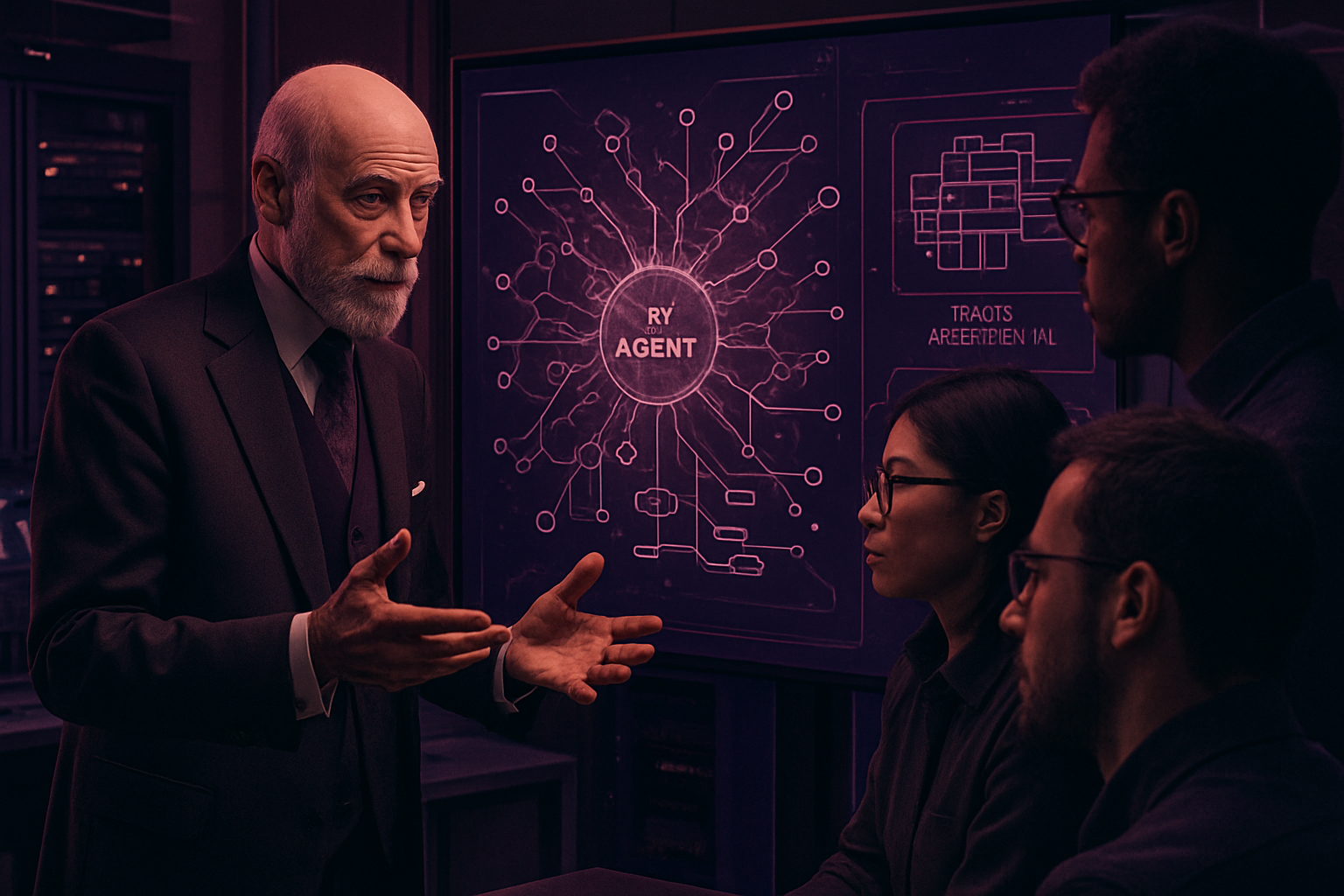
Vint Cerf and His Commitment to the Digital Future
Vint Cerf, one of the iconic figures behind the creation of the internet as we know it, recently left Google last week after two decades of service. However, his involvement in digital evolution does not stop there. He has recently taken on the role of advisor for Innovation Labs, an organization dedicated to creating an open infrastructure that allows artificial intelligence agents to reliably identify themselves on the Internet.
A New Mission with Innovation Labs
Innovation Labs is a branch of Identity Digital, a company specializing in DNS registry management. This company views domain names as an essential tool for ensuring accountability of AI agents. The goal is to prepare for a future where online interactions increasingly occur between automated agents rather than between humans. Cerf thus joins a small but influential group of internet personalities who support this vision.
AI Agents and Their Potential for Autonomy
Currently, AI agents primarily operate within closed systems, using internal resources to accomplish specific tasks. However, companies anticipate a future where these agents could operate autonomously on the Internet, interacting directly with other agents. A major obstacle to this vision is the lack of a shared standard for identifying and auditing these agents transparently.
DNSid: An Emerging Solution
To address this need, Innovation Labs has developed DNSid, a registry designed for the identification of AI agents. This system associates each agent with an existing Internet domain name and uses cryptographic proofs to track its registration over time. Allie Kline, interim CEO of Innovation Labs, revealed that the company is currently testing these standards with several major technology and identity companies, although their names remain confidential.
Le brief IA que les pros lisent chaque soir
Les 7 actus IA du jour, décryptées en 5 min. Gratuit.
Inclus dès l'inscription : notre sélection des meilleurs guides & comparatifs IA.
Choisis ton rythme
Gratuit · Pas de spam · Désabonnement en 1 clic
The Challenges of Identifying AI Agents
Vint Cerf has expressed his interest in bringing his expertise at a time when the issue of identification and accountability of AI agents is becoming crucial. He told TechCrunch that he could help at a moment when naming and identification are becoming increasingly important. Cerf questions the authorities governing these agents, their origins, and how their behavior is controlled and verified. According to him, these questions are complex because AI agents are far more dynamic than simple Internet domains, and it is not yet clear what the responsibilities of the organizations registering these agents are.
A Transformative Period for the Internet
Cerf describes this period as both fascinating and potentially frustrating, as it marks a significant milestone in the evolution of the internet and the technologies that depend on it. The functionality of AI agents is so radically different that it could transform the way we interact online.
The Importance of Shared Standards
For Cerf, the widespread adoption of any AI agent identification protocol will depend on its functionality and its ability to integrate into a diverse digital ecosystem. He provided an example where company X uses the technology of agent Y and company A uses the technology of agent C, and then they do not work together. He emphasizes that user pressure will be crucial to force harmonization, as was the case with TCP/IP.
A Data Non-Claiming Approach
A key aspect of Innovation Labs' proposal is that it does not seek to control the registration data of AI agents. Kline emphasized that this could avoid the natural rejection that arises from the idea of a tech giant monopolizing a standard and the associated data.
The Agentic Economy: A Perspective
When asked about the future of the agentic economy, Cerf remains cautious. He does not view this evolution as inevitable, but he is certain that people will attempt to realize it. According to him, our natural tendency to seek easier solutions could very well drive us to adopt AI agents to perform tasks on our behalf.
Brief IA — L'actualité IA en français
L'essentiel de l'actualité de l'intelligence artificielle, décrypté et expliqué chaque jour.