Visa and Mastercard: Agentic AI Revolutionizes Online Payments
Le brief IA que les pros lisent chaque soir
Les 7 actus IA du jour, décryptées en 5 min. Gratuit.
Inclus dès l'inscription : notre sélection des meilleurs guides & comparatifs IA.
Choisis ton rythme
Gratuit · Pas de spam · Désabonnement en 1 clic
The Rise of AI Agents in Online Commerce
Artificial intelligence assistants, such as ChatGPT and Claude, have already transformed the way we interact with technology by answering our questions and generating content. However, a new era is emerging with the advent of AI agents capable of performing tasks on behalf of users. This evolution could enable these artificial intelligences to make purchases for us, a development that could revolutionize online commerce.
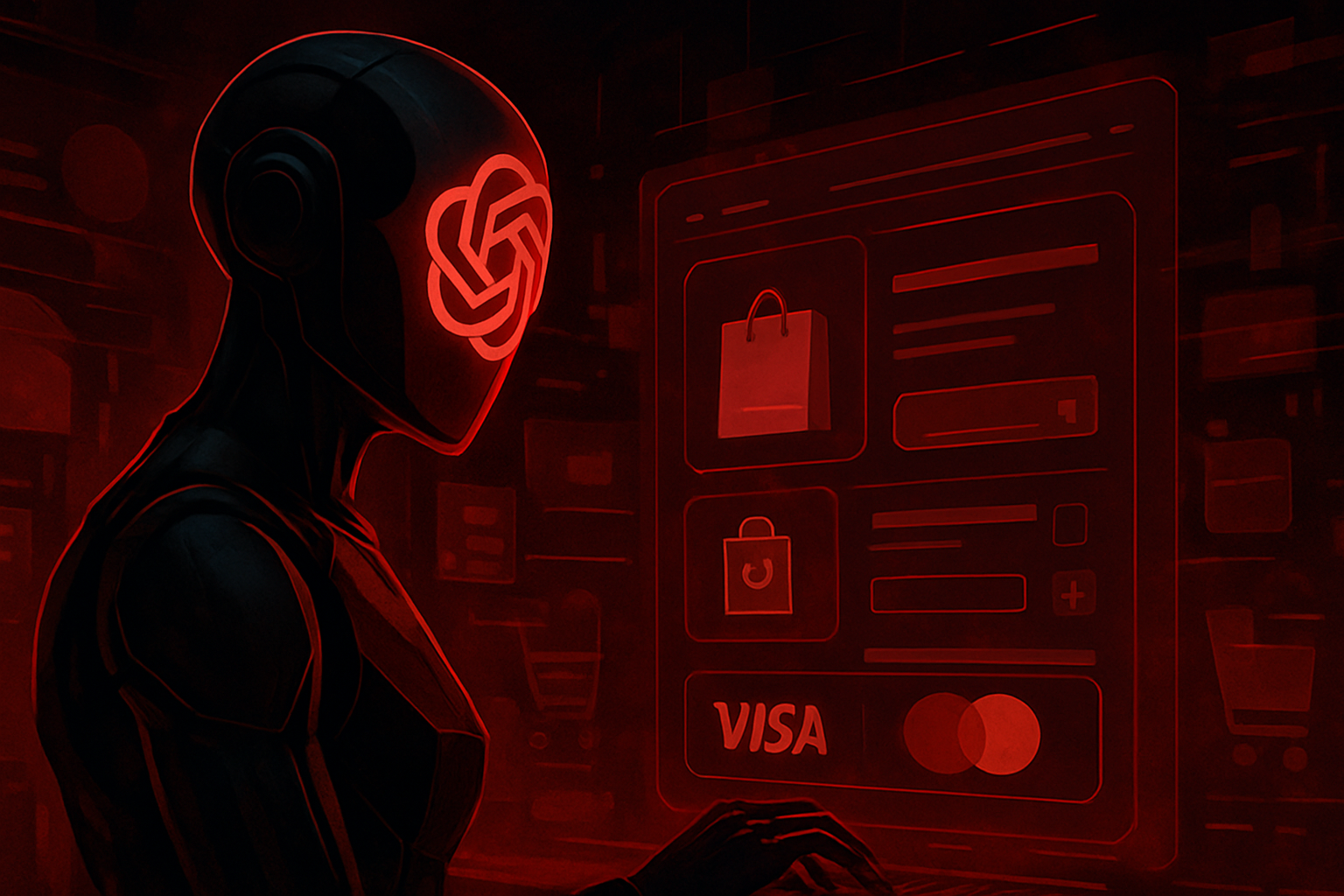
Visa and Mastercard, two American payment giants, are at the forefront of this revolution. They are working intensively to integrate these AI agents into their systems, allowing consumers to delegate the search, selection, and payment of products to these technologies. Online commerce is on the verge of a major transformation.
When AIs Will Shop for You
Agentic artificial intelligence is no longer limited to providing answers. It is now capable of executing complex tasks, which could transform entire sectors, particularly online commerce. Imagine a user asking their AI assistant to find a smartphone under 500 euros, compare offers, and finalize the purchase, all without leaving the conversation.
According to forecasts, by the next four years, agentic commerce could represent $1 trillion in the United States. Globally, this figure could reach between $3 trillion and $5 trillion. Visa and Mastercard are therefore seeking to position themselves in this promising market.
Partnerships and Innovations
Visa recently announced a strategic partnership with OpenAI to enable AI agents to make online purchases with prior user consent. ChatGPT, for example, will integrate Visa's payment services, allowing merchants to accept transactions initiated by these AI agents.
In addition to OpenAI, Visa is collaborating with Anthropic and Microsoft. Merchants will be able to verify the compatibility of their sites with AI agents, and a directory of reliable agents will be established. Payment tokens will precisely outline the actions authorized for an AI, addressing users' security and reliability concerns.
Mastercard's Ambitions
While Visa focuses on purchases made on behalf of users, Mastercard aims to go even further with its "Agent Pay For Machines" initiative. This project seeks to enable AI agents to carry out automatic microtransactions between services.
In practical terms, this means that an AI could be tasked with creating a website according to a defined budget, purchasing a domain name, subscribing to hosting, acquiring images, and integrating a payment solution, all without human intervention.
Security and Trust
The real challenge of this revolution is not so much technological as it is related to security and trust. Visa and Mastercard hope to become the "trusted third parties" of this new online commerce model. Although agentic commerce is still in its infancy, these companies are convinced that it could represent one of the next major evolutions in online commerce. Their task now is to convince consumers to entrust a portion of their purchases to artificial intelligences.
Brief IA — L'actualité IA en français
L'essentiel de l'actualité de l'intelligence artificielle, décrypté et expliqué chaque jour.