Vivodyne: A Human Data Center with Claimed Scores of 94 to 100%
Le brief IA que les pros lisent chaque soir
Les 7 actus IA du jour, décryptées en 5 min. Gratuit.
Inclus dès l'inscription : notre sélection des meilleurs guides & comparatifs IA.
Choisis ton rythme
Gratuit · Pas de spam · Désabonnement en 1 clic
Vivodyne has inaugurated a site near San Francisco that the company claims is the largest "human data center" in the world. The bioengineering startup relies on robotic laboratories capable of cultivating human tissues, dosing them, and monitoring them autonomously, with the ambition of generating causal data. It already claims a throughput twice that of animal testing in the United States and high predictive performance on certain tissues, aiming to better select drug candidates before clinical trials.
Vivodyne claims to achieve double throughput and opens near San Francisco
Last week, Vivodyne opened a site located just outside San Francisco, which the company presents as the largest "human data center" in the world. According to its CEO Andrei Georgescu, the team is already achieving a testing volume that represents double the total animal experimentation conducted in the United States. The company had previously raised nearly $80 million through two funding rounds led by Khosla Ventures to support this expansion phase.
Cultivated human tissues and claimed scores of 94% to 100%
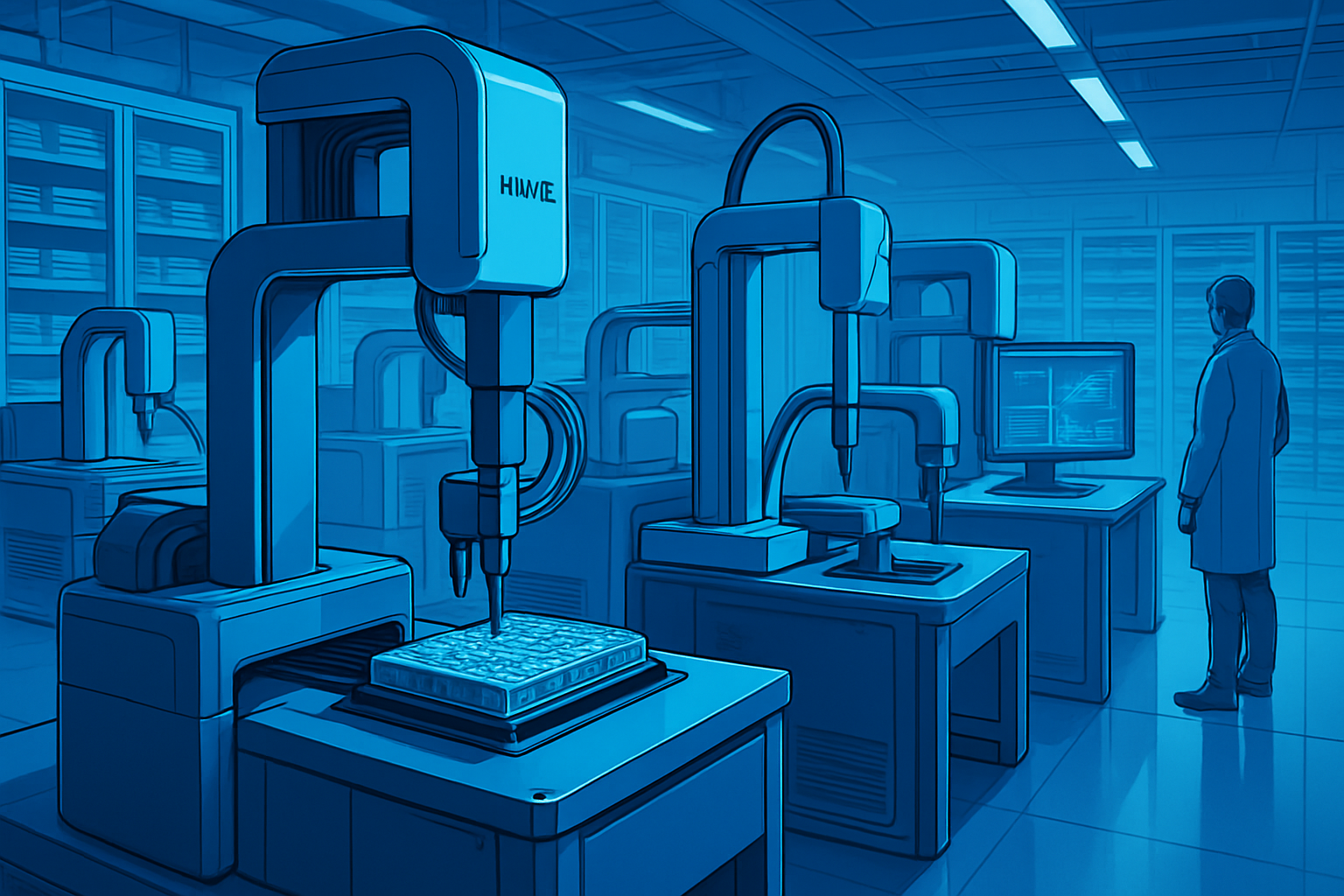
Vivodyne's HIVE laboratories, which are modular robotic systems, can, according to the company, cultivate 20 types of human tissues, dose them, and monitor them autonomously, generating what it calls causal data. Vivodyne claims that its tissue models closely mimic human organs: 94% predictive accuracy for liver cells against human toxicity trials, 96% agreement for respiratory tract tissues, and 100% concordance on tests involving 20 chemotherapy treatments in bone marrow. Founded in 2021 at the University of Pennsylvania, the company is led by Andrei Georgescu, a co-founder with a PhD in bioengineering.
Stated goal: better sorting before costly clinical trials
Vivodyne aims to accelerate the development of drug candidates by using indicators deemed more reliable before the clinical trial phase, which generally costs tens of millions of dollars. The company states it is working with various large pharmaceutical groups, although it has not publicly disclosed their identities. Andrei Georgescu compares the situation to automotive crash tests, where manufacturers aim for NHTSA compliance before the test, while pharmaceutical companies rarely have equivalent confidence before a trial, with the vast majority of compounds failing to gain FDA approval. More broadly, 90% of drugs that are effective in animals fail to be approved in humans despite entering clinical trials.
Causal data to train new AI models
Andrei Georgescu sees autonomous biological laboratories as a crucial means of producing causal data on human biology, intended for training new models. He cites a study published last month in Nature Methods that finds no clear scaling law for data on existing cellular corpuses. According to him, current training relies on static snapshots and ignores the trajectory that leads from one cellular state to another. The HIVE machines continuously track hundreds of thousands of experiments where diseased tissues are subjected to a stimulus, which he believes could feed reinforcement learning capable of better understanding cause-and-effect relationships.
Promises of AI giants and the real state of the pipeline
At this stage, a handful of AI-designed drugs have reached human trials, with one currently in Phase III. Alphafold, touted as a Nobel Prize winner and a major breakthrough for understanding the foundations of life, has yet to result in a new drug. Isomorphic Labs, created to capitalize on Alphafold, aims for its first trials by the end of the year, after an initial timeline set for 2025, and stated in February that drug discovery requires highly precise predictive models covering numerous properties and interactions. In the public debate, Dario Amodei recently dismissed the promises of "curing cancer" through AI as clichés, although he has previously mentioned them himself. Sam Altman has regularly invoked cancer cures to justify the pursuit of AGI and the computational power of OpenAI, while Demis Hassabis suggested last year that AI could potentially cure all diseases within a decade.
Brief IA — L'actualité IA en français
L'essentiel de l'actualité de l'intelligence artificielle, décrypté et expliqué chaque jour.