Voice AI: the "ChatGPT moment" deemed still far off
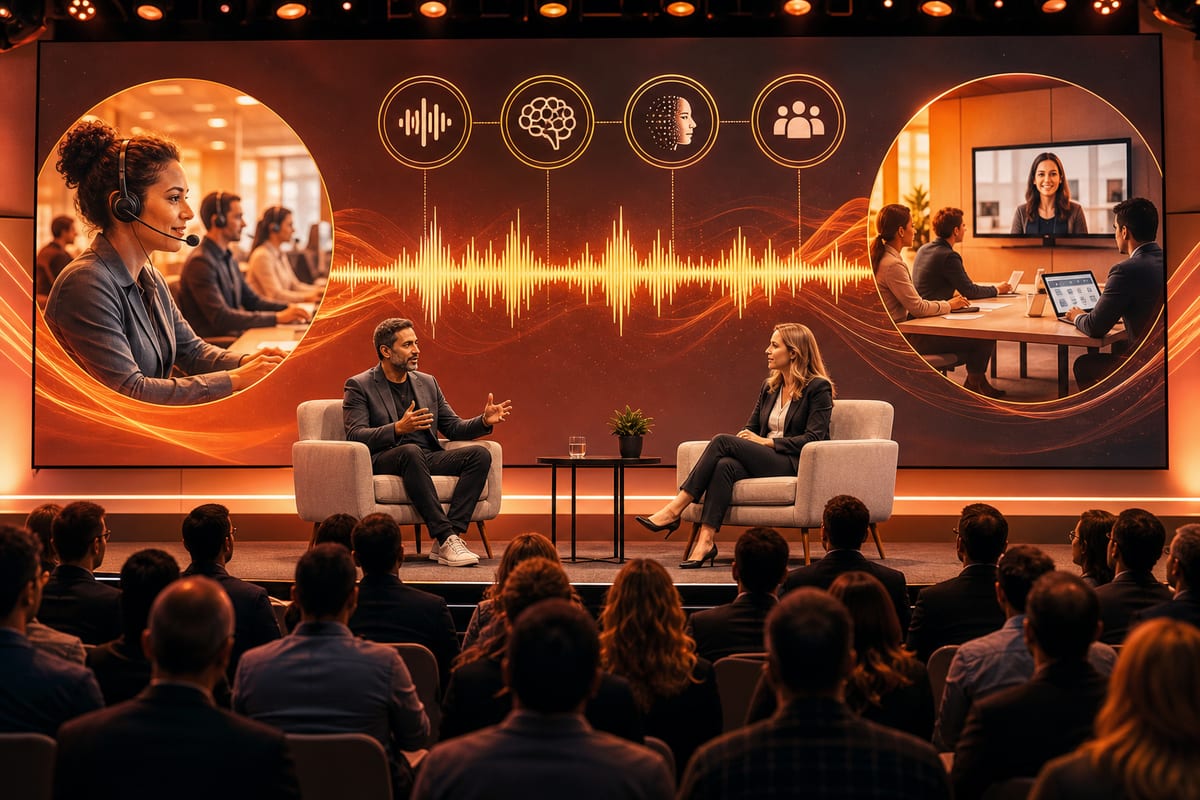
Despite significant funding and a steady stream of launches, executives from PolyAI and Otter believe that voice technology has not reached the tipping point seen with ChatGPT. They point to concrete obstacles, from ASR accuracy to emotional expression, and advocate for greater transparency in usage.
Reliability and Transparency Remain Blind Spots
Voice assistants still struggle to accurately understand their users, and note-taking tools can produce incorrect transcriptions or summaries. Shawn Wen attributes part of the problem to speech recognition models that omit keywords, undermining the complete context. Alex Gay believes that the language itself remains an area for improvement for these models. He warns that an initially inaccurate transcription degrades all subsequent actions and undermines user trust, which is why, in his view, it is essential to continue improving ASR due to significant downstream impacts. Executives also advocate for greater transparency: tools should indicate when recording and AI usage is taking place. Otter aims to build trust by notifying users in the chat when a meeting is being recorded, even without a bot present. Finally, Shawn Wen emphasizes the importance of clearly indicating to business callers that they are interacting with an AI. These positions were expressed on stage at the HumanX conference last month.
Le brief IA que les pros lisent chaque soir
Les 7 actus IA du jour, décryptées en 5 min. Gratuit.
Inclus dès l'inscription : notre sélection des meilleurs guides & comparatifs IA.
Choisis ton rythme
Gratuit · Pas de spam · Désabonnement en 1 clic
Naturalness of Voice and New Uses at the Heart of Roadmaps
After reaching the full-duplex milestone, Shawn Wen identifies the next challenge as accelerating reasoning to provide quick responses and make exchanges fluid. He believes that customer service agents must avoid a robotic tone and inspire enough confidence for callers to feel that a problem can be resolved. He adds that if voice quality allows for two or three comfortable exchanges and if the agent resolves the request, the need to speak to a human may decrease. At Otter, Alex Gay identifies key steps as identifying participants, capturing intentions, and providing enriched transcriptions based on organizational knowledge. The company is also working on digital twins capable of representing people in meetings, with one imperative: an output voice that expresses the emotions of a human conversation. Without the ability to debate or convey a felt relationship, an avatar would remain, in his view, a simple Q&A chatbot. For Otter, transcription is merely a foundation intended to generate productivity gains.
A Flourishing Market, but No "ChatGPT Snapshot"
The sector attracts billions of dollars, from model builders to customer service applications, meeting note-taking, and dictation. Announcements come in weekly, promising voices and dialogues close to human-like interaction. However, Shawn Wen believes that voice technology has not experienced the shockwave observed with ChatGPT. The development of full-duplex models marks a technical milestone, but it is not sufficient on its own to produce this shift.
Brief IA — L'actualité IA en français
L'essentiel de l'actualité de l'intelligence artificielle, décrypté et expliqué chaque jour.