Whisker Litter-Robot 5 Pro: Faulty AI and Sensors to Blame
Le brief IA que les pros lisent chaque soir
Les 7 actus IA du jour, décryptées en 5 min. Gratuit.
Inclus dès l'inscription : notre sélection des meilleurs guides & comparatifs IA.
Choisis ton rythme
Gratuit · Pas de spam · Désabonnement en 1 clic
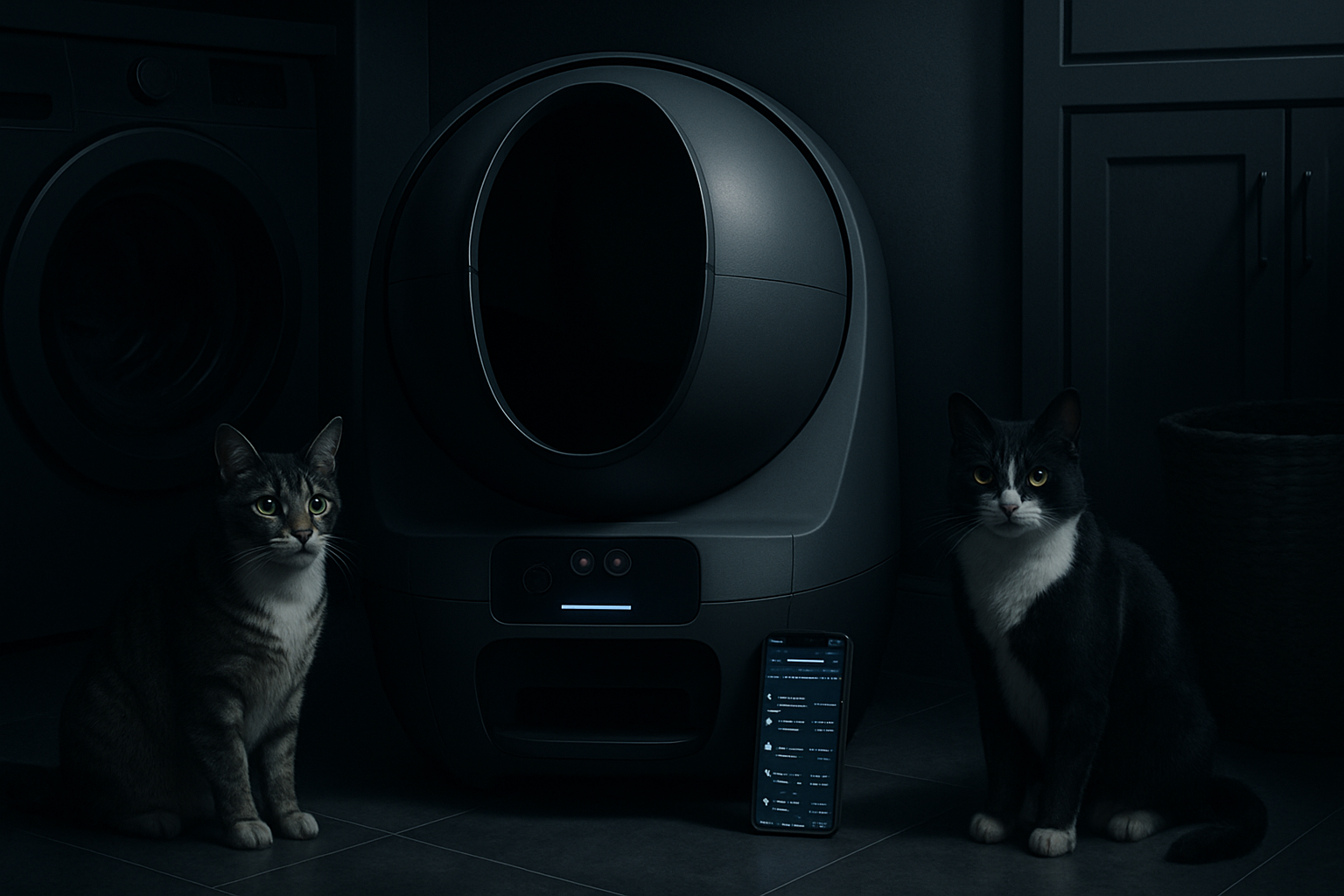
A six-month test reveals major flaws in the Litter-Robot 5 Pro's AI: erratic cat recognition, haphazard waste classification, and inconsistent weight measurements. Whisker mentions a miscalibrated gas sensor and scale on the tested unit, remotely fixes one, and states that a replacement would be necessary for the other, while promising software improvements. The cameras do not record everything, and the $8 subscription did not provide any useful "insights," according to the tester, although the mechanical collection remains effective.
Miscalibrated Sensors Acknowledged and Promises of Improvement
Whisker indicated that the gas sensor detecting feces on the tested unit was miscalibrated and corrected it remotely. The company then determined that the scale on the same unit was also miscalibrated, which may have contributed to the issues with WasteID and PawPrint, and clarified that correcting it would require a complete replacement of the machine. Whisker claims that the system is designed to learn and should improve over time, stating that it has refined enrollment by making image selection stricter. The company also recently deployed a feature called Patterns; according to the tester, it approaches more actionable information. Despite manual reassessments and corrections, cat recognition remained faulty, and a week after the initial errors, the profiles still displayed the same weight.
Cat Identification and Weight: The Failures of Cat ID
Cat ID relies on the front camera to assign each visit to the correct animal and can track up to five cats, but the function failed to reliably distinguish between the two tested cats. After about a week of use, the app offered the PawPrint setup by displaying captured images; during the test, these images were of poor quality, and it was not possible to change them or upload others. Whisker sells a $29 RFID PetTag for similar-looking felines. According to the company, poor lighting or subpar initial images disrupt recognition, and in cases of uncertainty, the built-in scale serves as a fallback signal. In the tested case, the two new cameras ended up merging profiles, and a 13.4-pound cat was even recorded as 2 pounds lighter overnight after confusion with the other.
Cameras: Limited Recordings and Placement Vigilance
The front camera records visits, while the internal cameras only provide a live view without recording; even with the subscription, only the front view is archived, while communication suggests recordings on both. Whisker announces that internal recording will arrive soon. The sensors interrupt rotation in case of detected activity and generate alerts, which allowed for remote verification that no cat was stuck. However, placement must be careful: the camera can film beyond the litter area, but an option allows recording only in the presence of a cat. In practice, capturing a live passage proved difficult and was only possible once during the test.
What Works: Collection and Daily App Use
The mechanical core holds up: the drum effectively sifts and disposes of waste, and compared to the Litter-Robot 4, the 5 Pro features a larger bin, more intuitive controls, and a wider dome. The app allows remote control of the device, checking litter and waste levels, and displaying the weight measured by the built-in scale. In practice, the drawer generally requires only weekly emptying, and the unit contains most odors.
Range, Pricing, and Compromises of the Evo Compared to Other Models
Whisker markets four models: Evo, 4, 5, and 5 Pro, priced at $599, $699, and $899 for the mentioned references. The 5 Pro is very large (almost 30 inches tall) and more spacious than the Evo and the 4, with support announced for up to five 30-pound cats. The Evo sacrifices several functions: no litter level tracking or alerts, limited compatibility with the hopper, a smaller bin, no nightlight, and perceived lower quality, with a sometimes finicky drawer. However, it shares an LCD screen with the 5 Pro, while the 4 uses LEDs. Shorter and slightly narrower, the Evo can fit into a corner, but its mat had to be removed during the tested installation, and it is specified for one to two cats under 19 pounds. On the services side, the Whisker Plus subscription at $8 per month covers health "insights" via AI and video storage, but delivered nothing actionable during the test; meanwhile, the WasteID function, intended to distinguish urine from feces, proved often inaccurate.
Brief IA — L'actualité IA en français
L'essentiel de l'actualité de l'intelligence artificielle, décrypté et expliqué chaque jour.