Xi Jinping Advocates Open Source for AI: China Opens Up to the World
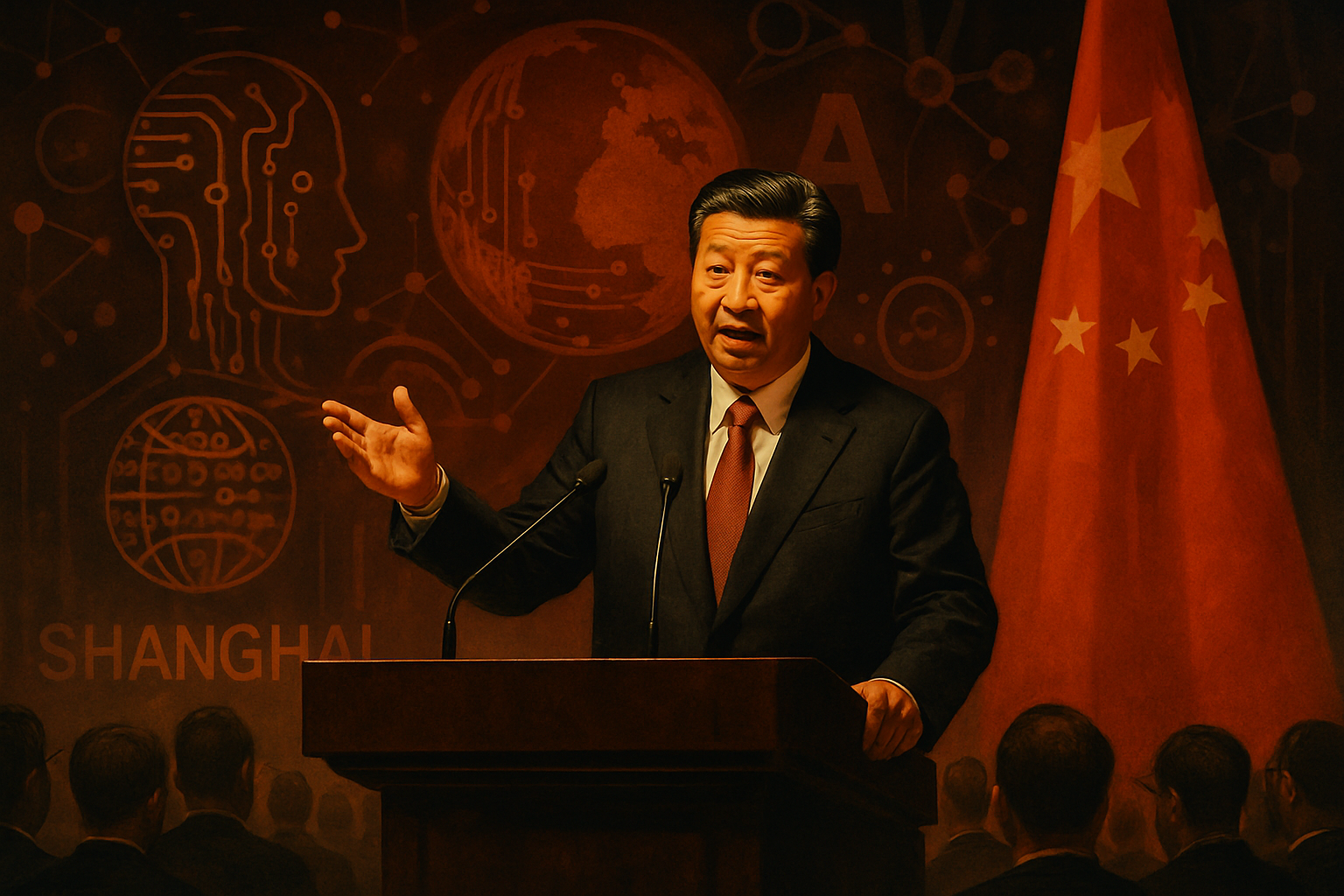
Xi Jinping Calls for Increased Open-Source AI
Chinese President Xi Jinping recently expressed his support for open-source in the field of artificial intelligence (AI). In a speech delivered on Thursday, he emphasized the importance of fostering openness, collaboration, and sharing in AI development. According to him, this approach represents a historic opportunity that China must seize to encourage open-source initiatives.
Divergence Between China and the United States
While the United States primarily relies on closed AI models, China is adopting a different strategy by promoting open models. Notable examples include Kimi K3 and GLM 5.2 developed by Z.ai. This divergence highlights a fundamental difference in how the two superpowers approach AI development.
Speech at the World Artificial Intelligence Conference
Xi Jinping shared his vision at the World Artificial Intelligence Conference in Shanghai. He advocated for increased regulation of technology while stressing the importance of open-source. In his speech, he outlined four key observations, starting with the principle of openness.
He pointed out that many Chinese models, such as those from DeepSeek, are open-source, contrasting with the practices of American labs that favor closed models. For instance, Meta has opened its Llama models but not its proprietary Muse Spark model. Similarly, OpenAI, despite its name, offers closed models, just like Anthropic.
Le brief IA que les pros lisent chaque soir
Les 7 actus IA du jour, décryptées en 5 min. Gratuit.
Inclus dès l'inscription : notre sélection des meilleurs guides & comparatifs IA.
Choisissez votre rythme
Gratuit · Pas de spam · Désabonnement en 1 clic
Xi Jinping's Vision
Xi Jinping expressed a perspective different from that of the United States, asserting that China is ready to be more open and adopt a more visionary approach. He also called for global regulation of AI, encompassing aspects such as technological oversight and early response systems.
He criticized American protectionism, stating that exaggerating national security concerns in the context of AI is problematic. This critique echoes past tensions, such as when the Trump administration delayed measures out of fear of losing the technological edge over China.
Sharing and International Cooperation
Despite a history of reluctance to share, illustrated by the example of Meta and Manus, Xi Jinping advocated for the use of AI that promotes understanding and sharing. He raised questions about how to make AI accessible to all, as inequalities persist.
In his fourth observation, Xi called for solidarity and improved global governance. He stressed the need for international cooperation to help countries in the Global South bridge technological gaps. To this end, he promised to provide 5,000 training opportunities and AI seminars to less technologically advanced countries.
Brief IA — L'actualité IA en français
L'essentiel de l'actualité de l'intelligence artificielle, décrypté et expliqué chaque jour.