Y Combinator Releases Quartermaster and Restricts Claude Code Tools
Le brief IA que les pros lisent chaque soir
Les 7 actus IA du jour, décryptées en 5 min. Gratuit.
Inclus dès l'inscription : notre sélection des meilleurs guides & comparatifs IA.
Choisis ton rythme
Gratuit · Pas de spam · Désabonnement en 1 clic
Y Combinator has made Quartermaster (QM) public, the agent that drives its operations. In this code, the adapter for Claude Code neutralizes most of the provided tools and relies on a narrow internal registry — ten permanent tools, up to a total of sixteen. The project also outlines its approach to costs, memory, and security, as well as a multi-vendor execution with session recovery via the database.
QM formalizes skill costs and security posture
QM's prompt skills are associated with usage costs, including a "taste" skill that is explicitly accounted for. The system features a specific design for context and memory management. Security posture controls frame tool approvals and policy behavior across different organizational scopes. Production cost factors include "sustainable sands" by scope, infrastructure, and a classifier overhead based on posture. A verdict specifies in which cases QM's vendor-neutral strategy justifies the complexity of the system.
Limited tool registry: 10 permanent, 16 maximum
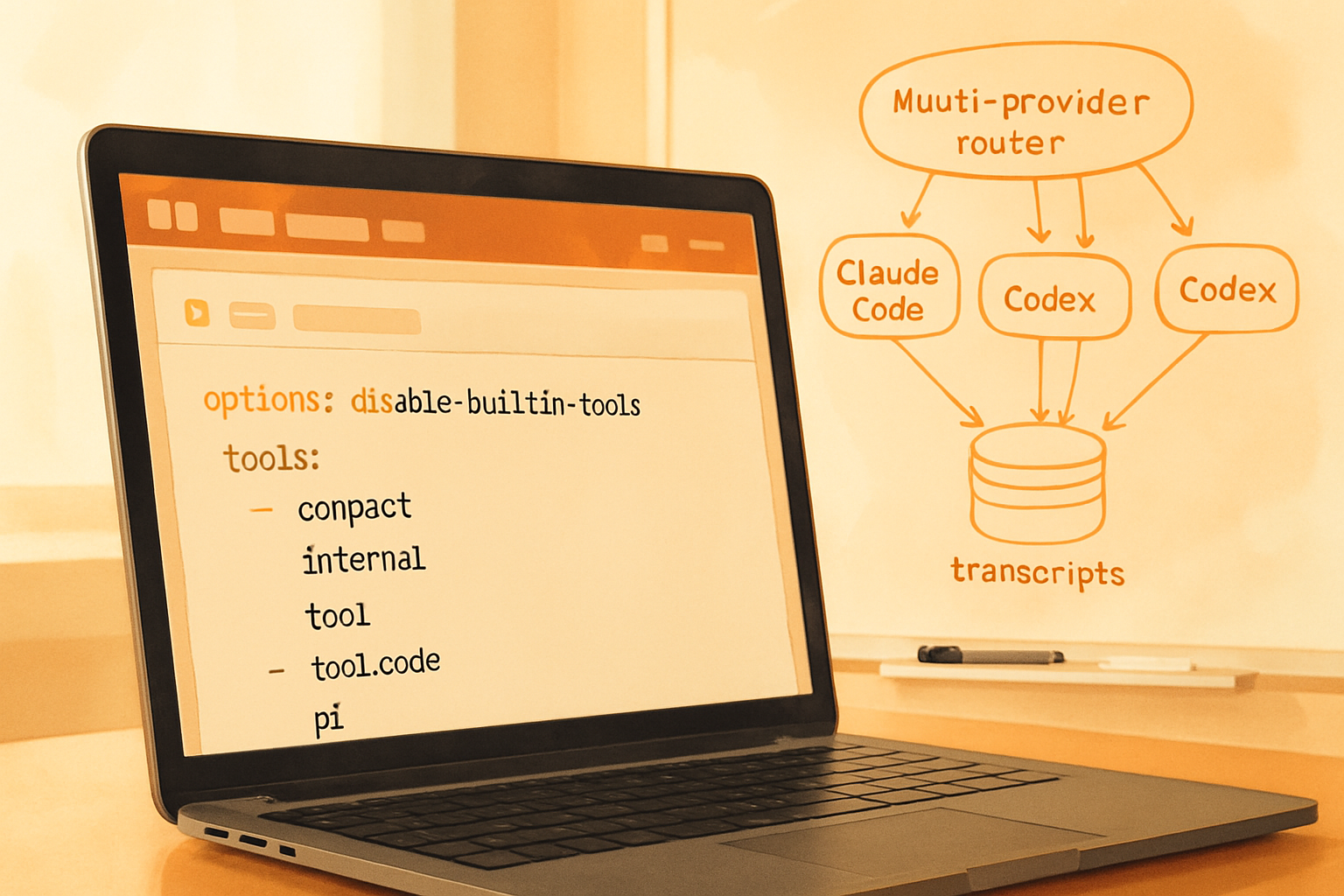
The adapter that launches Claude Code neutralizes nearly all the tools provided with the platform. Instead, QM relies on a restricted internal registry, with ten tools always available and up to sixteen in total. A read-only mode further reduces this registry by limiting access to the tools. This setup defines a fixed and reduced tooling surface around the agent.
Multi-vendor orchestration and database-reset sessions
QM integrates a multi-vendor router that allows the same tool registry to be used across multiple platforms, including Claude Code, Codex, OpenCode, and Pi. This interoperability relies on several adapter transports. During an exchange, a vendor session can be securely reset thanks to the transcription stored in QM's database. QM's approach is also compared to other tool tethering frameworks.
Brief IA — L'actualité IA en français
L'essentiel de l'actualité de l'intelligence artificielle, décrypté et expliqué chaque jour.