Zendesk anticipates half of support will be handled by AI agents by 2030
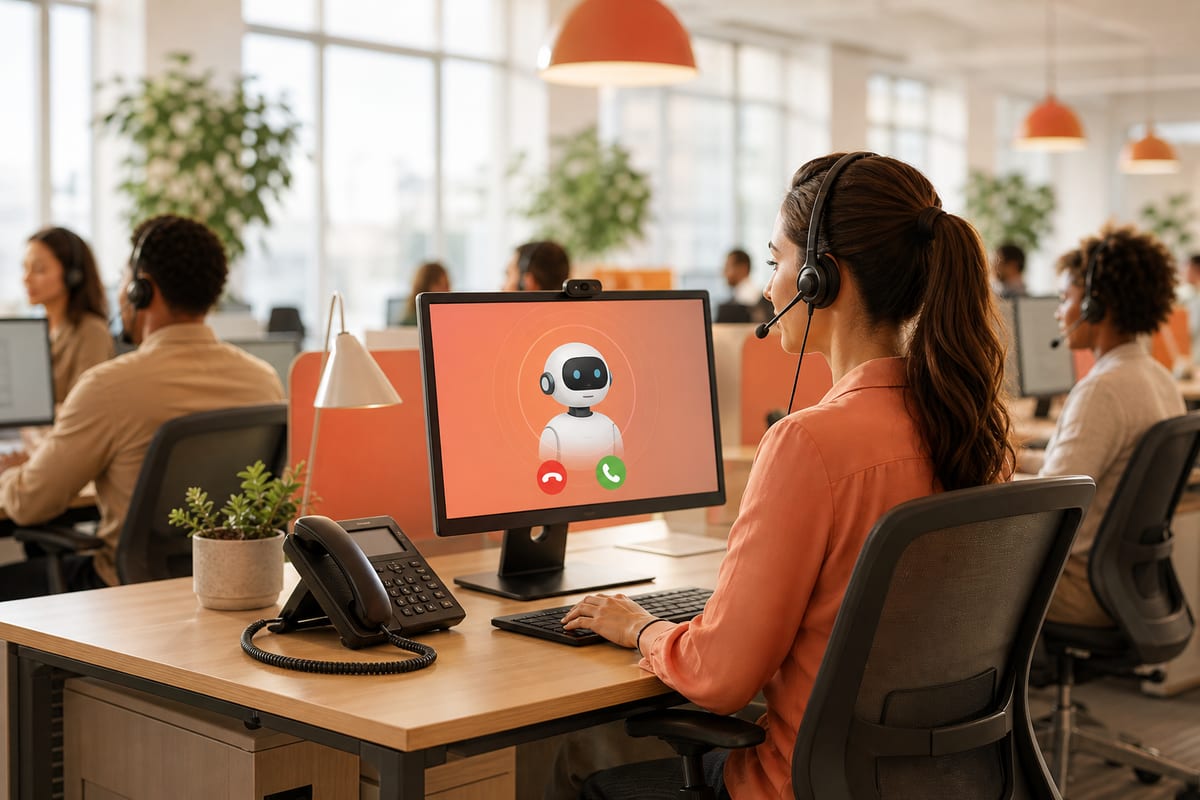
Zendesk estimates that by 2030, about half of support traffic will come from personal agents. Their arrival on human channels is starting slowly, according to customer service officials gathered last month at the ICMI Contact Center Expo. Companies must already decide how to recognize these intermediaries and what operations to grant them.
Identifying Agents and Limiting Their Actions
Identifying an agent is not enough: the company must know which person they represent and rule out potential fraud. Even when authentic, two areas remain to be distinguished: the operations that the customer has entrusted to them and those that the service agrees to allow them to execute.
Shashi Upadhyay, President of Products, Engineering, and AI at Zendesk, calls for an infrastructure that can accommodate these agents while framing their capabilities. In light of the expected influx at his company, he rejects a delayed reaction, incident by incident. He urges providers to become security companies and to make significant progress: according to him, agents could overwhelm systems designed for human interlocutors.
Brent Barbara, Managing Partner at Clearest Blue, a customer experience technology consulting firm, emphasizes that the way to recognize these new interlocutors remains uncertain. He questions, in particular, which numbers they will use: their own or those of their owners' mobile phones, through spoofing. In a technology he describes as changing every week, he recommends first detecting the agents, then deciding how to treat them.
According to him, no clear and coherent answer has yet emerged. Policies may differ between health, finance, and consumer-facing activities, particularly e-commerce.
Le brief IA que les pros lisent chaque soir
Les 7 actus IA du jour, décryptées en 5 min. Gratuit.
Inclus dès l'inscription : notre sélection des meilleurs guides & comparatifs IA.
Choisissez votre rythme
Gratuit · Pas de spam · Désabonnement en 1 clic
A Loop Between Robots Cost $60,000
Security is not the only risk feared by contact center officials: they also worry about automated exchanges that loop endlessly. Brent Barbara reports an incident between a contact center robot and one responsible for outbound calls from another company. Before a human intervened, their exchange had incurred $60,000 in costs for the companies involved, he claims.
The first robot was judged on resolved calls; the second, on calls made without human intervention. According to the consultant, each met its objectives, but no customer received assistance. He therefore urges officials to check whether their metrics reward actual service rendered or merely the accumulation of activity.
Companies Choose Their Access Rules
Access policies already differ between companies. United Airlines, eBay, Amazon, Target, JPMorgan Chase, and Charles Schwab have limited certain operations of unauthorized personal agents. Walmart, for its part, is testing Agent Gateway in beta, which would allow authorized third-party agents to make purchases for their clients. Many other companies, in both B2B exchanges and consumer activities, are still contemplating their response.
At Genesys, Mike Szilagyi, General Manager and Senior Vice President, indicates that the platform is receiving functions to help users address these questions. The company rules out a complete blocking principle, as some agents carry the actual requests of legitimate customers. The executive anticipates widespread use of personal agents, for initially simple tasks, then more complex ones.
Providers are simultaneously working on standards covering communications, data, authentication, and permissions, in anticipation of an influx of agents for individuals and B2B relationships. Among the agents involved are Meta’s Muse, OpenAI’s Dots, Grok Bot, Gemini Spark, and Claude Duet.
Brief IA — L'actualité IA en français
L'essentiel de l'actualité de l'intelligence artificielle, décrypté et expliqué chaque jour.