Zuckerberg and AI Agents: A Cool Reception
Le brief IA que les pros lisent chaque soir
Les 7 actus IA du jour, décryptées en 5 min. Gratuit.
Inclus dès l'inscription : notre sélection des meilleurs guides & comparatifs IA.
Choisis ton rythme
Gratuit · Pas de spam · Désabonnement en 1 clic
Mark Zuckerberg describes a future of AI "for everyone" and ubiquitous personal agents. However, several experts view the reception as negative, questioning the messenger and highlighting very concrete barriers, from hardware access to the lack of public reflex for a Meta assistant. The company is described as repositioning itself, while its leader refuses to slow down in the face of competition, including from China.
Kirsten Korosec describes a negative reaction and costs
Kirsten Korosec states that the manifesto did not strike the right tone for many and observes a widespread negative reaction. She finds the text very "Pollyannish," recalls that Mark Zuckerberg has previously promoted similar ideas, and believes he does not present a realistic picture, while also estimating that there will be extreme costs. Russell Brandom, for his part, wrote that this manifesto embodies "exactly why people dislike AI." Rebecca Bellan connects part of the rejection to the messenger himself. She recalls that Mark Zuckerberg claimed he wanted to connect friends in the early days of social media, while she now observes content that incites anger and advertising rather than connection. Anthony Ha believes that many are wary of Mark Zuckerberg and Meta, anticipating that this distrust could intensify with the release of a new film about Facebook in the coming months.
Access limitations hinder Glimmer and public use
Rebecca Bellan explains that she attempted to download Muse Glimmer but was unable to install it on her MacBook, estimating that it requires specific hardware, which she cannot specify, making it less accessible to the average person. Kirsten Korosec considers that it is not yet a product for everyone. In the intended use, Rebecca Bellan describes Glimmer as a tool that manages schedules, drafts messages, and organizes files, always active and usable with or without a connection. She also mentions Muse Spark, which, according to her, allows Meta to maintain some control over its most effective models and generate revenue, particularly for increased computing needs or more ambitious projects. Rebecca Bellan further describes Llama as an excellent open-source tool. Anthony Ha notes that while users interact with Meta's AI tools on Instagram and Facebook, Meta is not yet the company that comes to mind for a personal assistant, and he sees the current approach as an attempt at repositioning.
Rebecca Bellan contrasts Meta's approach with that of labs
Rebecca Bellan believes that Mark Zuckerberg positions himself almost as an "anti-Dario," while Dario Amodei, CEO of Anthropic, has contested the label of AI pessimist. She describes leading labs that claim to want to focus on safety and slow down, while judging that they are not actually doing so, in a context where she mentions recent cybersecurity incidents. Mark Zuckerberg, on his part, states that we should not slow down, that we should not give an inch to China, and that slowing down would harm the individual that this technology can empower. In terms of competition, Rebecca Bellan believes that Meta is trying to win differently, without succeeding in cutting-edge closed models or necessarily in the open space, betting on personal empowerment and models to be deployed on individual devices. Anthony Ha recalls serious investments in AI, with high offers to scientists according to reports from last year, while considering that Meta does not spontaneously come to mind among leading labs.
The manifesto promises personal agents and raises questions
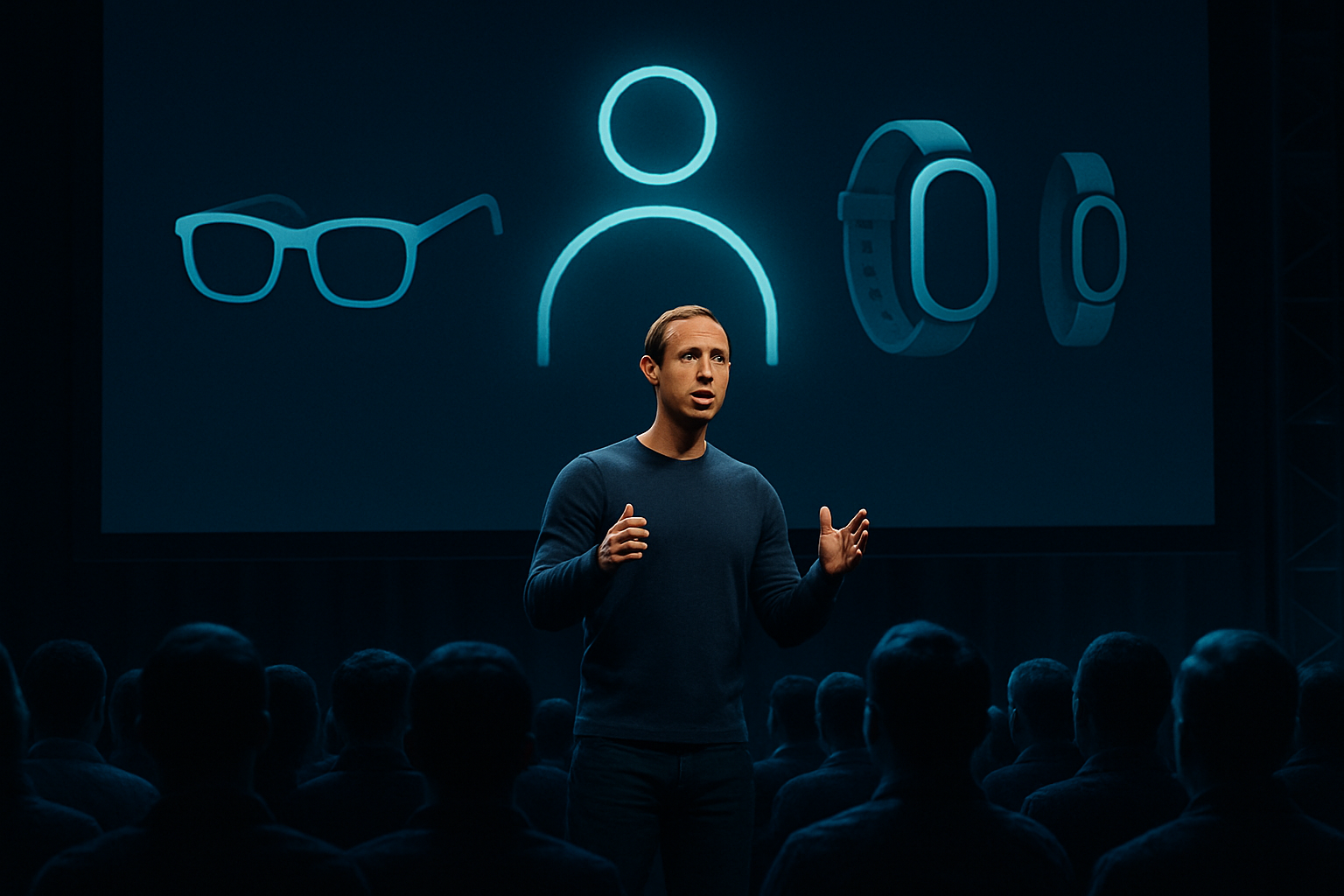
In a 6,500-word essay, Mark Zuckerberg writes that "the future is for everyone" and describes a future powered by AI where everyone would have a highly capable personal agent. He also poses the following question to AI pessimists: "why are you building these things?" Rebecca Bellan recalls a similar letter published a year earlier, which mentioned uses on glasses and wearable devices, while estimating that the final form factor remains unclear and that the choice would be left to the individual. Anthony Ha believes that part of the manifesto promises to unleash creativity and invention in a very abstract way, unlikely to convince skeptics, and judges that the more concrete elements about trainers and personal assistants are appealing in part but not for many uses.
Public promises spark viral reactions
Anthony Ha asserts that the future visions communicated by AI leaders often trigger viral reactions. He cites Sam Altman discussing the creation of personalized podcasts via ChatGPT for children on the way to school, an idea to which internet users responded by asking why not just talk to them.
Brief IA — L'actualité IA en français
L'essentiel de l'actualité de l'intelligence artificielle, décrypté et expliqué chaque jour.