Amazon: $220 Billion for AI and Negative Cash Flow
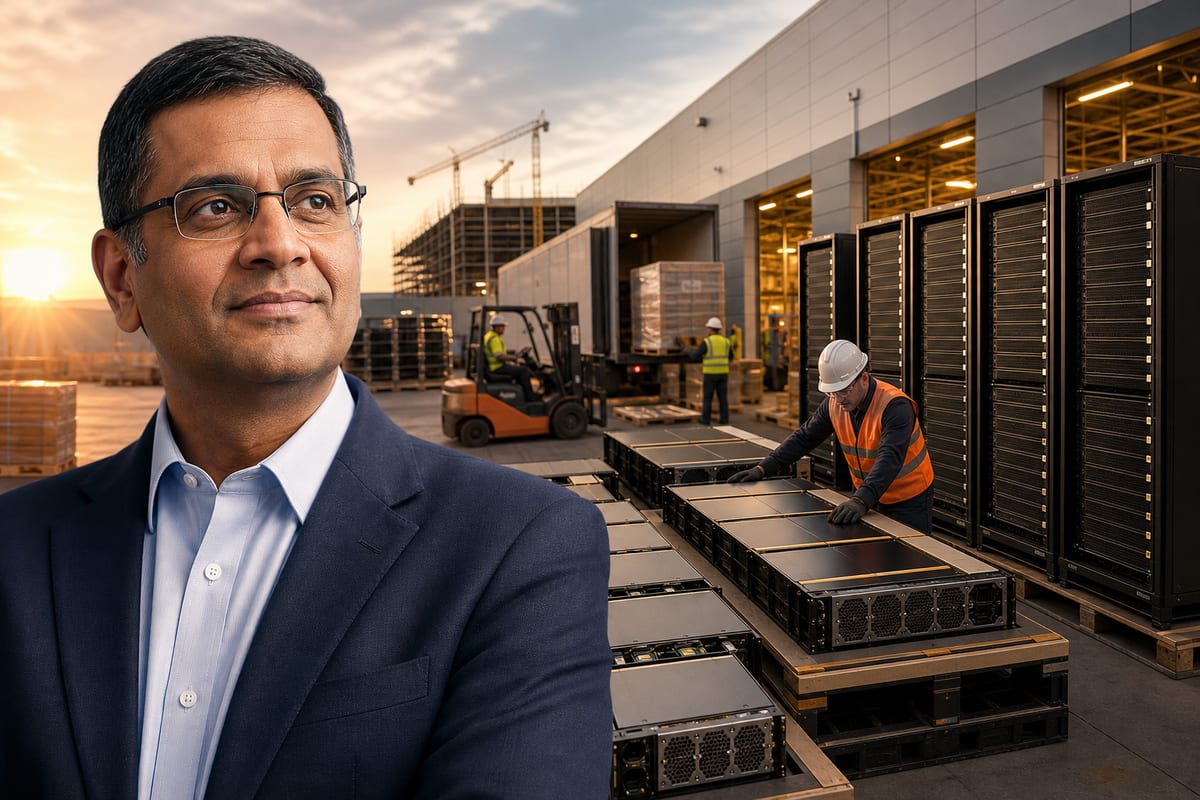
Amazon is committing unprecedented amounts to data centers and servers dedicated to AI, at the cost of a negative cash flow expected to last two years. The company is accelerating its logistics with an early receipt of Nvidia racks, while acknowledging that demand may exceed its capabilities until 2027.
2027: Demand Exceeding Supply and Cash Flow Pressure
Amazon anticipates that demand for its AI capabilities will still exceed its supply by 2027, according to Prasad Kalyanaraman during a meeting in September. In 2023, he had informed Andy Jassy that AWS would likely have emerged from its capacity crisis by that time, but the situation remains tight. Kalyanaraman estimates that Amazon's AI and machine learning business is still very negative in cash flow and anticipates two more years of negative cash flow. During an internal meeting in September, AWS CFO John Felton highlighted this turnaround by joking about the shift to negative cash flow. This year, Amazon is dedicating $220 billion to AI's physical infrastructure. Felton also mentioned the difficulty of planning in an uncertain environment, while Kalyanaraman noted an improvement in internal return on investment outlooks, although assumptions are still evolving. At Amazon's scale, an eight-week supply buffer can represent billions of dollars in immobilized equipment, weighing on liquidity.
Early Received Nvidia Racks: $5 Billion in August, Then $3 Billion/Month
Internal emails from August describe the establishment of an Early Rack Receipt process for servers equipped with Nvidia GB300 chips in U.S. facilities. An internal message projected around $5 billion in racks received in August, followed by approximately $3 billion per month for the foreseeable future. With this setup, Amazon takes possession of the racks earlier in the supply chain, which involves earlier cash outflows. Typically, the company only pays for the racks after their installation in data centers, with suppliers bearing the cost in transit. The intensity of AI data center construction makes coordination more complex, as Amazon must compete for scarce resources, including Nvidia GPUs and other AI components. Any delay in installation or connection to a reliable power source could defer the revenue generated by these assets.
Le brief IA que les pros lisent chaque soir
Les 7 actus IA du jour, décryptées en 5 min. Gratuit.
Inclus dès l'inscription : notre sélection des meilleurs guides & comparatifs IA.
Choisissez votre rythme
Gratuit · Pas de spam · Désabonnement en 1 clic
AWS Highlights 37% Growth and $496 Billion in Orders
AWS reported a 37% increase in revenue in the second quarter, its fastest pace in 18 quarters, with a backlog reaching $496 billion. Amazon claims to have solid indicators showing that additional capacity will be necessary. Andy Jassy, CEO, believes the company has a clear vision of strong financial returns from this investment cycle and describes AI as a once-in-a-lifetime opportunity. He emphasizes that Amazon will not be conservative in its investments related to this technology.
Permits, Electricity Prices, and Market Revaluation
Investors are concerned about the scale of AI data center expansion, which is deemed more expensive and longer to build. Analyst Dan Ives notes that the market is revaluing projects financing multi-year constructions against revenues that will arrive later. Uncertainty surrounding building permits and political debates over electricity prices further reinforce doubts about the speed of financial returns.
A Continuity Bet, Disrupting Historical Frugality
Prasad Kalyanaraman asserts that Amazon aims to have the largest AI data center capacity, while admitting that the commissioning of this capacity is not progressing as quickly as desired. Internal documents indicate orders for Nvidia GPUs amounting to several billion dollars, made before their actual installation. Two years ago, Wall Street was still questioning Amazon's cash usage, as the company has historically grown through large bets in cloud, logistics, and delivery, which have proven profitable. AI pushes this logic to a larger scale, despite Amazon's long-standing expertise in building data centers. Coordinating an industrial system where power, equipment, and construction advance at different rates creates bottlenecks, with a risk of immobilized equipment and committed liquidity as costs and forecasts vary. Kalyanaraman, a 21-year veteran promoted this year to the S team, has carried forward the frugality culture that has shaped Amazon and encouraged AWS teams to do more with less by the end of 2023. However, the pace of AI's rise makes this principle difficult to apply: when demand becomes fully visible, servers, energy, and construction capacities may fall short, pushing the company to commit funds earlier to secure supply and meet its capacity goals.
Brief IA — L'actualité IA en français
L'essentiel de l'actualité de l'intelligence artificielle, décrypté et expliqué chaque jour.