AMI Labs: Alexandre LeBrun Rejects AGI for His AI
A Distinct Approach in the AI Landscape
In an industry where terms like AGI (Artificial General Intelligence) and superintelligence are often used to describe ambitious advancements, Alexandre LeBrun, CEO of AMI Labs, takes a unique stance. In an interview with TechCrunch, LeBrun clearly stated that his company does not employ these terms. He emphasized that the use of these words has become rare, as industry players have shifted towards the concept of superintelligence, which he also considers to be of little relevance. According to him, these labels lack clear definitions and are not useful for describing the true capabilities of AI.
AMI Labs Seeking Strategic Partnerships
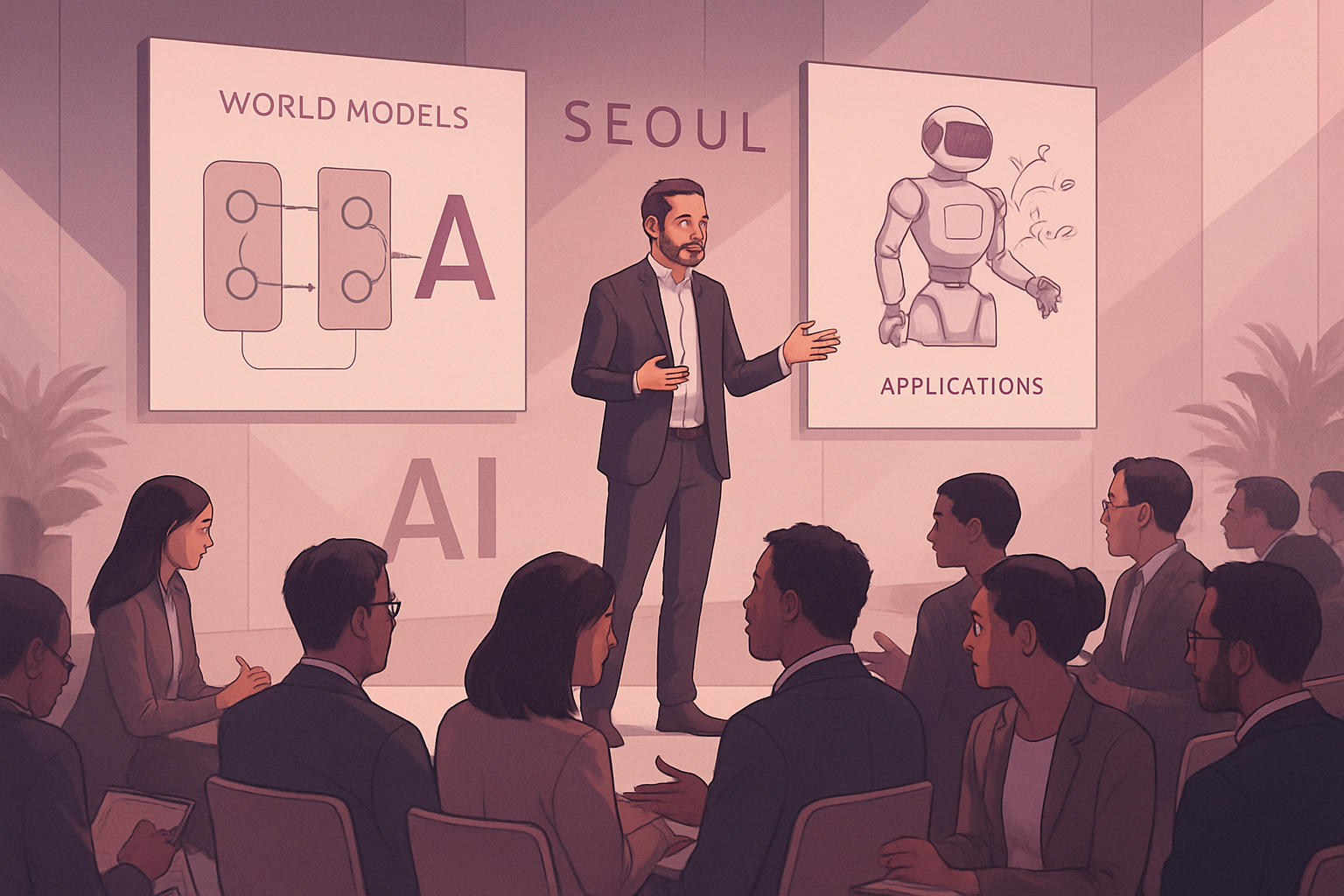
TechCrunch met with LeBrun in Seoul, where he was attending the International Conference on Machine Learning. The purpose of his visit was to forge partnerships with local and international companies, as well as researchers. Although AMI Labs is still in the pre-product development phase, it is striving to attract attention from sectors such as robotics, manufacturing, and electronics. LeBrun explained that their world model, which incorporates physical principles to interact with the real world, must demonstrate its effectiveness outside of laboratories.
Robotics: A Key Application Area
LeBrun identified robotics as a field where world models could have a significant impact. Currently, robots follow predefined routines, and AI remains limited in its ability to intelligently interact with the physical world. LeBrun illustrated this by mentioning an incident where a dancing robot nearly injured a child at a public event. According to him, an AI capable of understanding context could prevent such incidents. He noted that while robotic hardware has made significant progress, it still lacks a "brain" to fully leverage these advancements.
World Models vs. Language Models
LeBrun explained the distinction between large language models (LLMs) and world models. LLMs predict the next text, while world models predict the next state of the physical world. For example, if a glass is pushed to the edge of a table, a world model should be able to anticipate its fall. Although he does not consider world models to be superior to LLMs, he sees them as complementary, each playing a distinct role in understanding the physical world.
Le brief IA que les pros lisent chaque soir
Les 7 actus IA du jour, décryptées en 5 min. Gratuit.
Inclus dès l'inscription : notre sélection des meilleurs guides & comparatifs IA.
Choisis ton rythme
Gratuit · Pas de spam · Désabonnement en 1 clic
The Importance of Real-World Environments
For LeBrun, world models require training in real-world environments, which involves collaborating with industrial partners. AMI Labs is looking to establish a presence in Asia, drawn by the region's technological advancements, particularly in South Korea. The country is recognized for its cutting-edge industries in robotics and semiconductors, as well as its ability to rapidly adopt new technologies.
South Korea: A Strategic Partner
LeBrun expressed his interest in South Korea due to its advanced industrial environment and swift commitment to AI. The country plans to invest heavily in AI, particularly in chips and data centers. JP Lee, CEO of SBVA and supporter of AMI in Asia, highlighted the importance of the coexistence between physical AI and language models, and praised the South Korean government's efforts to support these technologies.
AMI Labs: An Emerging Company
Despite the absence of a commercial product, AMI Labs has already raised $1.03 billion and boasts a pre-money valuation of $3.5 billion. Founded by Turing Award winner Yann LeCun after his departure from Meta, the startup remains tight-lipped about its future plans. LeBrun indicated that they will reveal their advancements when they are ready, promising a surprise to come.
Health: A Personal Example for LeBrun
Health is a field that is particularly close to Alexandre LeBrun's heart, especially due to his past experience with Nabla, an AI-based health startup. He compares current AI systems to doctors who have been trained solely from textbooks, without ever having done practical internships. According to him, large language models cover only a tiny fraction of health needs, about 1%, with the rest requiring real-world experience.
Massive Investments in South Korea
Seoul's plan aims to mobilize around $880 billion to develop chips, AI data centers, and physical AI. This ambitious strategy seeks to strengthen South Korea's position as a leader in the field of artificial intelligence by supporting the research and development of advanced technologies that can coexist and complement each other.
Brief IA — L'actualité IA en français
L'essentiel de l'actualité de l'intelligence artificielle, décrypté et expliqué chaque jour.