Anthropic and Claude Science: AI at the Service of Research
Le brief IA que les pros lisent chaque soir
Les 7 actus IA du jour, décryptées en 5 min. Gratuit.
Inclus dès l'inscription : notre sélection des meilleurs guides & comparatifs IA.
Choisis ton rythme
Gratuit · Pas de spam · Désabonnement en 1 clic
Claude Science: A Major Breakthrough by Anthropic in Scientific Research
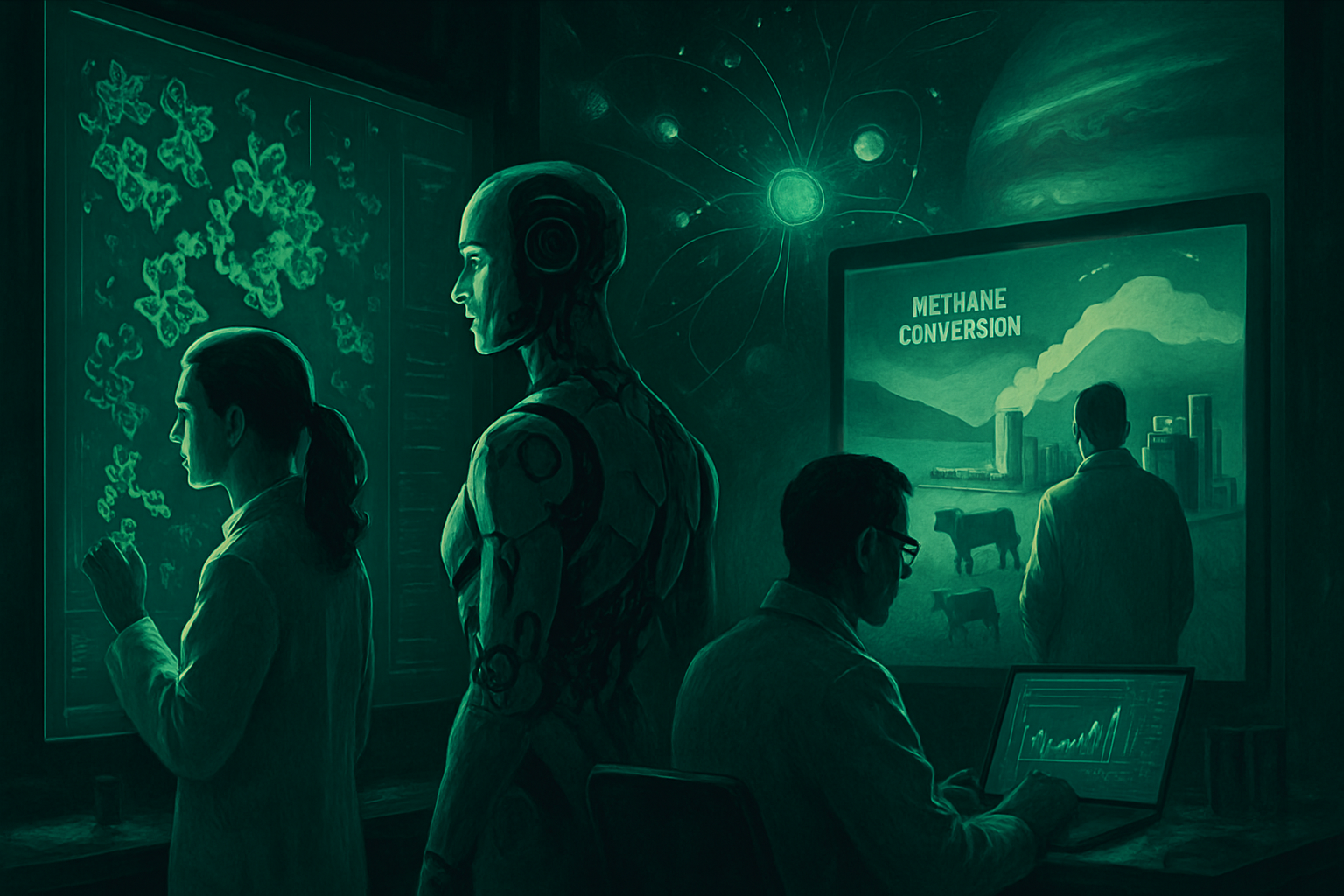
At a significant gathering of influential figures from the pharmaceutical sector, biotechnology pioneers, and renowned researchers, Anthropic unveiled its latest flagship product: Claude Science. This new tool is designed to revolutionize scientific research, much like Claude Code has done for software engineering. Claude Science stands out for its ability to autonomously execute complex tasks based on succinct and strategic instructions. It is equipped with specialized tools for computational biology as well as drug development. This launch reflects Anthropic's commitment to integrating AI into the scientific field, and the company plans to use Claude Science in its own research, particularly to develop treatments for rare and often overlooked diseases.
The Limitations of California's Carbon Climate Policies
California is facing criticism regarding its climate policies, particularly those related to managing methane from cattle manure. Several years ago, the state established a program encouraging farmers to convert methane into natural gas, a project that quickly gained popularity due to generous subsidies. However, recent studies highlight the weaknesses of this system, pointing out the inadequacies of carbon offset and trading mechanisms. Rather than requiring industries to directly reduce their emissions or bear the costs as an operating expense, lawmakers opted for an incentive system that shifts climate responsibilities among different actors and regions. This approach could, paradoxically, exacerbate global warming.
Massive Investments to Reverse Aging
Billions of dollars are currently being invested in research aimed at reversing the aging process, as scientists strive to discover methods to rejuvenate cells. However, the question remains: how close are these experimental treatments to becoming a reality? And what is their potential effectiveness? At a recent virtual event, MIT Technology Review addressed these questions with Mary Beth Griggs, a science editor, and Jessica Hamzelou, a senior biotechnology journalist. Subscribers now have the opportunity to watch the full discussion.
The Complex Quest for Dark Matter
For decades, physicists have been trying to detect Weakly Interacting Massive Particles (WIMPs), considered a major candidate for explaining dark matter. However, this quest faces a new obstacle: neutrinos. These tiny particles, emanating from the sun and other stars, create a "neutrino fog" that complicates the detection of dark matter signals. Nevertheless, this challenge does not mean the end of research. Scientists are redirecting their efforts and expanding their investigative methods. Among the new approaches are the use of quantum sensors, liquid helium detectors, and even explorations in Jupiter's atmosphere.
Highlights from Tech News
- The United States has lifted restrictions on Anthropic's Mythos and Fable models.
- A universe survey, the most detailed to date, is underway thanks to the largest ground-based digital camera.
- The chaos surrounding H1-B visas is driving tech talent out of the United States.
- In 2025, Trump raised over a billion dollars through cryptocurrency ventures.
- The UN warns of worsening global inequalities due to the rapid spread of AI.
- Companies are cutting AI costs by simplifying LLM outputs into "caveman" language.
- Babies are born with neural foundations for mathematics.
- An independent studio has acquired the film from OpenAI that was abandoned by Amazon.
- AI has recreated Gene Wilder's voice for a new "Willy Wonka" series.
- NASA plans to send a backup rover to Mars and a football balloon to the moon.
Quote of the Day
“Caveman save you token, save you money.” — The GitHub repository for the "caveman" plugin explains how the project reduces AI expenses by transforming verbose LLM outputs into concise text.
AI and Innovation in Drug Discovery
The development of a new drug is a long and costly process, typically requiring more than 10 years and billions of dollars. Increasingly, startups are betting on AI to accelerate this process and reduce costs. By anticipating the potential behavior of drugs in the body and eliminating non-viable compounds even before they leave the computer simulation phase, machine learning models can decrease the need for time-consuming laboratory work. However, AI-driven drug discovery is still in its infancy. Many companies are making promises they cannot yet fulfill, and while the technology is not a silver bullet, it is beginning to transition from promise to concrete practice.
Brief IA — L'actualité IA en français
L'essentiel de l'actualité de l'intelligence artificielle, décrypté et expliqué chaque jour.